Tamil Nadu | How the Museum of Chettinad keeps a community’s memory alive
Housed in an ancestral home in Kanadukathan, the museum looks to connect the Chettiar community’s traditions, global journeys, craft and future generations
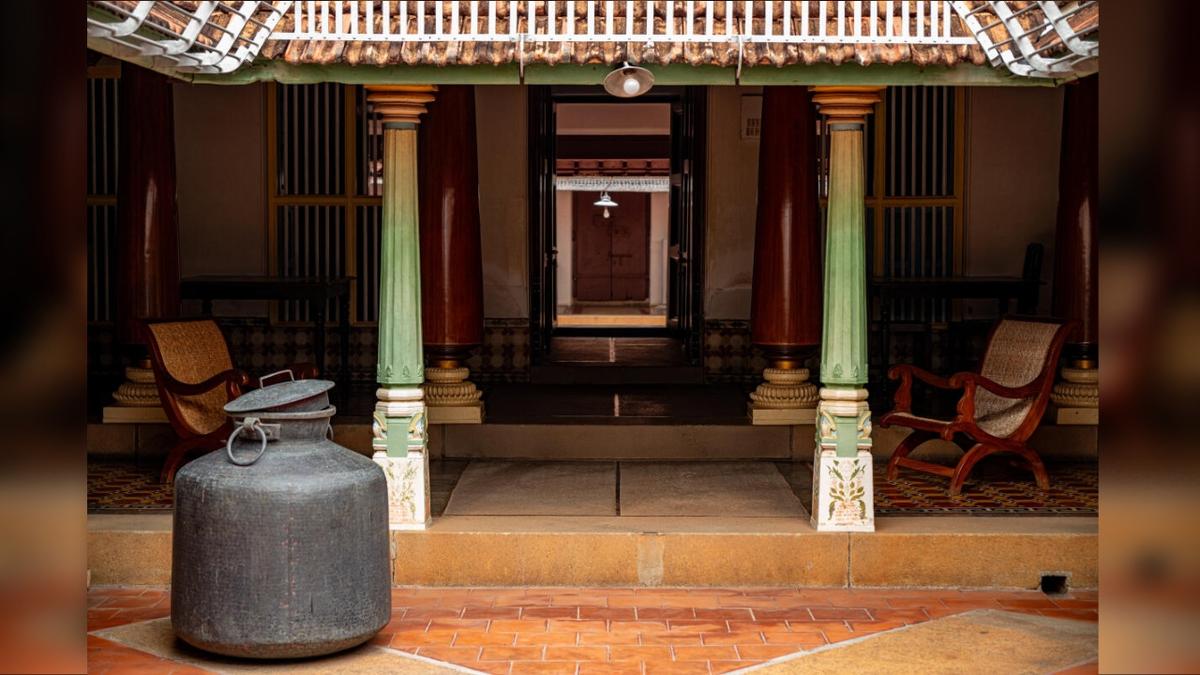
As the drive approaches the Chettinad region in southern Tamil Nadu, the terrain transforms into arid shrub. Palmyra trees flank the farmlands, their spiked leaves casting shadows on the tar road. Tamarind trees also shed their fruit, which crunches under the tires of passing vehicles. The Chettiar community has long resided in this area, establishing a robust network of trade and commerce throughout India and Asia.
Though dispersed worldwide—from the U.S. to Europe to Southeast Asia—members of the community still return to their ancestral homes in Chettinad for various events. The men are frequently away for extended periods, and it is the women who maintain their family compounds, which are heavily fortified with high walls and numerous rooms for joint family living.
These compounds exhibit intricate Burma teak carvings of deities, well-stocked kitchens, and provisions carefully stored to last through the dry summer months. A dedicated group, the M.Rm.Rm. Cultural Foundation, is dedicated to preserving this unique heritage and is led by Visalakshi Ramaswamy, a Chettiar revivalist committed to safeguarding her community's fading traditions.
Ramaswamy, who published the book, "The Chettiar Heritage," became acutely aware of the dismantling of Chettinad homes, sale of their belongings, and the passing of elders who were guardians of tradition. Her work on the book led to the establishment of the Museum of Chettinad, a 125-year-old family home in Kanadukathan, which now houses a comprehensive collection of Chettiar history and traditions.
The museum's exhibits encompass the history of the Nagarathar community, their routes of commerce, migration, and religion, as well as their domestic life, crafts, and festivals. Ramaswamy emphasizes the importance of understanding Chettiar traditions before intervening in their preservation and has built a core team to carry forward the museum's activities.
This museum aims to not only preserve the disappearing past but also to create a model for curating community museums that hold both tangible and intangible histories and have the potential to evolve.
Written by urgent.news from The Hindu's reporting — not their text. Machine-written — may contain errors; check the original before relying on it.