Klimawandel: Schwund an Eisschilden: Elf Billionen Tonnen Eis seit 1979
Grönland und die Antarktis sind die zwei großen Eisschilde der Erde. Wenn das Eis dort schwindet, hat das gravierende Auswirkungen auf den Meeresspiegel. Fachleute legen nun ein umfassendes Bild vor.
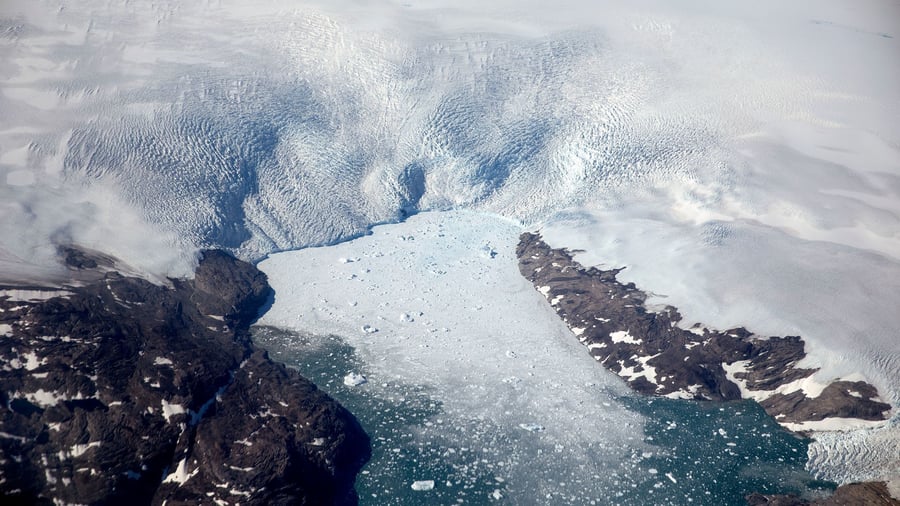
The two largest ice sheets on Earth, located in Greenland and Antarctica, have lost more than 11 trillion tonnes of ice over the past 45 years, from 1979 to 2023. This ice loss resulted in a global sea level rise of 3.14 centimeters, according to a research team from the Ice Sheet Mass Balance Intercomparison Exercise (IMBIE). To study this phenomenon, the team analyzed 42 individual surveys that relied on data from 27 satellite missions.
Their goal was to create a consistent picture of how the ice sheets had changed over the decades. Specifically, they examined where exactly the ice was lost, how much was lost, and how the process had accelerated. Ice loss has rapidly increased since the 1990s. In Greenland, annually around 60 billion tonnes of ice melted in the 1980s compared to approximately 264 billion tonnes per year during the 2010s, driven by hotter summers.
In Antarctica, a similar trend was observed, with around 48 billion tonnes of ice lost annually in the 1980s, increasing to an average of about 202 billion tonnes per year in the 2010s. Most of the ice loss came from faster moving glaciers discharging into the ocean, rather than melting on the surface. "More than four-fifths of the ice loss was delivered by rapidly moving glaciers to the ocean and not from surface melting," said co-author Inès Otosaka from Britain's Northumbria University.
This indicates that the long-term trend is driven by the dynamic response of the ice sheets to a warming ocean. In Antarctica, the loss of ice was entirely due to accelerated glacier flow and melting of ice from the warmer ocean. Sea level rise implications The ice sheets have a significant impact on the rise of sea levels. According to the European Space Agency (ESA), which supported the study, Greenland and Antarctica are responsible for about a quarter of the rising sea levels.
The remaining three-quarters are attributed to the melting of mountain glaciers and primarily the thermal expansion of warmer seawater. The contribution of the ice sheets to the rising sea levels is substantial. "An increase of just three centimeters may seem small, but it puts an additional six to nine million people at risk of flooding and coastal erosion," said Andrew Shepherd from Northumbria University.
Is ice loss slowing down? In the latest years of the study, from 2020 to 2023, the loss of ice has slowed down slightly. However, experts warn that this does not mean an end to the long-term trend. The ice sheets continue to lose more ice than they gain.
Written by urgent.news from Handelsblatt's reporting — not their text. Machine-written — may contain errors; check the original before relying on it.