Huge new Webb image is chock-full of space delights
ESA has unveiled a spectacular new Webb image. One of the largest shots yet, it features protostars, jets, distant spiral galaxies and a gravitational lens. The post Huge new Webb image is chock-full of space delights first appeared on EarthSky .
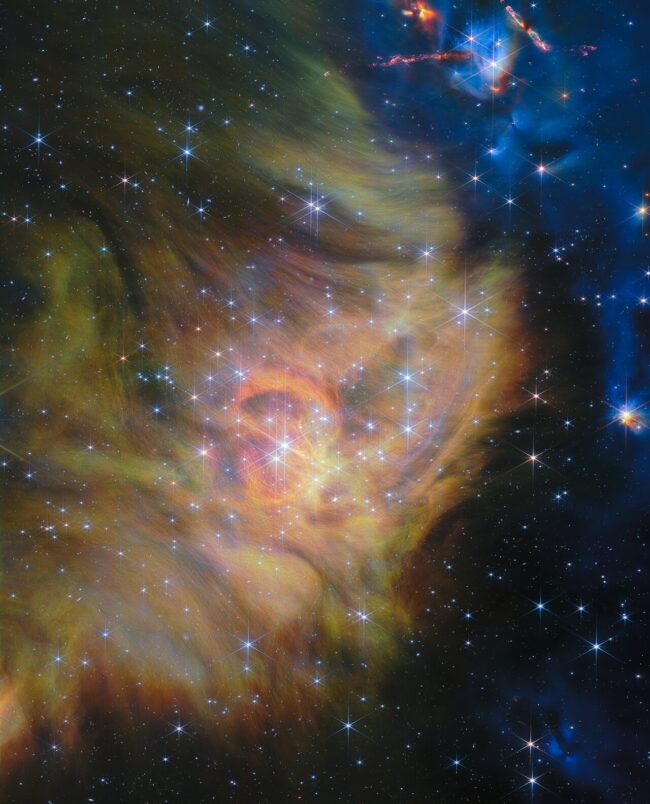
The European Space Agency (ESA) has unveiled a stunning new image from the James Webb Space Telescope (JWST), showcasing a star-forming region known as IC 348. Located approximately 1,000 light-years away in the constellation Perseus, IC 348 is an active hub of star formation.
The researchers who captured the image were specifically searching for brown dwarfs, or "failed stars," but their findings far exceeded expectations. The JWST's powerful capabilities revealed not only brown dwarfs, some as small as twice the mass of Jupiter (0.19% the mass of the sun), but also protostars, relativistic jets, spiral galaxies, and even a gravitational lens effect.
The image is remarkably detailed, with close-ups revealing multi-colored protostars surrounded by disks of gas and dust, as well as the bright jets produced by these young stars. Additional objects such as Herbig-Haro objects, which are bright jets associated with newborn stars, are also visible. The researchers also detected signs of disks around one of the lightest newfound brown dwarfs, suggesting potential planet or moon formation.
Beyond the star-forming region, the image provides a glimpse into the larger cosmic landscape. Background galaxies, both bright and faint, are scattered throughout the frame, with some appearing up to billions of light-years away. The gravitational lens effect caused by the foreground galaxy creates distorted images of more remote galaxies, adding another layer of complexity to this already breathtaking cosmic portrait.
Written by urgent.news from EarthSky's reporting — not their text. Machine-written — may contain errors; check the original before relying on it.