Three Wild Dogs Made a Record-Breaking Trek Across Zambia, Traveling More Than 2,500 Miles in Search of Mates
The canines achieved the longest recorded movement by any African mammal. Their journey highlights the importance of having protected corridors for wildlife
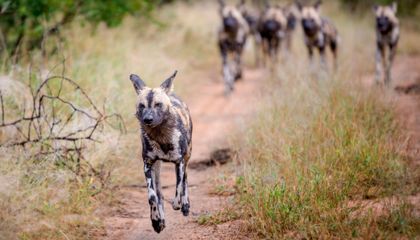
Three male African wild dogs set off on a record-breaking 2,500-mile trek across Zambia, traveling more than any other wild mammal on the continent. This nine-month journey, detailed in a study published in Ecology on September 13, highlights both the challenges these animals face and their remarkable resilience. Conservation scientist Sarah Durant, who was not part of the study, praised the findings as "fantastic" and emphasized their contribution to understanding African wild dogs and the connectivity of landscapes.
With only around 6,600 adults and yearlings remaining in the wild, African wild dogs are an endangered species. They form social packs, but only the dominant pair breeds, leading other members to disperse in search of mates. Scientists equipped radio collars on wild dogs from 19 groups, enabling detailed tracking of their movements.
The central trio, the Mayukuyuku males, began their journey from Zambia's Kafue National Park in mid-summer 2025, heading eastward into unprotected areas. Two weeks before them, their four sisters embarked on a separate trek in a nearby game management area. The females were later reduced to three, while the males traveled nearly 750 miles.
The siblings briefly reunited in an unprotected area after the females' journey, but they soon separated again. The females' journey ended abruptly when one of them was found repeatedly returning to the same spot, indicating a possible fatal encounter with a hunting snare. Meanwhile, the male dogs continued their journey and reached a game management area in eastern Zambia's Luangwa Valley by April 2026, having covered over 2,560 miles.
This remarkable journey suggests that African wild dog populations may be more interconnected than previously thought, underscoring the importance of connected landscapes for their conservation. Experts argue that governments must protect wildlife corridors connecting vital ecosystems, emphasizing that borders should not dictate conservation efforts.
Written by urgent.news from Smithsonian's reporting — not their text. Machine-written — may contain errors; check the original before relying on it.