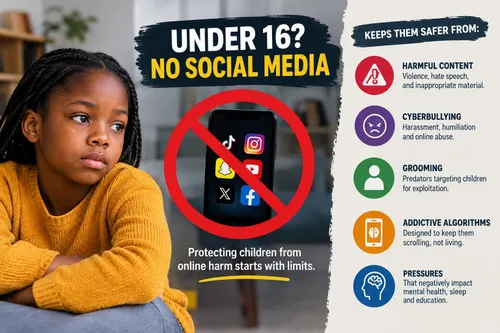
South Africa has no plan to ban under-16s from social media
South Africa has no current law or formal proposal to bar children under 16 from social media, while government and Parliament debate stronger protections against online harms.
South Africa's air pollution levels are connected to an increased risk of serious bacterial infections, according to recently published research in Nature Microbiology. The study analyzed data from the nation's GERMS-SA surveillance program, which recorded 59,017 invasive pneumococcal disease (IPD) cases across 531 hospitals from 2005 to 2023.
The research found that exposure to fine particulate matter (PM2.5) levels of 50 micrograms per cubic metre led to a 3.4% higher cumulative risk of IPD over the following eight weeks, with the risk differing based on age and bacterial strain.
IPD is caused by the Streptococcus pneumoniae bacteria invading sterile body parts, potentially leading to bloodstream infections, meningitis, or pneumonia. The study examined genetic information from 4,350 bacterial samples, revealing that certain serotypes (14, 19A, and 8) were more susceptible to pollution exposure.
Older individuals (65 and older) faced a 16% higher cumulative risk at the same pollution level, compared to the overall population increase. The researchers noted that bacterial subtypes reacted differently to pollution exposure, and the timing of increased disease risk varied by serotype. For example, serotypes 4, 8, 23F, and 19F showed an immediate increase in risk, while others exhibited a more delayed response.
The study accounted for temperature, humidity, and population density, finding that high temperatures and lower humidity also increased disease risk. In a theoretical scenario where pollution levels had been lower in Gauteng in 2019, researchers estimated that approximately 16 out of 718 observed IPD cases might have been prevented if weekly levels remained at or below 40 micrograms per cubic metre, and around 25 if the threshold was 15 micrograms per cubic metre.
Experts stressed that air pollution data has limitations, and individual measures to reduce exposure, such as adjusting outdoor activities, are insufficient. They recommended checking the South African Air Quality Information System (SAAQIS) for updates on air quality in one's area.
Written by urgent.news from IOL's reporting — not their text. Machine-written — may contain errors; check the original before relying on it.
This story
This is one outlet's version. Read the fullest account.