Proposed Chinese, Arabic languages: We cannot run our education on contradictions – Dr Kwabena Tandoh
Spokesperson for the New Patriotic Party’s (NPP) Education Committee and former Deputy Director-General of the Ghana Education Service, Dr Kwabena Tandoh, has criticised what he describes as contradictions in the government’s handling of education policy, saying the sector requires stability and predictability.
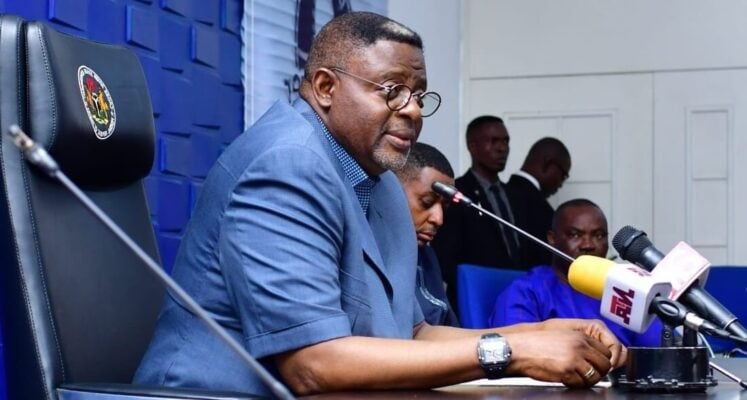
Dr Kwabena Tandoh, spokesperson for the New Patriotic Party’s (NPP) Education Committee and a former Deputy Director-General of the Ghana Education Service, has lashed out at what he perceives as contradictory approaches to education policy in Ghana. In an interview on JoyNews’ The Pulse, Tandoh emphasized the need for education to operate on a foundation of stability and predictability.
He criticized the government’s proposed introduction of Chinese and Arabic language instruction as an example of policy inconsistency that undermines the sector’s ability to function effectively. Tandoh argued that education policy cannot be developed and communicated in a way that results in conflicting directives from various levels of government.
“No nation can run its most critical sector on contradictions. Education requires stability, it requires predictability, and it requires structural rigor,” he stated. This statement comes in the wake of President John Dramani Mahama’s recent claim that there was no previous policy on the introduction of Chinese language instruction, despite earlier activities by relevant government bodies.
Tandoh pointed to the involvement of the Ministry of Education, the Ghana Education Service, and the National Council for Curriculum and Assessment (NaCCA) in the proposed Chinese curriculum. He alleged that the curriculum was handed over to Education Minister Haruna Iddrisu in July and that Iddrisu described it as his “single most important achievement” in curriculum review.
Tandoh was questioned about the evidence supporting this claim, but he pointed to a September 13 report in the Daily Graphic that stated NaCCA officials had participated in teacher training on the Chinese curriculum. He noted that NaCCA officials, including the Deputy Director and Head of Curriculum, had attended training sessions at the Confucius Institute in Cape Coast.
However, sources at NaCCA denied that the agency had organized any training to prepare teachers for teaching Chinese and Arabic. Tandoh challenged this claim, pointing to the reported participation of NaCCA officials in the training. He questioned how NaCCA could deny involvement when its Deputy Director and Head of Curriculum were present at the training sessions.
Tandoh emphasized that this disagreement reflects a deeper issue in education administration. He argued that when policy positions change or appear contradictory at the highest levels, the impact extends beyond political credibility to affect teachers, parents, and students who rely on the education system. “We have education administrators, we have teachers, we have parents, and ultimately we have students who pay the ultimate price,” he concluded.
Tandoh stressed that education policy must be guided by clear processes, institutional coordination, and consistency to prevent uncertainty among teachers, parents, and students.
Written by urgent.news from MyJoyOnline Ghana's reporting — not their text. Machine-written — may contain errors; check the original before relying on it.
This story
This is one outlet's version. Read the fullest account.
- NPP demands apology or sacking of Education Minister over Arabic, Chinese language controversy ghanaiantimes.com.gh
- Education Minister assures TUTAG of Book and Research Allowance payment by end of September adomonline.com
- Only Prime Minister’s Office can grant sanction to prosecute IAS officers, Centre tells Madras High Court thehindu.com
- There is policy divergence at Education Ministry – NPP Education Committee spokesperson myjoyonline.com
- You will be paid, don't go on strike - Education Minister pleads with TUSAG, GAUA 3news.com