LEARNING CURVEBALL: Universities confront growing gaps between school and first-year demands
Passing matric remains every school learner’s proudest milestone. Yet across South African universities, academics warn that the leap from secondary school to tertiary study exposes gaps few students see coming, and that closing them is a shared responsibility, not a student failing.
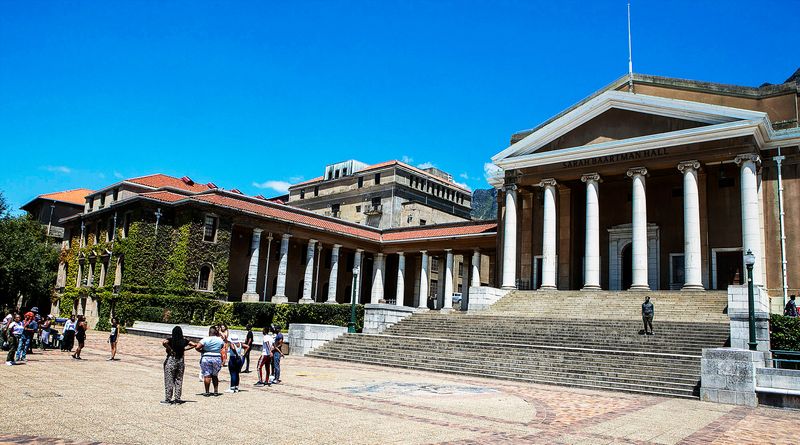
South African universities are grappling with significant gaps between the demands of tertiary education and students' preparedness, according to academics. Collecting a bachelor's pass is considered an achievement, but stepping onto campus can be a sobering reality check for many students. Experts across the country describe these gaps as not due to students lacking ability, but because higher education requires a different skill set.
At Stellenbosch University, Professor Wikus van Niekerk, Dean of the Faculty of Engineering, notes that the workload and pace are a big step up from school, particularly in engineering. A strong background in mathematics and science is crucial for success. The university reports that close to 20% of first-year engineering students drop out, despite support measures.
At the University of Cape Town, Professor Michelle Kuttel sees the issue from a different perspective as head of the Computer Science programme. She emphasizes the importance of strong mathematics skills, noting that it's more important for schools to teach proper mathematics than offer IT as a subject. The University of Johannesburg's Simamkele Qoyo shares Qoyo's experience of struggling with time management and procrastination due to the workload.
Not all experts view this as a deficit in students. Dr Shoba Rathilal, Acting Director of the Centre for Excellence in Learning and Teaching at DUT, cautions against describing these as student deficits. She emphasizes that students arrive with significant strengths and diverse forms of knowledge, but may not have the same educational opportunities or prior learning experiences.
Academics point to how students have learned to think as another issue. Professor Daniel Wilke of Wits School of Mechanical, Industrial and Aeronautical Engineering observes a shift in first-year habits, with students relying more on memorization rather than understanding to develop thinking. Schools should focus on students developing an understanding of concepts, principles, and ideas, rather than memory-driven education.
Simamkele Qoyo also highlights the impact of different study methods. He explains that the study methods he used in high school did not work in university, suggesting that schools should provide alternative study techniques. The extended programme at Cape Peninsula University of Technology has helped Qoyo work well despite a lack of background in drawing.
Universities are taking steps to address these gaps. Stellenbosch has a full extended curriculum bridging year for under-prepared engineering students, supported by summer schools, study-skills lectures, educational psychologists, and AI tutor-bots. Wits University has a Gateway to Success programme to help first-year students orientate themselves and access support services. DUT frames its support as developmental rather than remedial, with tutorials, mentoring, academic advising, and diagnostic literacy assessments.
Written by urgent.news from Daily Maverick's reporting — not their text. Machine-written — may contain errors; check the original before relying on it.