How chimps teach their kids tool tricks
Adults first demonstrate tool use, then hand over the implements to their infants, who copy the behavior.
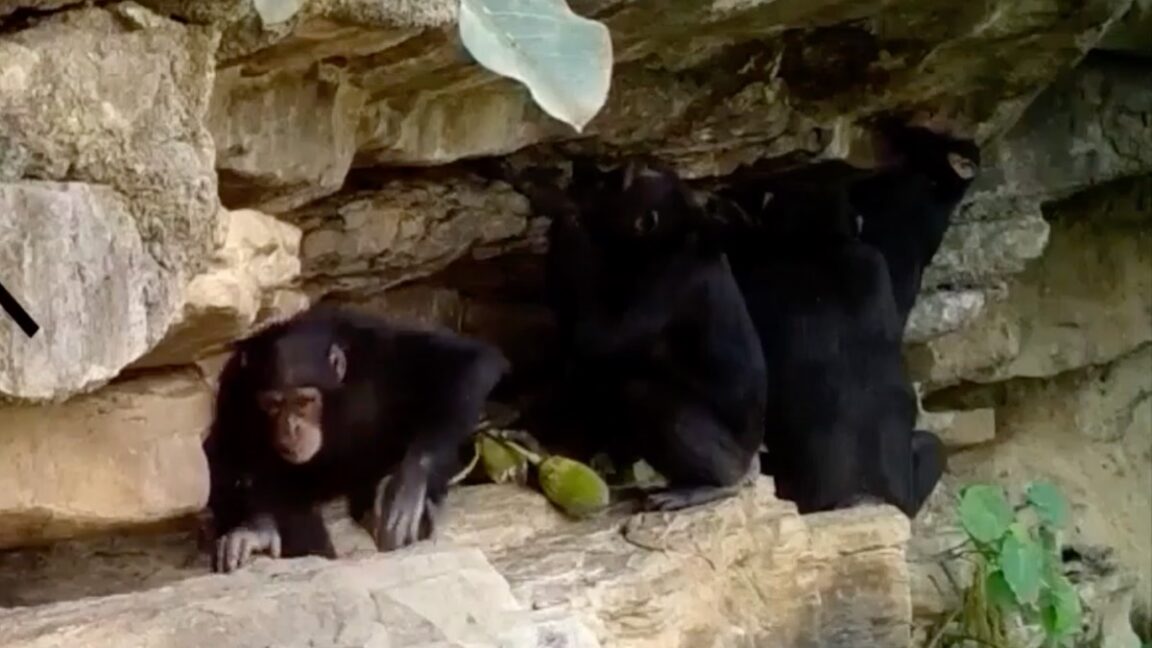
Chimpanzees employ rudimentary tools during foraging expeditions for sustenance. A recent study published in the journal Frontiers in Psychology reveals that these learned behaviors are transmitted from adults to their offspring via social learning. Adult chimpanzees deliberately demonstrate the desired actions, subsequently offering their tools to the younger ones, allowing them to imitate the same movements.
The exchange of food and tools from experienced individuals, termed as food or tool transfer, might facilitate chimpanzees in mastering technology to procure food items that are otherwise challenging to access. Andreu Sánchez-Megías, a graduate student at the University of Barcelona and the Jane Goodall Institute Spain in Senegal, and the paper's co-author, elucidates, "Tool transfers thus appear to be a form of teaching, alongside observation and supervised practice."
It appears that mothers assume the primary role as models and instructors in this respect for their young chimpanzees. As previously reported, tool usage was once considered a hallmark of humanity, although Charles Darwin noted chimpanzees employing stones to crush nuts in 1871. In 1960, the late primatologist Jane Goodall witnessed a chimp named David Greybeard bending a twig, removing its leaves, and utilizing it to extract termites from a nest and consume them.
When informed of this behavior, Goodall's mentor, Louis Leakey, famously remarked, "Now we must redefine 'tool,' redefine 'man,' or accept chimpanzees as humans." Since then, chimpanzees have exhibited the creation of termite sponges using leaves, the formation of algae-collecting sticks, and the sharpening of rudimentary spears for hunting. The full article is available for further reading.
Written by urgent.news from Ars Technica's reporting — not their text. Machine-written — may contain errors; check the original before relying on it.
Also reported by 1 other outlet
- How chimps teach their kids tool tricks arstechnica.com