Why I am grateful for Asean’s endless meetings
I remember 2011 well. Indonesia was chairing the Association of Southeast Asian Nations, and I was serving as deputy foreign minister for Asean cooperation. I learned a great deal, although if I had to summarise the experience in one word, I would say: meetings. Asean members meet. They talk. They disagree. They issue statements. Then, quite remarkably, they meet again. We meet in conference…
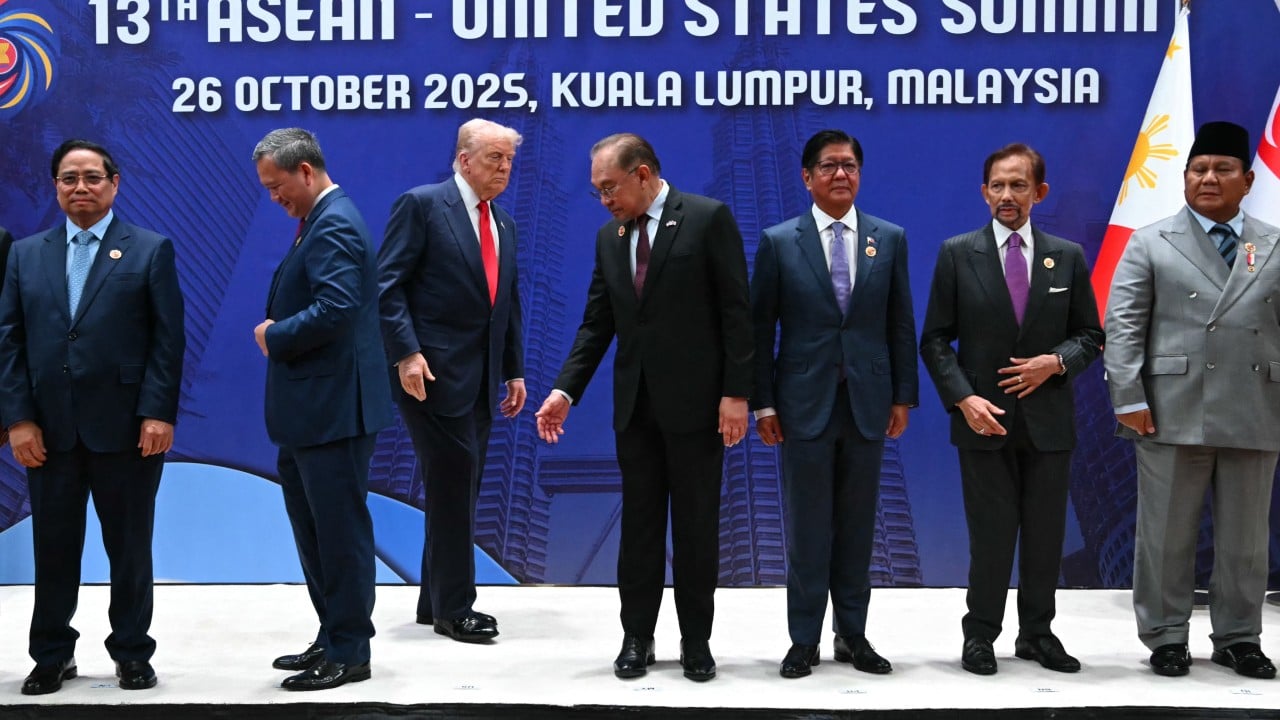
My gratitude extends to Asean's continuous meetings. Indonesia previously chaired the Association of Southeast Asian Nations, and I served as Indonesia's deputy foreign minister for Asean cooperation. The experience taught me a great deal, primarily that Asean members meet, discuss, disagree, and issue statements, only to meet again.
These meetings occur in various settings, such as conference rooms, coffee shops, and restaurants. We communicate via telephone and online platforms, and when issues become serious, we often indulge in durian.
To observers, Asean consensus may seem tedious, lacking immediate breakthroughs or swift resolutions. However, as my diplomatic career progresses, I come to appreciate the value of repeatedly meeting, even after disagreements. Agreement is crucial, but it's not the sole indicator of successful diplomacy. Sometimes, the success lies in maintaining the conversation even after disagreements.
In Beijing, I encounter a similar scenario at Chinese dinner tables, where a round table denotes equality without removing order. Each participant has a designated place and is expected to contribute. These discussions foster trust gradually through conversation, shared meals, and the willingness to understand one another. This practice may offer a valuable lesson for a world rapidly transitioning towards multipolarity.
While multipolarity signals a need for immediate adjustment in global power distribution, it doesn't specify how power will be exercised or the nature of the emerging order.
China's vision of an equal and orderly multipolar world acknowledges this challenge. Its Global Governance Initiative emphasizes sovereign equality as a cornerstone. However, turning sovereign equality into actionable practice and creating order without replicating hierarchy remains a challenge. Perhaps Asean can provide part of the solution.
International order necessitates power to maintain it, yet it also requires limits on how power is used. Institutions help establish these limits, and countries accept restraints because predictability benefits everyone – they know broadly what others may do, what they are unlikely to do, and how disagreements will be managed.
Yet, the challenge arises when power shifts. Established powers might worry that restraint provides rivals with opportunities to advance. Rising powers may question rules they had limited influence in shaping. When nations no longer believe restraint will be reciprocated, rules give way to transactions. Every concession implies a price, and every act of self-restraint may appear as a favor that must be repaid.
Cooperation doesn't necessitate agreement on everything; it requires preserving the means to work through disagreements, even when agreement is unattainable.
This complexity is amplified by the diverse forms of power today. One nation might possess greater military strength, while another boasts significant manufacturing capacity, financial influence, advanced technology, or essential mineral resources. Power often coexists with dependence in other areas. Countries won't always share identical interests; however, they can develop a shared understanding of how their different forms of power should be exercised.
Indonesia, with its largest population and economy, accepts Asean's consensus, which restrains its dominance. This restraint benefits smaller members, assuring them that Indonesia won't impose decisions upon them, and Indonesia trusts smaller members won't combine to outvote it. Each party compromises, accepting limits in exchange for reassurance.
This situation is particularly complicated because power varies across different dimensions. A country may have superior military strength, manufacturing capacity, financial influence, advanced technology, or essential mineral resources, while simultaneously being dependent in other areas. Countries won't always share similar interests, but they can cultivate a mutual understanding of how their distinct types of power should be utilized.
Indonesia, being Asean's largest in terms of population and economy, accepts consensus, which limits its influence. This restraint benefits smaller members by reassuring them that Indonesia cannot unilaterally dictate decisions. It also assures Indonesia that smaller members won't collectively outvote it, as each party compromises, accepting limitations for assurances.
While Asean's experience has limitations, its approach to disagreement and dialogue offers a modest lesson for the evolving global order. Cooperation doesn't require countries to agree on everything; rather, it necessitates preserving means to address disagreements that cannot be resolved through consensus. The habit of dialogue sustains this process, ensuring equality by providing every country a voice, promoting humility by encouraging countries to listen and recognize their limitations, and fostering predictability through repeated interactions.
Although habitual dialogue cannot eliminate power disparities or resolve all disputes, it plays a crucial role in managing power shifts and preventing crises. This is why I view the recent Indonesia-China comprehensive strategic dialogue, held in Jakarta, with optimism. The importance of this dialogue extends beyond the topics discussed; the habit that facilitated the discussion is invaluable.
The momentum to protect this progress is significant, as bilateral trade between Indonesia and China has tripled since 2015, and Chinese investments have surged.
Written by urgent.news from Reuters Business via SCMP's reporting — not their text. Machine-written — may contain errors; check the original before relying on it.