Senate panel slams low conviction rate in child abuse cases, summons officials
ISLAMABAD: Alarmed by low conviction rates, a lack of forensic support and schools covering up abuses, the Senate Functional Committee on Human Rights summoned officials and ordered strict action over delays in the delivery of justice and the non-reporting of child abuse cases. A meeting was held at Parliament House on Tuesday under the chairmanship of Senator Samina Mumtaz Zehri. Khyber…
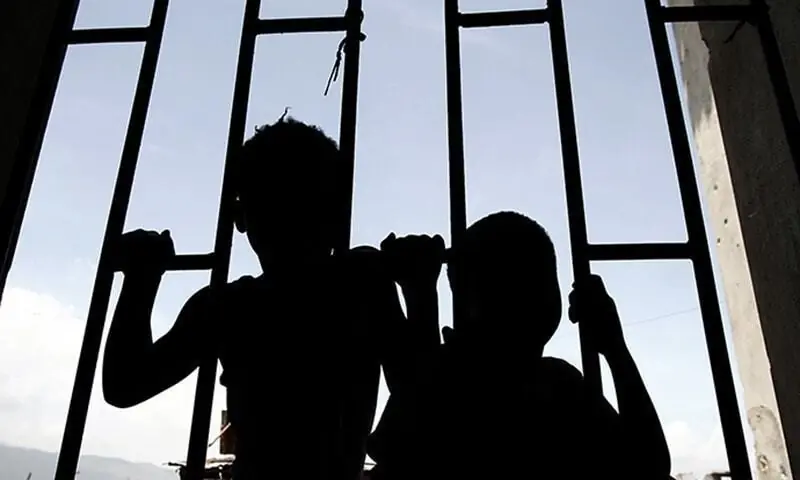
In a meeting held at Parliament House, the Senate Functional Committee on Human Rights expressed deep concern over the low conviction rates for child abuse cases in Pakistan, particularly in Khyber Pakhtunkhwa (KP). The committee, chaired by Senator Samina Mumtaz Zehri, summoned officials to present an operational report on actions taken against child abuse.
KP officials informed the committee that out of 625 registered cases, 576 had been processed, with over 300 sent for trial, resulting in a meager conviction rate of around 6 per cent. The committee was alarmed by the absence of a localised Forensic Science Laboratory in KP, which causes evidence degradation during transportation to other provinces.
During the meeting, it was revealed that, under the Child Protection Act 2010, multi-stakeholder mechanisms were addressing abuse in various settings, such as educational institutions, madrasas, child labour, and street begging. However, there has been a concerning rise in peer-to-peer abuse linked to minors accessing explicit content at home, with 855 such cases reported in KP in 2025 and more than 1,700 nationwide.
The committee expressed strong displeasure over the Westminster School, Islamabad case, where the school administration failed to report the incident. They recommended the strict closure of any school that does not enforce child protection policies to deter such behaviour. Senator Hafiz Karim remarked that while crimes have defined penalties, implementation remains severely lacking.
The committee directed Punjab officials to re-examine relevant statutory provisions and cancel bail grants to accused individuals. They also asked the Punjab Inspector General of Police to maintain close coordination with the prosecution office. Senator Aimal Wali questioned how more than 12,000 cases remained unresolved despite the presence of specialized forensic laboratories in Punjab, pointing to procedural loopholes and flawed investigations.
In response, the committee resolved to undertake an official oversight visit to Balochistan and directed the secretary of the Ministry of Human Rights to instruct provincial governments to prepare representatives for parliamentary meetings, warning against incomplete documentation. According to data from child rights organization Sahil, a total of 1,914 child abuse cases were reported across Pakistan during the first six months of 2026.
Written by urgent.news from Dawn - Pakistan's reporting — not their text. Machine-written — may contain errors; check the original before relying on it.