Sam George calls for African approach to AI development and governance
Minister for Communication, Digital Technology and Innovation, Samuel Nartey George, has called for a distinctly African approach to the development and deployment of Artificial Intelligence (AI), insisting that the continent’s values, data, infrastructure and human capacity must be adequately represented in the global AI ecosystem. Speaking at the ongoing UNESCO Global Forum on the Ethics […]
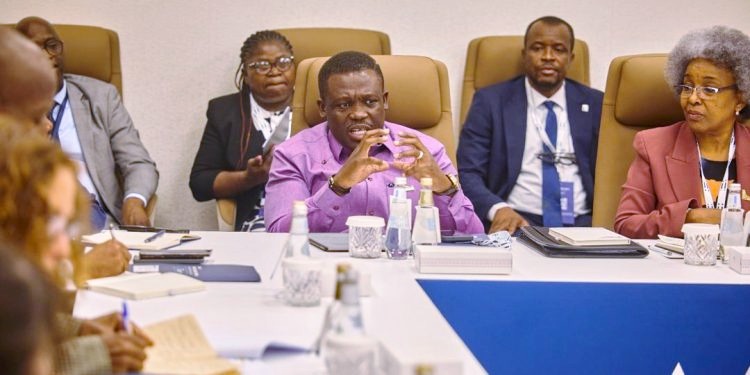
Samuel Nartey George, Ghana's Minister for Communication, Digital Technology and Innovation, has advocated for an African-centric approach to Artificial Intelligence (AI) development and governance. Addressing the UNESCO Global Forum on the Ethics of Artificial Intelligence in Riyadh, Saudi Arabia, George emphasized the need for Africa to assert its values, data, infrastructure, and human capacity within the global AI ecosystem.
He highlighted that Ghana's experience with the UNESCO Readiness Assessment Methodology (RAM) had enabled the country to identify its strengths and weaknesses as it executes its 10-year National AI Strategy.
George argued that AI ethics discussions should extend beyond technical aspects to encompass the values embedded within AI systems. He questioned who influences the ethical standards of AI models and stressed that these standards are ultimately shaped by the values of the societies that create them. Concerns were raised about AI systems potentially failing to accurately recognize African cultural practices due to insufficient training on African datasets.
An example was provided where an AI system might classify a traditional African cultural rite as nudity, a classification that could arise from inadequate understanding of the cultural context.
The minister urged UNESCO to champion the inclusion of African perspectives and values in global AI ethics standards. He also compared AI governance to social media regulation, questioning whether global community standards established by technology companies adequately account for African cultural values, suggesting that Africa must have a stronger voice in shaping the standards that will govern emerging technologies.
In Ghana, George disclosed that the government is investing $250 million over the next two years in AI computing infrastructure, with the aim of creating a regional hub that provides high-performance computing resources to neighboring countries, universities, researchers, and technology start-ups. He cautioned against individual African countries building their own expensive infrastructures, advocating instead for regional hubs to alleviate pressure on energy systems and facilitate affordable, sovereign computing resources for the continent.
George also highlighted Ghana's investments in human capital development, emphasizing the government's commitment to training one million Ghanaians in digital skills through the One Million Coders programme. This initiative extends beyond coding to include areas such as AI, data security, and cybersecurity. The government is collaborating with the Ministry of Education to integrate AI-related courses into university programs, ensuring students in 20 major universities complete designated AI courses as prerequisites for graduation.
Additionally, Ghana has trained all Chief Directors in AI skills, with these training programs now being extended to directors and assistant directors across the civil service. George's vision extends beyond Ghana, advocating for a continental consensus on AI governance, infrastructure, and Africa's engagement with major global technology companies, as Ghana's upcoming leadership roles within the African Union present an opportunity to advance a collective African position on AI and digital technologies.
Written by urgent.news from Adom Online's reporting — not their text. Machine-written — may contain errors; check the original before relying on it.