Oil price could surge to $US150 as war engulfs major Middle East supply routes
The war front expanding in the US-Iran conflict has extended beyond the Strait of Hormuz into the Red Sea. With no sign of de-escalation, there is a higher risk of war pushing oil prices towards $US150 per barrel, even higher than the level it reached during the global financial crisis in 2008.
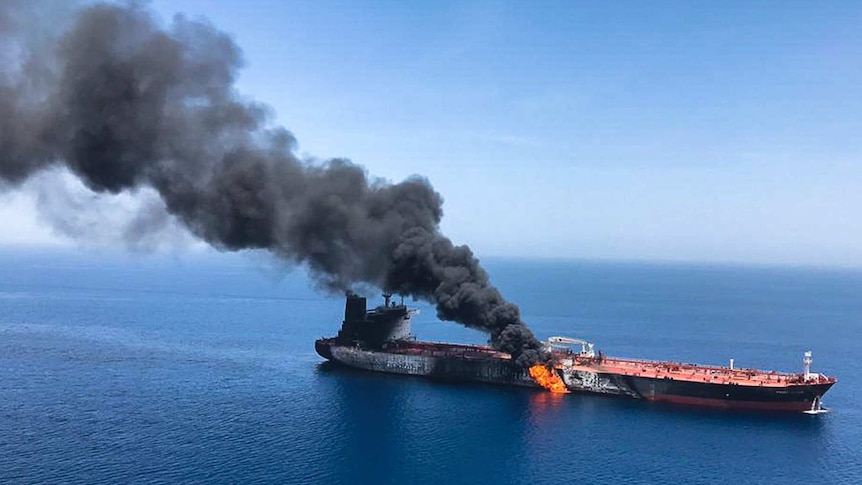
The Strait of Hormuz, Red Sea and Saudi Arabia are now battlegrounds as war intensifies. Yemen's Iran-aligned Houthis launched dozens of missiles and drones at a Saudi military base overnight, following an attack that crippled the East-West pipeline on Thursday. This pipeline was crucial in circumventing the blockaded Strait of Hormuz, which provides roughly 20% of the world's oil supply.
The Houthis have rapidly advanced, capturing territory including Perim Island at the Red Sea's mouth, pushing oil prices above $US100 per barrel. Meanwhile, a British maritime security agency reported another vessel struck by a projectile in the strait, resulting in a fire. This conflict complicates efforts to minimize global oil supply disruption for US President Donald Trump and other authorities.
Saudi Arabia, leading a coalition against the Houthis since 2015, had maintained a ceasefire, but it broke down in July as Houthi strikes targeted Abha Airport and a naval blockade against Saudi-linked ships began. Global benchmark Brent crude and US West Texas Intermediate (WTI) crude both surpassed $US107 and $US103 per barrel, respectively.
The Australian benchmark, Tapis, is trading at $US110 per barrel, a 46% increase since July. The impact on fuel prices is imminent, with NRMA reporting an average unleaded petrol price of $2.19 per litre and diesel at $2.68 per litre. Oil analyst Vivek Dhar warns that the closure of the East-West pipeline means 65-70% of prewar flows are now required, putting the world weeks away from critically low oil supply levels.
If inventory depletion occurs, Brent oil futures may need to rise to around $US150 per barrel, higher than during the global financial crisis in 2008. This could lead to uncontrolled demand destruction in emerging Asian economies, making it difficult for Trump to avoid a scenario resembling defeat or capitulation in the US-Iran war.
Written by urgent.news from ABC News AU's reporting — not their text. Machine-written — may contain errors; check the original before relying on it.
This story
This is one outlet's version. Read the fullest account.
- Kanaf Centre leads UAE, Middle East with child forensic technology gulfnews.com
- The Pentagon admits that Iranian strikes damaged and destroyed hundreds of buildings at U.S. bases across the Middle East fortune.com
- Hormuz traffic dwindles after Middle East attacks intensify freemalaysiatoday.com
- Container shipping costs to Middle East extend gains in August amid conflict koreatimes.co.kr
- Hormuz traffic drops after Middle East attacks intensify middleeasteye.net