Marine heatwave likely caused sharp decline in Hawaiian humpback whales, study finds
Roughly a decade ago, a marine heatwave in the northeastern Pacific Ocean caused a dramatic decline in populations of forage fish and krill, the base of the marine food chain. A recent study found that the Hawaiian humpback whale population, which feeds on krill and small fish, also declined sharply during the 2013-16 heatwave and […]
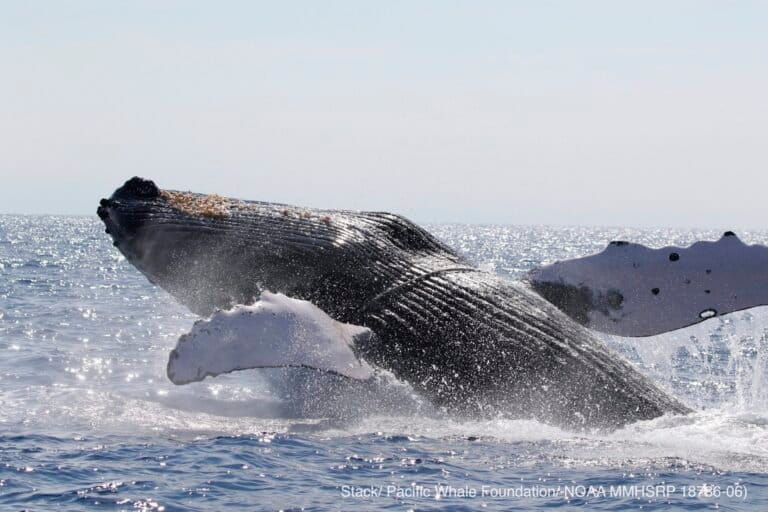
A marine heatwave in the northeastern Pacific Ocean a decade ago triggered a significant decline in the population of Hawaiian humpback whales, according to a recent study. The decline occurred during the 2013-16 heatwave, which coincided with a sharp drop in the availability of their primary food source, krill and small fish. Humpback whales in the North Pacific breed and give birth in Hawaii during the winter months, after migrating from cold Alaskan and Canadian waters during the summer.
Researchers analyzed over 27,000 photos of whale sightings between 2002 and 2023 to study the impact of the marine heatwave. Based on the analysis of photos uploaded to the Happywhale citizen science platform, the Hawaiian humpback whale population declined by 37% between the 2014-15 breeding season and the 2021-22 season. Adult survival rates also declined sharply, falling from around 99% to just 68% during the heatwave. This precipitous drop in adult survival is unprecedented for long-lived mammals.
Written by urgent.news from Mongabay's reporting — not their text. Machine-written — may contain errors; check the original before relying on it.