If Venus Had An Ancient Moon, It Was Doomed
Earth has a big beautiful Moon, while Venus, its 'sister planet', doesn't. Why is that? Did it ever have one? If it did, new research shows it was never going to last very long.
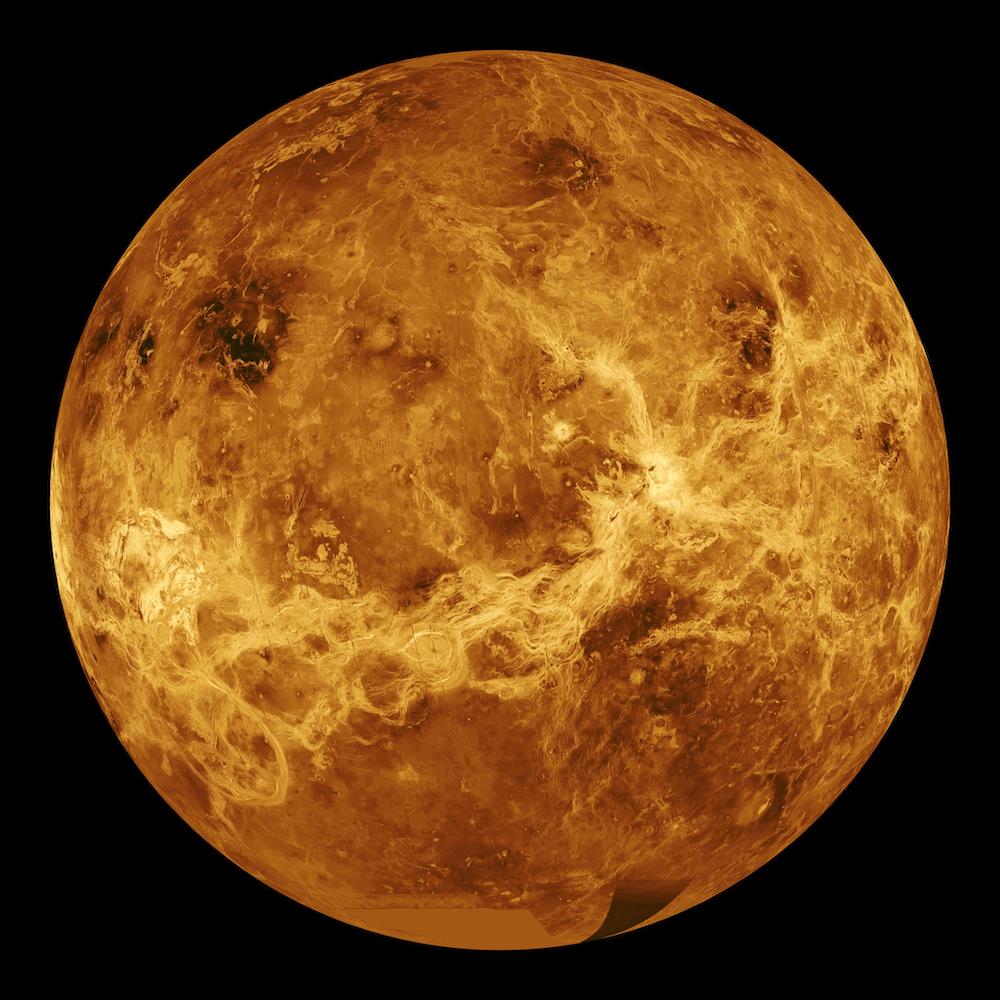
The absence of a natural satellite is a distinctive feature of Venus, setting it apart from Earth, its "sister planet." While Earth boasts a moon, Venus lacks one. Researchers at the University of California, Riverside, led by planetary astrophysics professor Stephen R. Kane, have delved into the possibility of Venus once having a moon that met its demise.
They explored the tidal evolution of a hypothetical Venus-moon system, examining how the moon's orbit and Venus's spin interacted under tidal forces. Kane explained that Venus's rapid rotation and dense atmosphere make it inhospitable compared to other Solar System bodies, and this likely played a role in any potential moon's demise.
The simulations conducted by Kane and his team indicated that any hypothetical Venusian moon would eventually be pulled into the planet due to the planet's gravity and Venus's slower rotation. The more massive the moon, the sooner its impact. Unfortunately, finding evidence of such a moon today is highly challenging, given Venus's heavily cratered surface, which suggests it was resurfaced by a major volcanic event hundreds of millions of years ago.
However, the possibility of sub-surface seismic evidence left by an ancient moon collision remains a tantalizing prospect for future research.
Written by urgent.news from Universe Today's reporting — not their text. Machine-written — may contain errors; check the original before relying on it.