Golf VX's new simulator is next level — so I compared it side-by-side with a real course
I tried Golf VX's new Quantum tech and played the same course with it and in real life. Can tech compete with real?
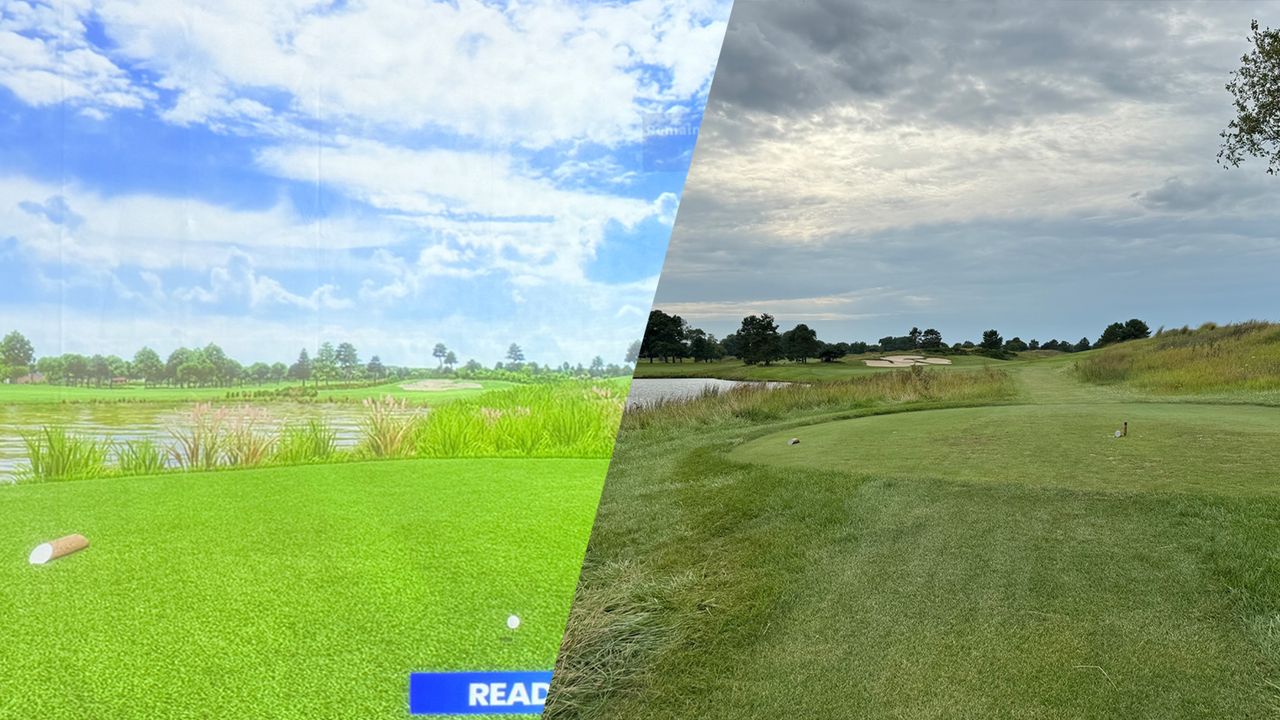
The golf simulator landscape is constantly evolving. When Golf VX unveiled its new Quantum technology, it seemed like the pinnacle of virtual golf experiences. To assess how well Quantum holds up against the real deal, I visited the company's flagship location in Arlington Heights, Illinois – just outside of Chicago – to play a popular semi-private course called The Glen Club. Next, we ventured to the actual course to play and compare the differences between the simulator experience and the real thing.
Upon arriving at Golf VX's flagship location, I was eager to get hands-on with their latest simulator technology. The most notable improvement over their previous T2 sim is the 15-axis swing plate, which allows the ground to shift, creating the most realistic lies I've ever experienced in a simulator. In actual golf, players rarely encounter completely flat lies, so practicing with balls positioned above or below the feet is crucial for improving the game.
Another significant enhancement is the Q-Mat, a ceiling-mounted projector that displays data about your swing path, distance, and other key metrics directly on the floor. By keeping your focus on your swing without needing to glance around to check your swing path, the Q-Mat can help correct common issues like a slice or hook. Dave, who described himself as a slicer, expressed particular interest in this feature.
The most impressive aspect of Golf VX's technology, compared to other commercial and home launch monitors, is the near-instantaneous projection of your ball flying on the screen. There's a mere 15ms delay between striking the ball and seeing it take flight on the projector. This speed bridges the gap between hitting the ball into a screen and playing on an actual course.
While it's impossible to say that the Golf VX-rendered course is indistinguishable from the real world, the company has done an excellent job incorporating all the essential details to provide an immersive experience. The simulator includes all 380 courses available in their software, with a focus on The Glen Club for this comparison.
Notable features include water hazards, tree lines, and bunker locations that match between the real and simulated versions. After stepping back and comparing both versions, I could still recall the look and feel of the simulated course during my time on the real tee box.
To further evaluate the realism, I recorded a first-person version of hole 12 in real life and in the simulator using Meta glasses. While my scores differed significantly between the two (a par in the simulator versus a six in real life), the paths to complete the hole were remarkably similar. By reviewing both versions, it became clear that the courses in Golf VX are rendered with remarkable attention to detail, making it one of the best golf simulators I've ever used.
Golf VX's Quantum simulators are currently available, though their high price point of around $50,000 to $100,000 for a full room buildout limits their accessibility for most home users. However, as the technology advances, Golf VX plans to expand its footprint, making Quantum available at more locations in the future.
Written by urgent.news from Tom's Guide's reporting — not their text. Machine-written — may contain errors; check the original before relying on it.