Trump Says He Backs a United Ireland, Stoking a Divisive Debate
The President called uniting Northern Ireland and the Republic of Ireland “one of the ‘naturals’ of all time.”
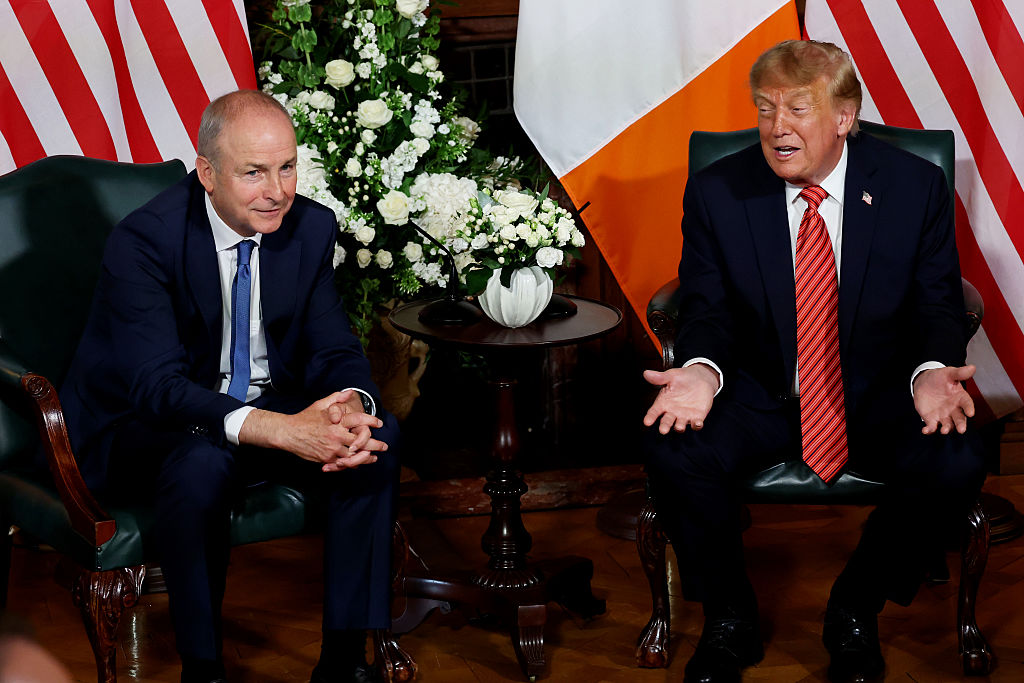
During his visit to Ireland, U.S. President Donald Trump expressed his support for a united Ireland, stating he would "love to see" it happen. This stance, which diverges from the long-standing U.S. policy of neutrality on Northern Ireland's nationhood, has sparked a divisive debate.
Trump's remarks came during a bilateral meeting with Taoiseach Micheál Martin at Farmleigh House in Dublin. He doubled down on his support for a united Ireland during a visit to a golf tournament in the Irish village of Doonbeg. The U.K., however, has not taken kindly to Trump's comments, with the British government urging caution.
The U.S. President's stance on a united Ireland is not new. In March, Trump joked about a "merger" of the two regions, though he emphasized that the comment was clearly in jest. The controversy surrounding Trump's remarks has been fueled by the differing perspectives of the Irish and British governments.
Martin, the Irish Taoiseach, downplayed the impact of Trump's comments, stating that they shouldn't be surprising given Trump's unique perspective on issues. However, some responses to Trump's remarks have been seen as an overreaction, particularly from the British contingent.
The issue of a united Ireland stems from the island of Ireland's division in 1921, following the Irish War of Independence. While a northern region of six counties remained part of the U.K., the rest of the island became the Irish Free State, which became a sovereign republic in 1949. For decades, tensions between largely Catholic Irish nationalists and mainly Protestant unionists have characterized the region.
The 1998 Good Friday Agreement ended the violence known as the Troubles, recognizing the right of those in Northern Ireland to identify as British, Irish, or both. However, a referendum on the issue has not yet been held, with Northern Ireland's status based on democratic consent.
Written by urgent.news from Time's reporting — not their text. Machine-written — may contain errors; check the original before relying on it.