Trump bats for a ‘unified’ Ireland: What led to its partition?
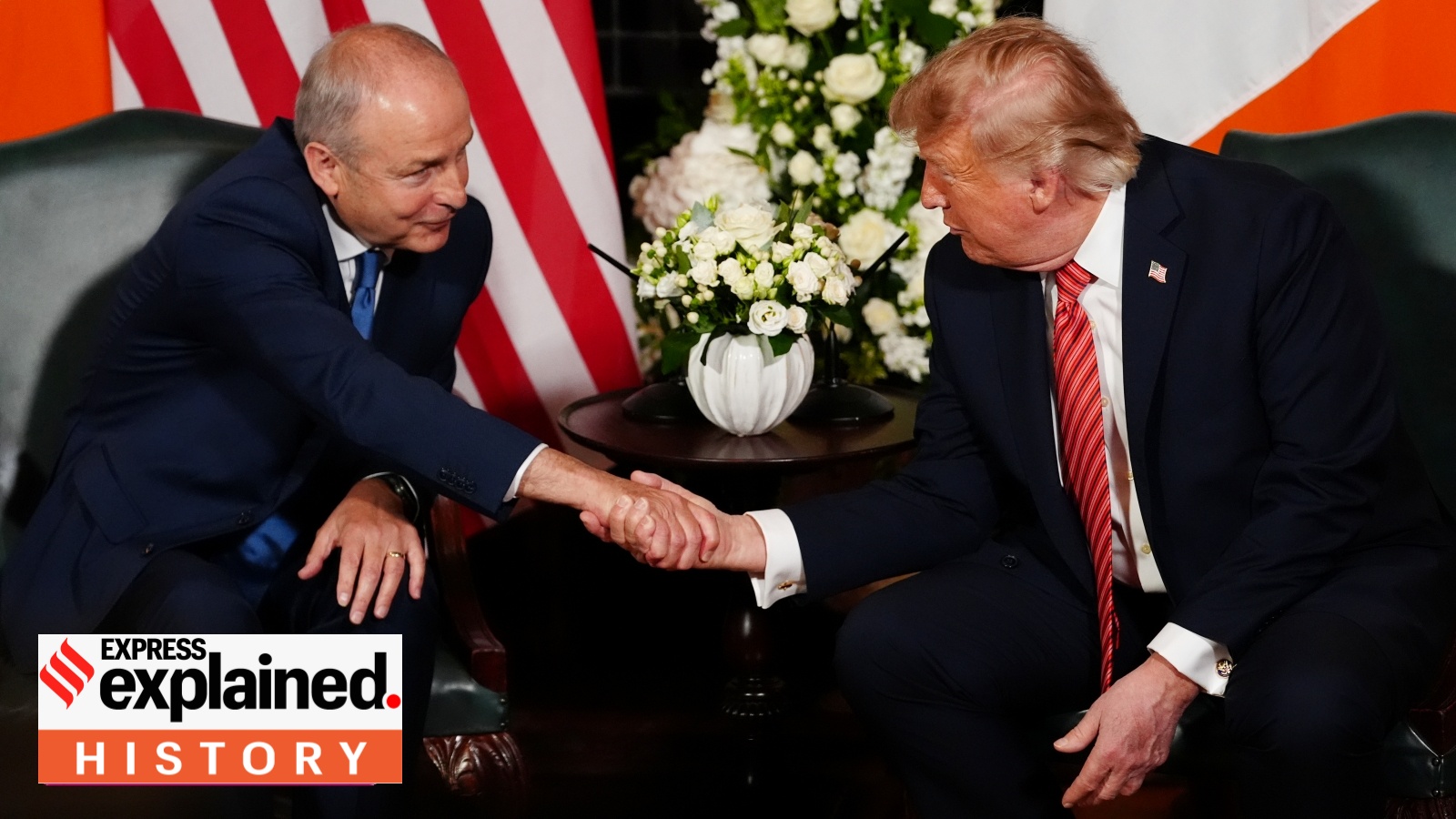
U.S. President Donald Trump expressed his support for a "unified" Ireland during a visit to the nation, stating that he believed such a unification would eventually occur. The president was referring to the potential reunification of the Republic of Ireland and Northern Ireland, the latter of which is part of the United Kingdom. His comments triggered a range of reactions from the UK government and various political parties within both Ireland and Northern Ireland.
The partition of Ireland, which began centuries ago under British rule, has been a complex and ongoing issue. Irish resistance to British rule emerged from the 13th century onwards, primarily due to the predominance of the Catholic majority in Ireland, as opposed to the Protestant population in Britain and Northern Ireland. This resistance took both peaceful and violent forms, driven by the desire for a separate Irish state, also known as "Home Rule."
Irish nationalism, primarily composed of the Catholic population, sought Home Rule, which eventually gained momentum in the late 19th century. However, a minority of Irish Protestants, known as Unionists, staunchly opposed Home Rule, fearing being a Protestant minority under a Catholic majority. The British government attempted to address this issue with the Government of Ireland Act 1920, which partitioned the island into Northern Ireland and Southern Ireland, later becoming the Irish Free State.
The partition was influenced by similar historical events in India and Pakistan, and even sparked comparisons to the partitioning of other regions like Israel and Palestine.
Written by urgent.news from The Indian Express's reporting — not their text. Machine-written — may contain errors; check the original before relying on it.