South American 'Pompeii': Volcanic eruption 22 million years ago preserved a snapshot of the Andes forming
An enormous volcanic eruption buried a snapshot of the baby Andes mountains, revealing a slow-and-steady growth rate.
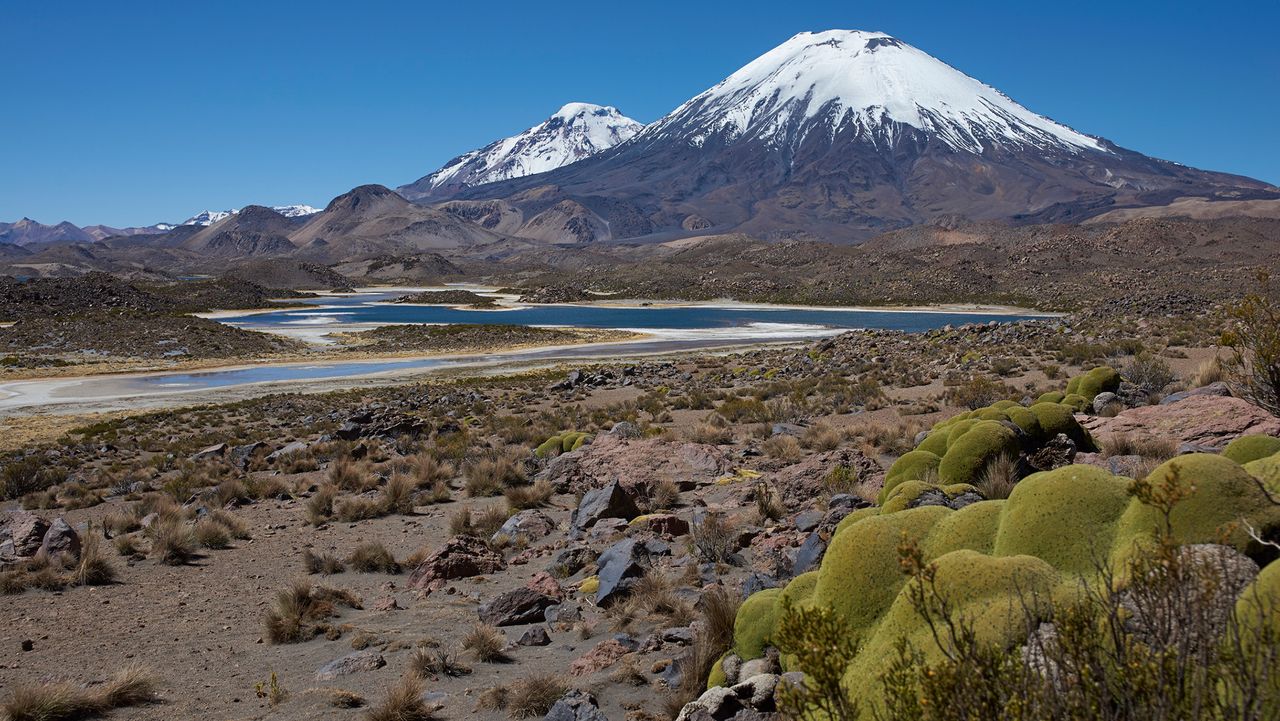
A volcanic eruption 22 million years ago captured a snapshot of the Andes in their early stages, revealing the slow and steady formation of this massive mountain range. The eruption occurred at the Lauca Caldera in present-day northern Chile, spewing a pyroclastic flow - a mixture of rock, volcanic gas, and ash - that blanketed the landscape. This type of deposit is similar to the one that buried the Roman town of Pompeii in A.D. 79, preserving the town's structures and inhabitants as they lay in place.
Researchers published a study in the journal Science Advances on September 11, extrapolating the pre-eruption landscape to understand the Andes' formation. According to the findings, the deposits were likely to have covered rolling foothills rather than jagged peaks. Dr. Byron Adams, a geomorphologist at University College London, stated that this discovery demonstrates how volcanic eruptions can "freeze a moment in Earth history," providing clues about the mountain-building process.
The study focused on the shape of the volcanic blanket and the known behavior of rivers in shaping mountains to infer what lay buried beneath the layers of ash. The original slope of the volcanic flow from the Lauca Caldera was approximately 1.5 degrees. The researchers also calculated the erosion of the landscape to determine the speed at which the rocks in the region were rising as the oceanic Nazca Plate subducted beneath the continental crust of South America, contributing to the Andes' growth.
Prior to the eruption, the uplift of the crust was no more than 0.16 mile (0.26 kilometers) per million years, a gradual process. This aligns with earlier research that utilized specific minerals within rocks to estimate when a particular rock rose through the crust and approached the surface. There is ongoing debate about whether the Andes grew steadily over 40 or 50 million years or rose more slowly and then rapidly in the last six to 10 million years.
The researchers' findings, which cover a significant portion of this period, support the hypothesis of a slow and steady growth pattern.
This same method could potentially be applied to other mountain ranges around the world, according to the researchers.
Written by urgent.news from Live Science's reporting — not their text. Machine-written — may contain errors; check the original before relying on it.