Small Dinosaurs May Have Had an Evolutionary Advantage Over Their Enormous Relatives
Were there ever small dinosaurs? Learn about the dinosaurs that lived alongside ancient giants and how their size may have helped them adapt, diversify, and survive in changing ecosystems.
When we picture dinosaurs, colossal creatures often come to mind. The likes of Tyrannosaurus rex, Triceratops, Edmontosaurus, and even mammoth-sized animals such as Diplodocus and Brontosaurus dominate our imagination. However, this image of a dinosaur-dominated world is largely due to the easier discovery and preservation of large bones. Smaller creatures, with their delicate and fragile bones, are less likely to be found and remain hidden in the annals of history.
Interestingly, recent studies suggest that dinosaurs weren't as small as one might think. In fact, they may have been precluded from inhabiting the smallest ecological niches by the earliest mammals. These mammals, which were relatively tiny compared to today's standards, outcompeted dinosaurs in the smallest habitats.
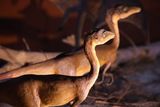
However, this doesn't mean that dinosaurs weren't small. They were just not as diminutive as modern mammals. Advancements in technology have allowed paleontologists to study these tiny dinosaurs using CT scans, revealing their fragile bones without needing to extract them from the surrounding rock.
One of the smallest known dinosaurs today is the bee hummingbird, a bird weighing less than an ounce. Yet, there existed a non-avian dinosaur that was even smaller – less than a foot long and likely feathered. Known as Epidexipteryx, this dinosaur lived in what is now China during the Middle Jurassic Period.
These diminutive dinosaurs likely lived in the treetops, with gliding structures similar to modern flying squirrels or sugar gliders, allowing them to move from tree to tree. While it's possible that other smaller dinosaurs remain undiscovered, most of the smallest dinosaurs known are incomplete, making it difficult to ascertain their exact size.
It's also been discovered that dinosaurs were always small. The oldest species known is about the size of a chicken. Furthermore, the Liaoning Province in China has provided a snapshot of a prehistoric ecosystem with small dinosaurs outnumbering larger ones.
The benefits of remaining small are clear. Today, small creatures dominate ecosystems due to their lower vulnerability to extinction. Larger creatures require more resources and are harder to hide, making survival challenging. Thus, staying small can be advantageous, particularly in the face of catastrophic events such as volcanic eruptions, habitat degradation, or the depletion of food sources.
Written by urgent.news from Discover Magazine's reporting — not their text. Machine-written — may contain errors; check the original before relying on it.