Municipalities in R40.5bn Eskom debt programme breach payment conditions
Fifty of 71 municipalities in Eskom’s debt-relief programme failed to pay their current accounts, while no specific consequence-management measures were taken against responsible officials or political office-bearers, Parliament has been told.
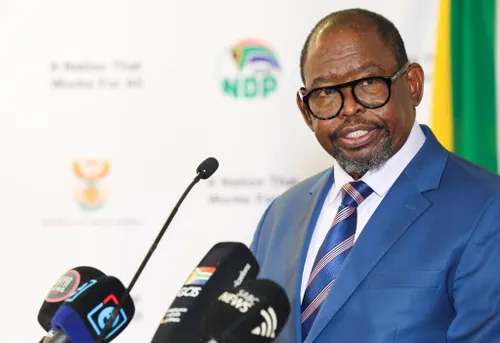
Finance Minister Enoch Godongwana disclosed that 50 out of the 71 municipalities involved in the Municipal Debt Relief Programme have not yet paid their current accounts to Eskom as of last month. These municipalities owe a total of R40.5 billion, which includes debt accumulated since their involvement in the programme initiated in 2023.
As of 7 August 2026, 50 municipalities were not in compliance with the condition of paying Eskom their current accounts, despite inconsistently meeting other conditions of the Municipal Finance Management Act Circular. This information came in response to parliamentary questions from DA MP Kevin Wakelin, who inquired about the National Treasury's assessment of the municipalities concerned, the total outstanding debt owed by each, and specific interventions taken.
He also wanted to know if consequence management measures were imposed on officials found responsible for non-compliance. The National Treasury launched the Municipal Debt Relief Programme three years ago with the aim of improving Eskom’s balance sheet and enabling Eskom to write off municipal debt under strict conditions. Out of the 71 participating municipalities, 50 failed to pay their current accounts to Eskom as of last month.
These municipalities are distributed across various provinces: 11 in Northern Cape, 10 in Mpumalanga, 9 in Free State and North West, 4 in KwaZulu-Natal, 3 in Gauteng and Eastern Cape, 2 in Limpopo, and 1 in the Western Cape. The defaulting municipalities owe Eskom a combined R40.5 billion, with Emalahleni Municipality in Mpumalanga owing the highest at R6.7 billion, followed by Emfuleni in Gauteng with R4.7 billion, and Govan Mbeki Municipality in Mpumalanga, Mbombela Municipality in Mpumalanga, Matjhabeng in Free State, Madibeng Municipality in North West, and Matlosana in North West, each owing R3.3 billion or more.
The reasons for non-compliance include failure to approve cost reflective tariffs, not billing all consumers, not enforcing credit control and collecting dues, and inability to collect property rates and service charges in Eskom supply areas. Some municipalities lack water functions and water meter functionality, which hinders their ability to restrict water in Eskom supply areas for rate collection.
The National Treasury conducts monthly compliance assessments, issuing non-compliance certificates to non-compliant municipalities and sending warning letters. The National Treasury has initiated a staggered termination process, allowing Eskom to recover the municipal relief debt from defaulting municipalities while enforcing better payment through the Distribution Agency Agreement (DAA).
Of the 50 defaulting municipalities, 27 have received termination letters, allowing them to continue participating in debt relief under a five-year service delivery agreement with Eskom. Seven municipalities have been terminated, while 20 have committed to meeting the requirements of the Electricity Regulation Act before concluding their service delivery agreements with Eskom.
No specific consequence management measures have been taken against municipal officials and political office-bearers regarding the Municipal Debt Relief Programme.
Written by urgent.news from IOL's reporting — not their text. Machine-written — may contain errors; check the original before relying on it.