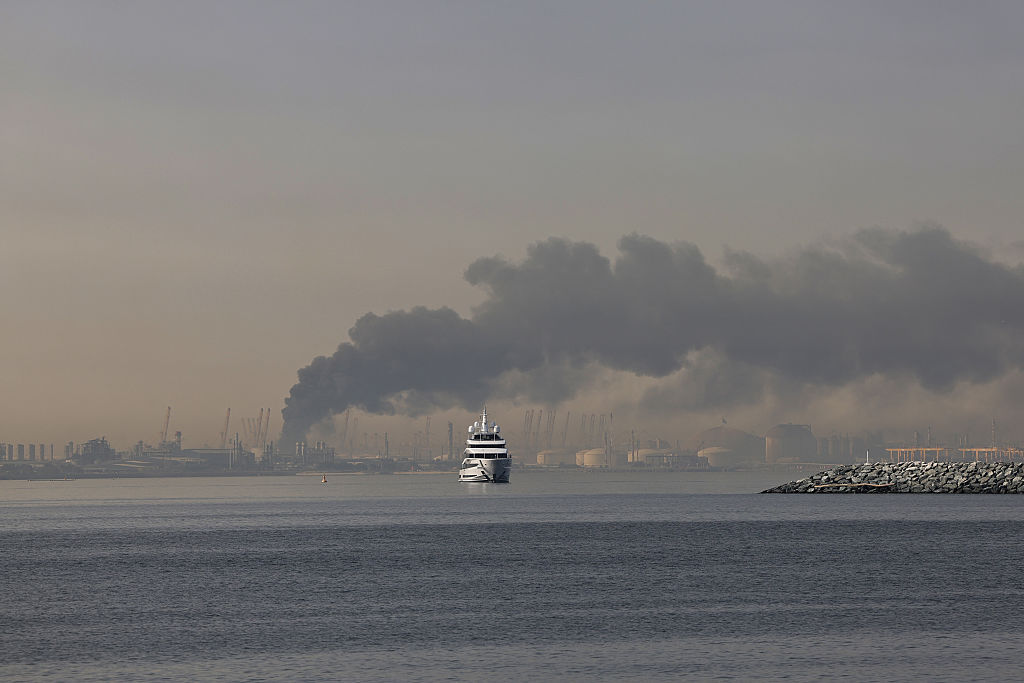
Saudi pipeline shutdown threatens oil exports to Europe and Asia as kingdom relies on stored supplies
The pipeline disruption comes as Gulf oil exports have already fallen sharply and shipping routes face further threats. With no restart date announced, the impact on deliveries to Europe and Asia depends on how long the shutdown lasts.
Saudi Arabia has temporarily halted its East-West oil pipeline following drone strikes, raising concerns about potential disruptions to exports heading to Europe and Asia. The kingdom's energy ministry announced the shutdown on Friday, as a precautionary measure after the pipeline was targeted in the Riyadh and Medina regions the previous Thursday.
Emergency and technical teams are currently securing the pipeline and assessing its safety, but the ministry has not disclosed when pumping operations will resume or the extent of the damage.
Experts estimate that a prolonged shutdown could jeopardize around 4 million barrels of oil per day, which represents roughly 4% of the global oil supply. Currently, stored oil at the Red Sea port of Yanbu can sustain exports for about five to seven days. However, these estimates have not been confirmed by Saudi authorities. The impact on deliveries hinges on how swiftly pumping is restored and the availability of stored oil.
The roughly 1,200-kilometer pipeline transports oil from eastern Saudi Arabia to Yanbu on the west coast, facilitating exports through the Red Sea without tankers navigating the volatile Strait of Hormuz. Aramco had boosted pumping capacity to a maximum of 7 million barrels per day during the first quarter of the year to sustain exports despite shipping disruptions via the Hormuz. The pipeline also supplies refineries along Saudi Arabia's west coast, enhancing its utility beyond mere export capacity.
While deliveries to Europe and Asia will face interruptions, tanker operations can still load oil stored near export terminals. Nonetheless, these supplies will dwindle unless additional oil arrives. In Europe, tankers can navigate north from Yanbu via the Red Sea to the Suez Canal and the Mediterranean. Conversely, the direct sea route to Asia involves sailing south through the Bab el-Mandeb, the narrow gap between the Red Sea and the Gulf of Aden, and onward towards the Indian Ocean.
This route is under threat from Yemen's Houthis, who have taken control of Perim Island and the Red Sea coast, effectively claiming sovereignty over the strait. Tankers seeking to reach Asia might opt for a longer journey north through the Suez Canal and across the African continent. However, altering a tanker's route does not resolve the underlying issue of transporting oil to Yanbu.
The International Energy Agency's September oil market report highlighted a worldwide decline in stored oil supplies, with an approximate 507 million barrels decrease since February. This reduction includes a sharp 95 million barrel drop in August alone. The agency projected Gulf oil exports at around 13 million barrels daily in August, marking nearly half their pre-war levels.
Moreover, the agency reported significant increases in diesel prices in Europe and Asia due to supply chain disruptions, which have curtailed fuel availability.
Written by urgent.news from Euronews's reporting — not their text. Machine-written — may contain errors; check the original before relying on it.