Hindi Diwas: How the Constituent Assembly settled India’s language row
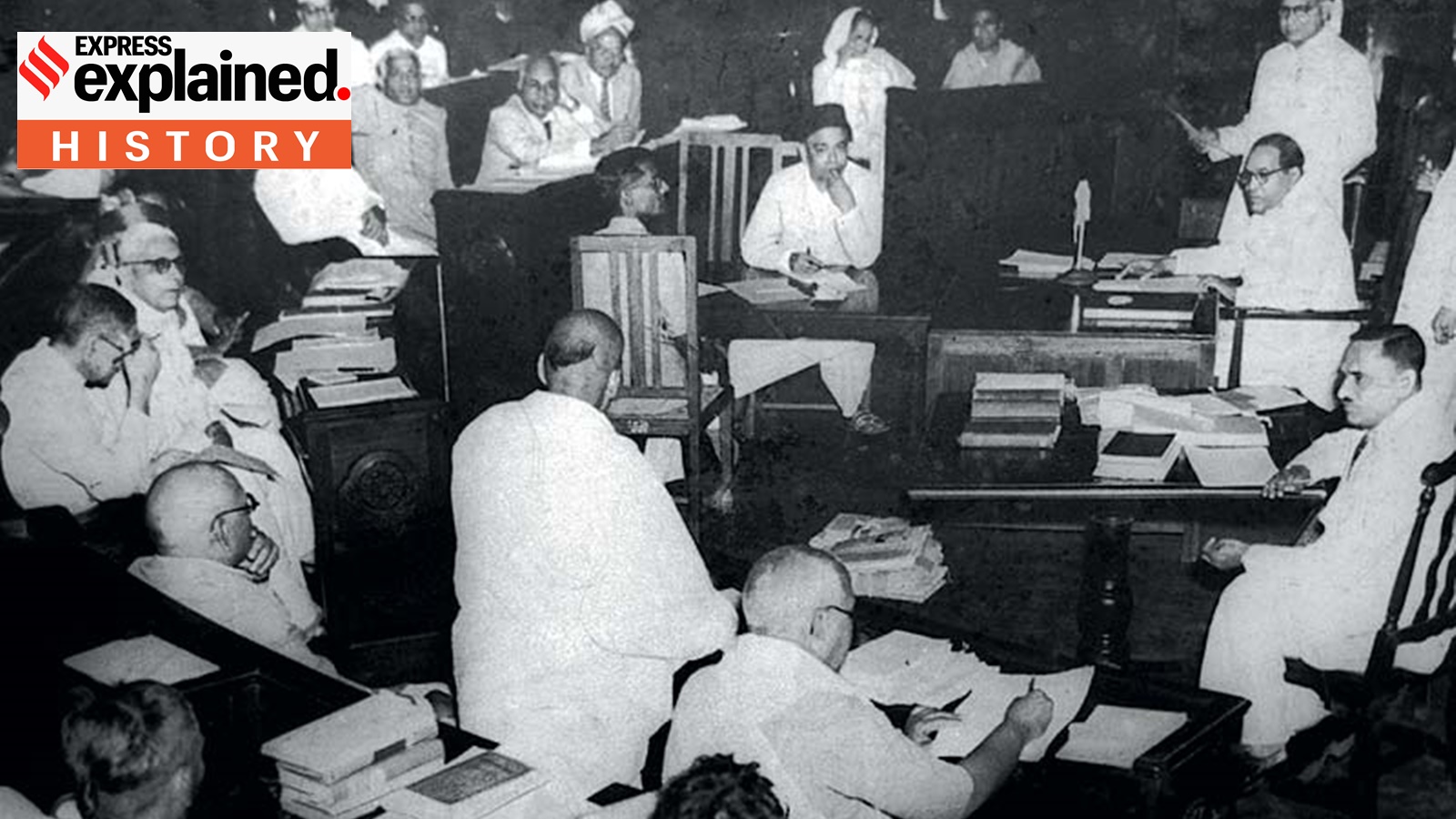
The Constituent Assembly of India faced a contentious debate over the national language during its earliest sessions. RV Dhulekar, a Congressman from United Provinces, strongly advocated for Hindustani to be used in the constitution-making process. Despite knowing that not everyone in the Assembly was fluent in the language, Dhulekar stated, "People who are present in this House to fashion a constitution for India and do not know Hindustani are not worthy to be members of this Assembly.
They better leave." His remarks caused a disturbance, but the Chairman managed to restore order. The language issue remained a significant problem for the Assembly.
On September 14, 1949, after years of debate, the Assembly adopted the Munshi-Ayyangar formula, which designated Hindi as the "official language of the Union," while English would continue to be used "for all official purposes" for 15 years after the Constitution's commencement. Today, this date is celebrated as Hindi Diwas.
The language dispute in the Constituent Assembly was one of the most divisive issues. The representatives from Hindi-speaking regions, mainly from north-central India, demanded that Hindi be declared the national language and replace English immediately. They argued that a multilingual society was incompatible with Indian unity.
In contrast, representatives from non-Hindi-speaking regions, particularly from the south, and moderate leaders of the Congress Party rejected the idea of linguistic uniformity, emphasizing "unity in diversity."
Political scientists like Hanna Lerner noted that the debate over the national language raised a procedural question about how to choose the language. Hindi proponents demanded a simple majority vote, while their opponents argued for consensus, preferably unanimity. Sett Govind Das, a Hindi-speaking representative, argued that democracy functions on majority opinion and that any decision must be accepted by the minority respectfully.
On the other hand, SP Mookerjee of Bengal warned against imposing a majoritarian decision on linguistic minorities, stating that it would not be possible to achieve by coercion.
The Assembly ultimately approved the Munshi-Ayyangar formula in 1950, which was later incorporated into Articles 343-351 in Part XVII of the Indian Constitution. This formula provided a 15-year transition period during which Hindi could increasingly be used by the Central government. Alongside Hindi, the Constitution recognized fourteen other languages for official use, listed in the Eighth Schedule.
Provinces could choose one of the regional languages or English for internal affairs, while English remained the language of inter-provincial communication unless replaced by Hindi by Parliament.
However, even after the transition period ended in 1965, Hindi was not widely used by the Union government. Following violent riots in non-Hindi-speaking states, the issue remains a sensitive topic in India's political landscape.
Written by urgent.news from The Indian Express's reporting — not their text. Machine-written — may contain errors; check the original before relying on it.