What happens if Bombardier jets are not sold in the U.S.?
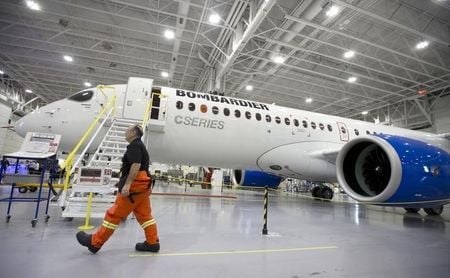
A potential ban on Bombardier aircraft sales in the United States could have significant repercussions for both the Canadian jet maker and the U.S. aerospace industry. Bombardier's largest market, the U.S., accounts for approximately 45% of the global business-jet market and is the company's most important individual market. The company typically delivers 80 to 100 aircraft annually to the U.S., compared to its total annual deliveries of around 155.
In 2026, Bombardier anticipates selling more than 157 aircraft, a figure that could be affected by a U.S. sales ban.
The company's extensive supply chain in the U.S. would also be impacted by a ban on sales. Bombardier's supply chain includes approximately 2,800 U.S. companies across 47 states, resulting in about $2.5 billion in annual U.S. purchases. Key suppliers include GE Aerospace, which provides engines for Bombardier's Global 7500 and 8000 aircraft, Honeywell, which powers the Challenger 300, 350, and 3500 family, and RTX's Collins Aerospace, which supplies avionics for the Global and Challenger ranges.
A ban on Bombardier sales could also affect U.S. defense contractors, should Canada shift future procurement toward European or Asian suppliers. Programs that could be exposed to such a shift include Canada's planned purchase of 88 Lockheed Martin F-35A fighters, with an acquisition budget of approximately C$27.7 billion. While only 16 of these fighters are firmly ordered, Canada has considered Saab's Gripen as a possible partial alternative.
Canada also has commitments involving Boeing's P-8A Poseidon and General Atomics' MQ-9B SkyGuardian drones.
While a complete cancellation of Canada's outstanding U.S. defense contracts is deemed unlikely, future purchases could gradually shift toward other suppliers if trade relations between Canada and the U.S. deteriorate. The potential ban on Bombardier sales in the U.S. highlights the interconnected nature of the aerospace industry and the potential consequences of trade tensions.
Written by urgent.news from Investing.com's reporting — not their text. Machine-written — may contain errors; check the original before relying on it.