Energie: Bundesnetzagentur: Gasspeicher könnten schon jetzt für Winter reichen
Der Herbst naht, bald brauchen Millionen Haushalte wieder viel mehr Gas für ihre Heizung. Doch Deutschlands Gasspeicher sind nicht allzu voll. Die Bundesnetzagentur teilt die Bedenken nicht.
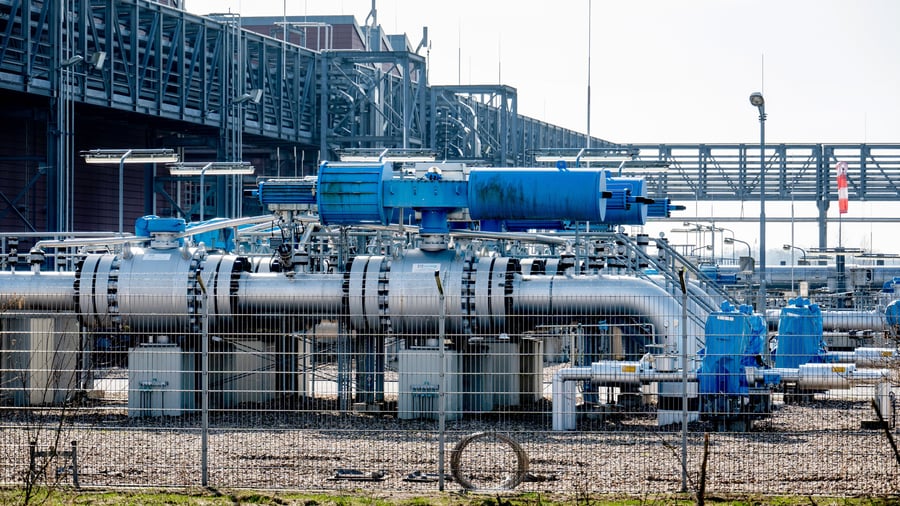
Düsseldorf - The Bundesnetzagentur has expressed concerns that Germany's gas storage facilities may not be sufficient this winter to meet the gas supply. Bundesnetzagentur chief Klaus Müller told Deutsche Presse-Agentur that there is now more gas in the storage than was taken out of the storage during the entire last six-month period.
Currently, slightly more than 136 Terawatt-hours of gas are stored, which is about 55 percent of their capacity. In the last winter, approximately 134 Terawatt-hours were taken out. Compared to previous years, the gas storage level is low, leading to concerns in recent days that the stored gas quantity might not be enough until spring.
The possibility of state-ordered orders has also been discussed, but these are possible but costly. Gas storage association Ines recently spoke of "historically low filling levels" and warned for rules so that gas storage would be worthwhile again. However, the comparison with previous filling amounts is misleading due to the presence of LNG terminals on Germany's coasts, allowing extra capacities to be quickly imported from the world market.
Pipelines from Norway are also available. Müller emphasized that LNG imports are currently possible as terminal utilization is about 45 percent, providing sufficient capacity for additional gas import. Like the Federal Ministry of Economics, Müller is not currently considering a state intervention and instead relies on the free market.
"It is the task of traders to fill the storage," said the agency chief, stressing that traders have delivery obligations towards municipalities and industrial plants. "They can meet these obligations through deliveries via pipelines, LNG imports, or discharges." They must fulfill these obligations, which is why state interventions would be costly.
Written by urgent.news from Handelsblatt's reporting — not their text. Machine-written — may contain errors; check the original before relying on it.