2026 SHS placement crisis was caused by changes to established model – Former Dept. GES Director
Former Deputy Director-General of the Ghana Education Service (GES), Dr Kwabena Bempah Tandoh, has attributed the difficulties surrounding the 2026 Senior High School (SHS) placement exercise to changes made to the established placement model.
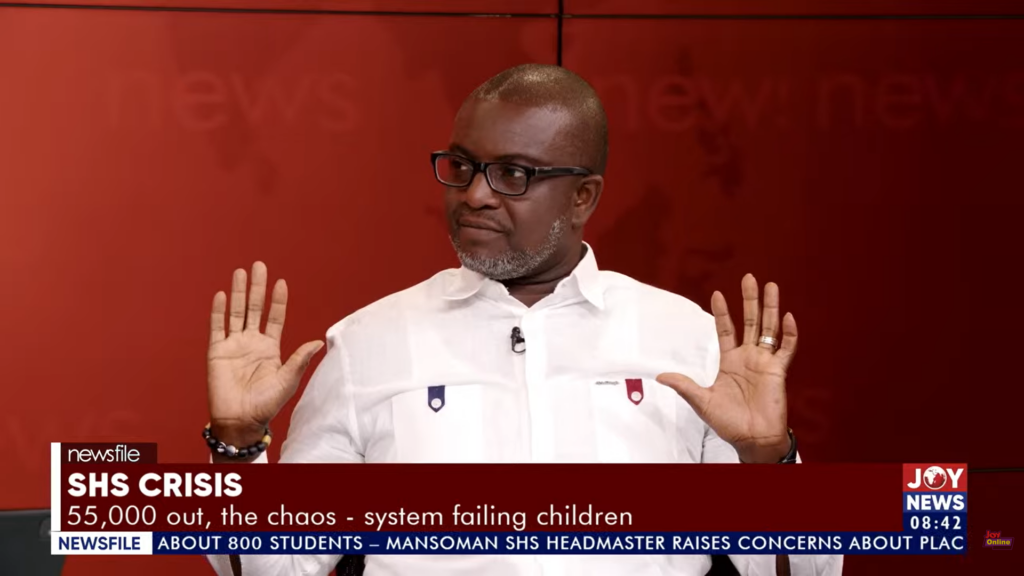
The 2026 Senior High School (SHS) placement crisis was attributed to alterations made to the established placement model, according to Dr Kwabena Bempah Tandoh, the former Deputy Director-General of the Ghana Education Service (GES). Dr Tandoh, serving as the spokesperson for the NPP Policy Committee on Education, discussed the issue on JoyNews' Newsfile. The controversy stemmed largely from changes to student selection, eligibility criteria, and the number of Category A schools candidates could apply to.
Historically, Ghana's secondary school placement system was based on two key factors: student choice and the availability of places in schools. The 1987 education reforms transformed the structure from Junior Secondary School (JSS) and Senior Secondary School (SSS) to the current Junior High School (JHS) and Senior High School (SHS) system. However, limited spaces remained a challenge, necessitating the consideration of grades, merit, and school capacity during admissions.
In 2005, the Computerised School Selection and Placement System (CSSPS) was introduced to modernize the process by utilizing computers to replace manual work by school authorities. Despite this, cut-off points persisted as schools could only admit students according to their available capacity. The introduction of Free SHS in 2017 aimed to increase access to secondary education, with students who failed both English Language and Mathematics generally excluded from progression to SHS.
In 2026, Dr Tandoh highlighted that the eligibility rule was changed without adequate communication, consultation, and collaboration with stakeholders, contributing to the initial decision to classify 54,985 candidates as disqualified. This policy reversal, however, demonstrated the uncertainty introduced by the change. He also disputed the notion that the crisis was primarily due to a lack of SHS places, citing 859,828 available places against 623,000 candidates requiring placement.
A significant change was the allowance for students to select two Category A schools, compared to previously permitting only one. This resulted in about 313,000 students applying to Category A schools, which had only 76,417 available places, creating a substantial demand-gap issue. Dr Tandoh emphasized that admission to SHS must balance choice with merit, stressing that choosing a school does not guarantee admission if demand substantially exceeds capacity.
He called for greater consistency in education policy and stronger stakeholder consultation before major changes are made to the SHS placement system.
Written by urgent.news from MyJoyOnline Ghana's reporting — not their text. Machine-written — may contain errors; check the original before relying on it.
This story
This is one outlet's version. Read the fullest account.