2026 SHS placement crisis caused by changes to established model – Former Deputy GES boss
Former Deputy Director-General of the Ghana Education Service (GES), Dr Kwabena Bempah Tandoh, has attributed the difficulties surrounding the 2026 Senior High School (SHS) placement exercise to changes made to the established placement model. Speaking on JoyNews’ Newsfile on Saturday, Dr Tandoh, who is also spokesperson for the NPP Policy Committee on Education, said the controversy was largely…
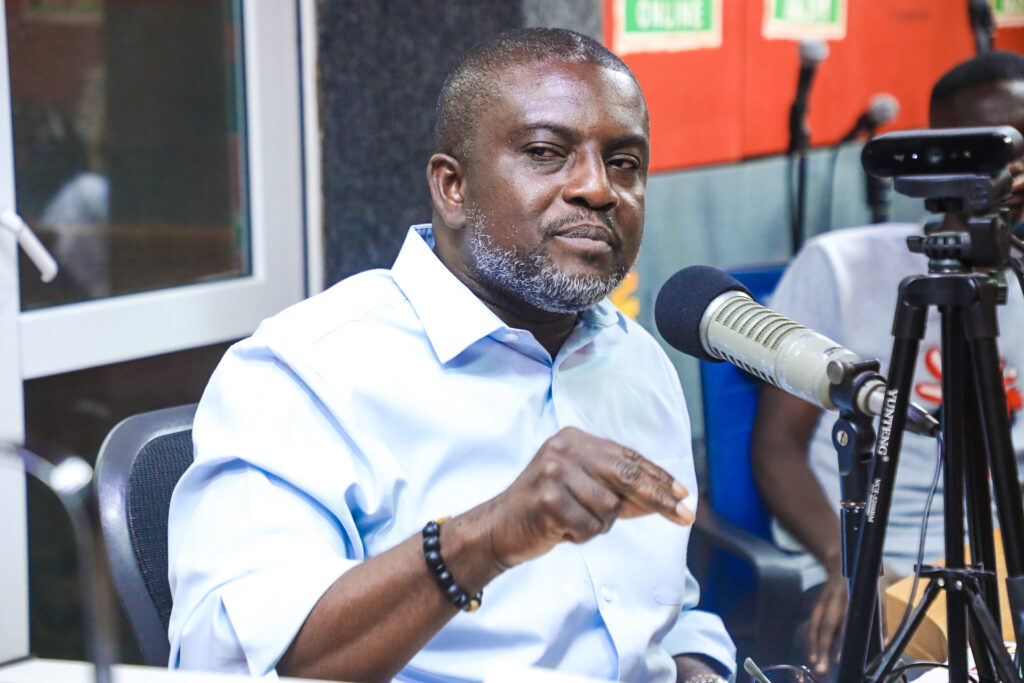
Former Deputy Director-General of the Ghana Education Service (GES), Dr Kwabena Bempah Tandoh, has blamed the 2026 Senior High School (SHS) placement issues on modifications to the established placement model. In an interview on JoyNews ' Newsfile, Dr Tandoh, who also represents the NPP Policy Committee on Education, highlighted that the disagreement stemmed from adjustments to student selection, qualification criteria, and the maximum number of Category A schools candidates could choose.
The comments come amidst widespread concern regarding approximately 55,000 candidates in the 2026 placement exercise. Dr Tandoh emphasized that Ghana's secondary school placement system traditionally balanced student preferences with school availability. Before the 1987 education reforms, students completed primary school, took the Common Entrance examination, and were admitted to secondary schools based on their preferences and school capacities.
The reforms implemented the Junior Secondary School (JSS) and Senior Secondary School (SSS) structure, which later integrated into the current Junior High School (JHS) and Senior High School (SHS) system. However, limited spaces persisted, making grades, merit, and school capacity crucial factors in admission. The Computerised School Selection and Placement System (CSSPS) was introduced in 2005 to computerise the process while retaining the need for cut-off points, as schools could only admit students based on their available capacity.
In 2017, Free SHS initiated efforts to boost secondary education access, with students failing English Language and Mathematics generally excluded from progression, with numbers consistently within a narrow range. Dr Tandoh revealed that the eligibility rule was altered in 2026 without proper communication, consultation, and collaboration with stakeholders, leading to the initial classification of 54,985 candidates as ineligible.
The Ministry of Education later allowed the affected students to engage in self-placement. Dr Tandoh dismissed the notion that the primary cause of placement difficulties was a shortage of SHS places, citing that 859,828 places were available, while approximately 623,000 candidates needed placement. He pointed out that 1,132 infrastructure projects undertaken between 2019 and 2025 aimed to increase school capacity.
Dr Tandoh argued that the actual issue lies in the uneven distribution of demand on specific schools. The decision to permit students to select two Category A schools, compared to the previous policy of one Category A school, exacerbated the pressure on the system. While Category A schools possessed about 76,417 available places, around 313,000 students opted for Category A schools.
Dr Tandoh considered the change poorly conceived, contending that it created a significant gap between demand and available capacity. He criticised the communication strategy regarding students with aggregate scores between six and 10 being eligible to apply to Category A schools, as it generated expectations without adequately accounting for the number of candidates likely to achieve those grades relative to the limited Category A places.
Dr Tandoh asserted that admission to SHS must strike a balance between choice and merit, using Presbyterian Boys’ Secondary School (Presec) as an example. He explained that a school could declare 1,300 vacancies overall, with only 200 places in a specific programme like Science. If 5,000 candidates chose that programme as their top preference, only the highest-performing 200 could be admitted, as the school could not exceed its available capacity.
The remainder of the candidates would then be considered for their secondary preferences based on the placement rules. Dr Tandoh maintained that choosing a school does not guarantee admission, particularly when demand significantly exceeds capacity. He concluded that the 2026 crisis was primarily driven by changes to the placement model, heightened pressure on Category A schools, and insufficient communication of the new rules, rather than merely a lack of school infrastructure.
Dr Tandoh called for greater consistency in education policy and enhanced consultation with stakeholders before making substantial changes to the SHS placement system.
Written by urgent.news from Adom Online's reporting — not their text. Machine-written — may contain errors; check the original before relying on it.