What Umno must accomplish at its general assembly
The party must lay the groundwork for GE16, take note of delegates' grouses, and confront the evidence gap on Malay support.
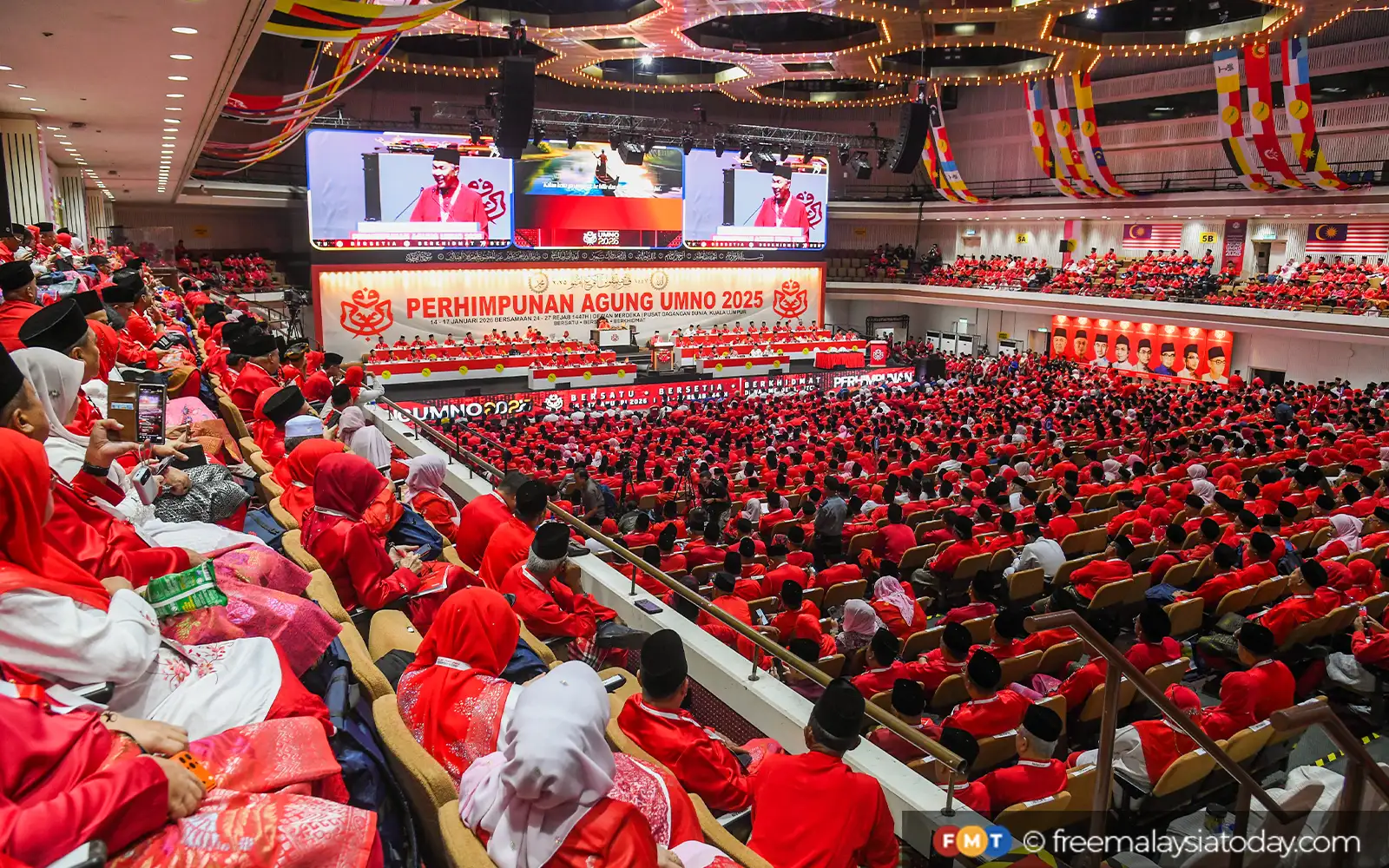
Umno's 2026 general assembly will be judged primarily on whether the party can demonstrate that its participation in government has enhanced its value to voters, rather than on which coalition it favors. The assembly, which takes place from September 9 to 12 and includes over 6,400 delegates, provides a forum for the party to evaluate its political direction and its role within the unity government.
The main question is whether Umno's current arrangement strengthens its claim to represent Malay interests while governing a diverse nation.
Umno has been operating within a coalition it previously opposed, which has contributed to federal stability. However, stability alone is insufficient to rebuild political loyalty. Malay voters who have shifted to other parties did so for various reasons, including concerns about leadership credibility, governance, economic pressures, and responsiveness to daily issues. Therefore, the debate over staying in or leaving the unity government is complex, as coalition arithmetic alone is not enough to rebuild trust.
To succeed, Umno must balance maintaining sufficient political independence to remain recognizable to its traditional base with demonstrating that its role in government contributes to national stability and effective administration. While Umno's independence is important, appearing solely focused on retaining power risks losing its identity, and pursuing confrontation merely to showcase independence could weaken the stability it helped create.
Instead, the assembly should emphasize performance politics, where coalition arguments are weighed against household economic issues such as wages, food costs, housing, employment, education, and social mobility.
The Malay Education Convention, where Umno president Ahmad Zahid Hamidi outlined goals for strengthening Bumiputera education through recognized industrial competencies and workplace learning, suggests a more durable political language centered on measurable advancement. However, these announcements must be accompanied by accountability measures.
Umno should use its position in government to deliver outcomes that can be independently assessed, such as skills pathways, employment opportunities, assistance for vulnerable households, transparent administration, and opportunities for younger Malays. Emphasizing national prosperity without framing it as an ethnic contest is crucial.
The assembly also serves as a leadership test, as Umno's leaders must bring the voices and concerns of grassroots delegates to the forefront. If grassroots concerns are genuinely central, uncomfortable discussions about alliances, leadership quality, candidate competence, and government performance must occur rather than being glossed over with ceremonial consensus.
Consequently, Umno's preparation for the 2026 general election should begin with candidate credibility and constituency intelligence, rather than relying solely on slogans.
Umno's organizational machinery remains an advantage, but it cannot generate trust indefinitely. Candidates must possess local legitimacy, clean reputations, policy competence, and the ability to communicate across generations. Younger voters, in particular, operate in a politically dynamic environment where information spreads rapidly, and institutional loyalty cannot be assumed.
Therefore, Umno should also address an evidence gap by providing constituency-level proof of Malay confidence. Electoral gains, membership enthusiasm, and large political gatherings measure different outcomes from electoral success. Without evidence of voter transferability, turnout, age cohorts, marginal constituencies, and reasons for changing allegiance, optimism can turn into strategy based on anecdote.
Ultimately, the 2026 Umno general assembly matters not because it can definitively settle Umno's future in four days, but because it can clarify the standards by which Umno should be measured going forward. The party's renewal depends on translating relevance into governing usefulness. If Umno can connect Malay confidence with competent administration, economic opportunities, institutional integrity, and national stability, it can present a compelling proposition for the 2026 election.
However, if the assembly focuses primarily on coalition positioning, Umoh may emerge internally more united but without gaining wider electoral appeal.
Written by urgent.news from Free Malaysia Today's reporting — not their text. Machine-written — may contain errors; check the original before relying on it.
This story
This is one outlet's version. Read the fullest account.
- What Umno must accomplish at its general assembly freemalaysiatoday.com