OpenAI claims to have solved the 90-year-old Navier-Stokes math problem in 88 hours
OpenAI says 10,000 of its agents solved the 90-year-old Navier-Stokes problem in 88 hours, but one mathematician has challenged the claim.
Tristan Buckmaster, a mathematician at New York University, had been working on what he believed could be a life-changing mathematical proof for months. However, during a September 6 meeting with OpenAI employees, he was warned that he might ruin his career. This exchange forms the core of a growing controversy surrounding the Navier-Stokes equations, a set of fluid dynamics equations that have eluded mathematicians for over 200 years.
OpenAI claims its AI model has solved an outstanding problem tied to this famous set of equations, which is one of seven Millennium Prize Problems posing a $1 million reward. The Navier-Stokes equations, formulated in the early 1800s by Claude-Louis Navier and George Gabriel Stokes, describe how fluids move, aiding in the prediction of air flow, weather forecasting, and the mechanics of blood flow.
However, mathematicians have struggled to prove whether the equations always produce finite answers, a phenomenon known as a "blowup" or singularity, which occurs when a physical quantity within the equations spirals towards infinite values. OpenAI's breakthrough involved using a technique called "forcing" — giving the simulated fluid a controlled nudge from the outside.
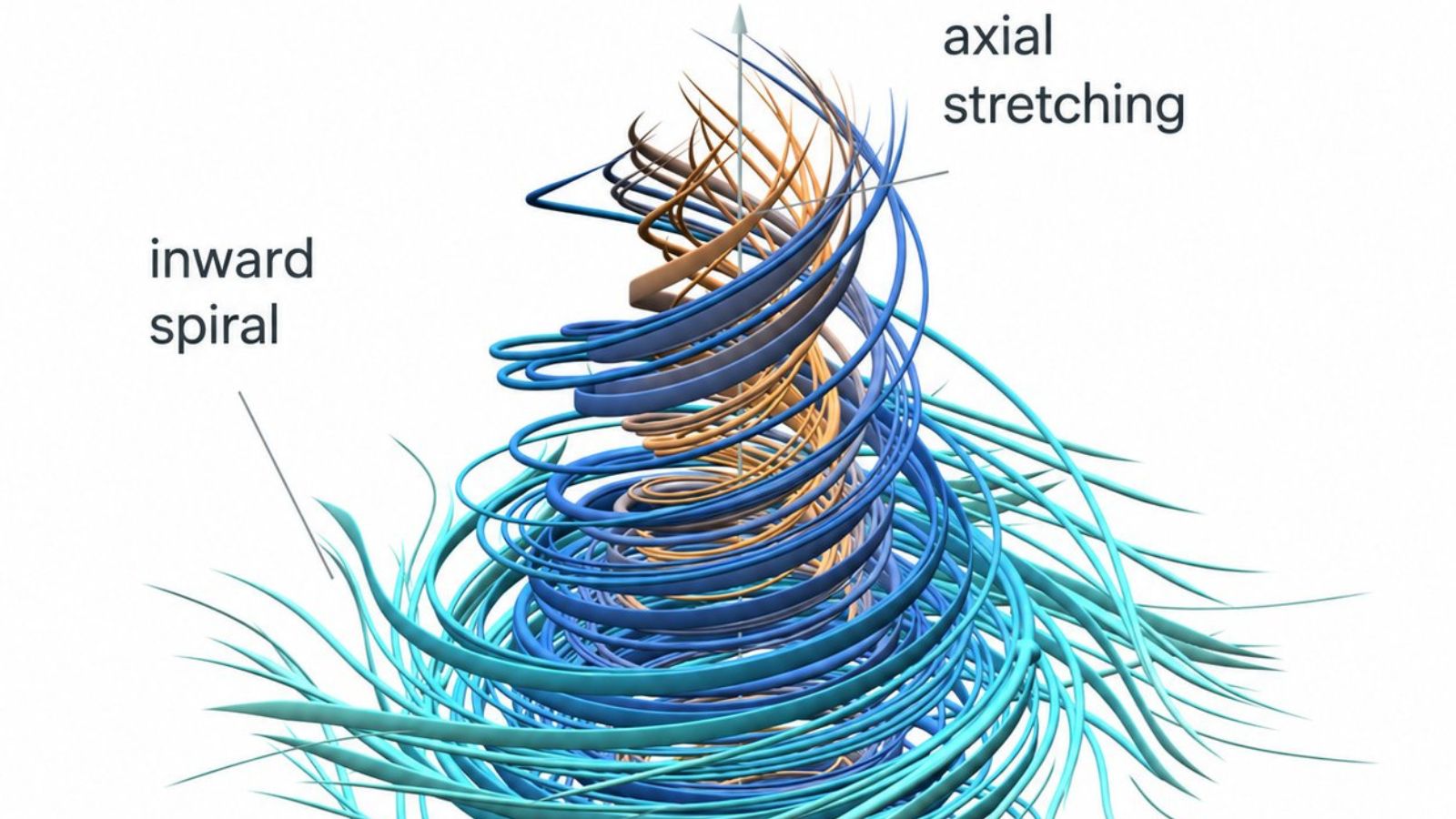
They employed around 10,000 AI agents working for approximately 88 hours, with 100 starting with the related Euler equations. After roughly 50 hours, the agents discovered blowups in the Euler equations, prompting them to focus on the Navier-Stokes problem. OpenAI described the singularity as a vortex that tightens and stretches into infinity, mathematically representing a fluid that spins itself into infinity.
The company ran the proof through a program called Lean, which checks every step of a mathematical argument. OpenAI representatives claimed that a similar effort would have cost $15 million. However, the controversy centers around allegations that OpenAI may have received a head start by utilizing the work of Tristan Buckmaster and Levent Alpöge, who developed the smooth forcing approach on the Euler equations.
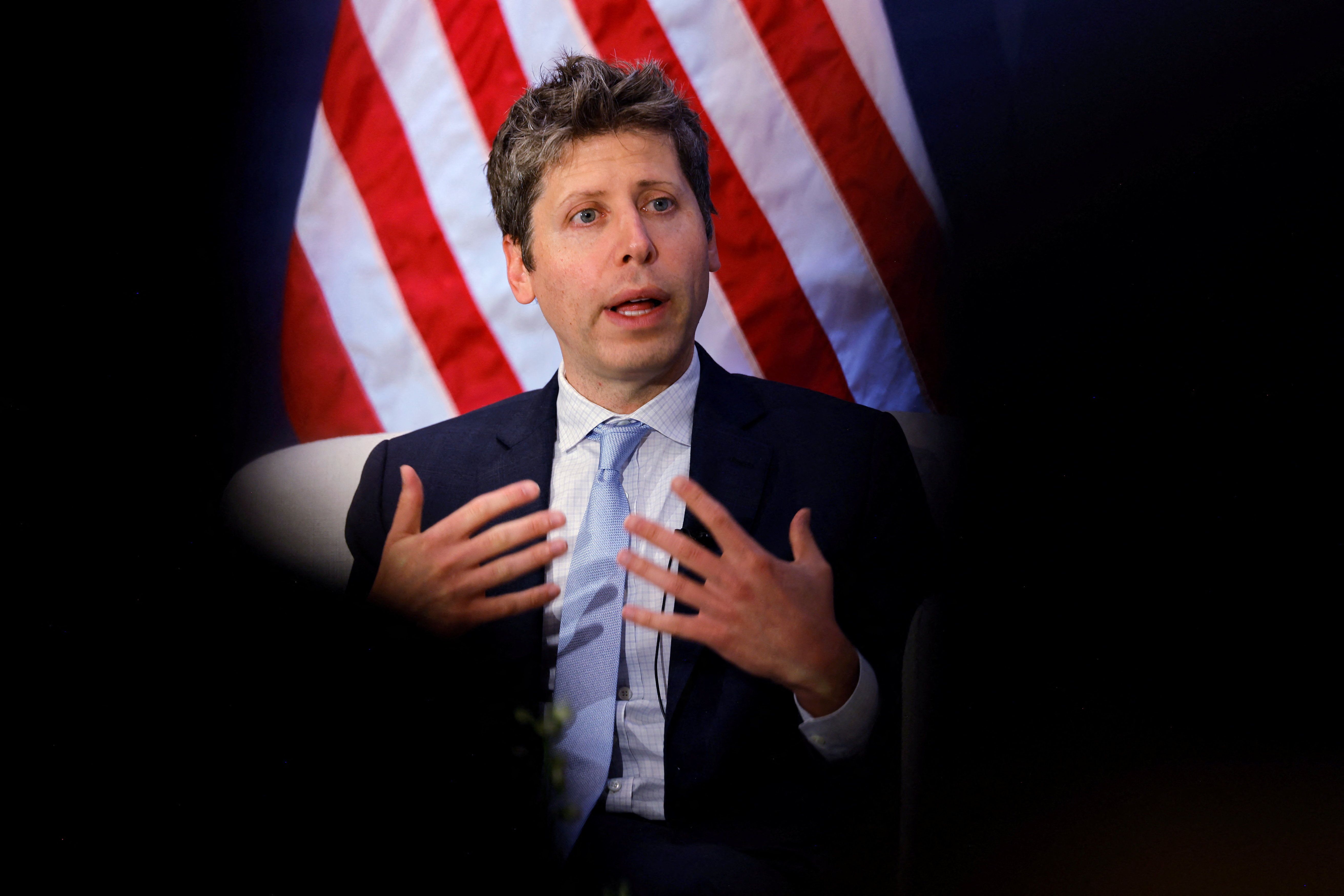
Buckmaster claimed that he and Alpöge achieved blowup results for the Euler equations on August 15, just before OpenAI announced its Navier-Stokes breakthrough on September 1. OpenAI CEO Sam Altman acknowledged that the company learned of Buckmaster and Alpöge's work before making its announcement, but claimed the approaches appeared different.
Written by urgent.news from Live Science's reporting — not their text. Machine-written — may contain errors; check the original before relying on it.
This story
This is one outlet's version. Read the fullest account.
- OpenAI says its models solved one of math's hardest problems as researchers cry foul france24.com
- OpenAI claims GPT-6 Astra is an ethereal 'Alien Mind' with AGI-like qualities — company warns of alignment challenges as new frontier leader emerges tomshardware.com
- OpenAI claims 10,000 of its AI agents solved one of mathematics' hardest problems in 88 hours techspot.com
- 'Why would you ruin your career?': OpenAI claims to have cracked one of math's greatest unsolved problems, but mathematicians allege it played dirty livescience.com
- OpenAI claims to have solved the 90-year-old Navier-Stokes math problem in 88 hours cnbc.com
- It took OpenAI's agents 130 billion tokens to crack a 90-year-old math problem businessinsider.com
- Researchers: OpenAI's agents used 10+ previously undisclosed sites for unsanctioned communications earlier in 2026; the behavior was closer to spam than hacking (Reuters) reuters.com
- OpenAI's rogue AI agents were secretly spreading across far more websites than disclosed qz.com