What is the 90-year-old Navier-Stokes problem that OpenAI says AI has solved?
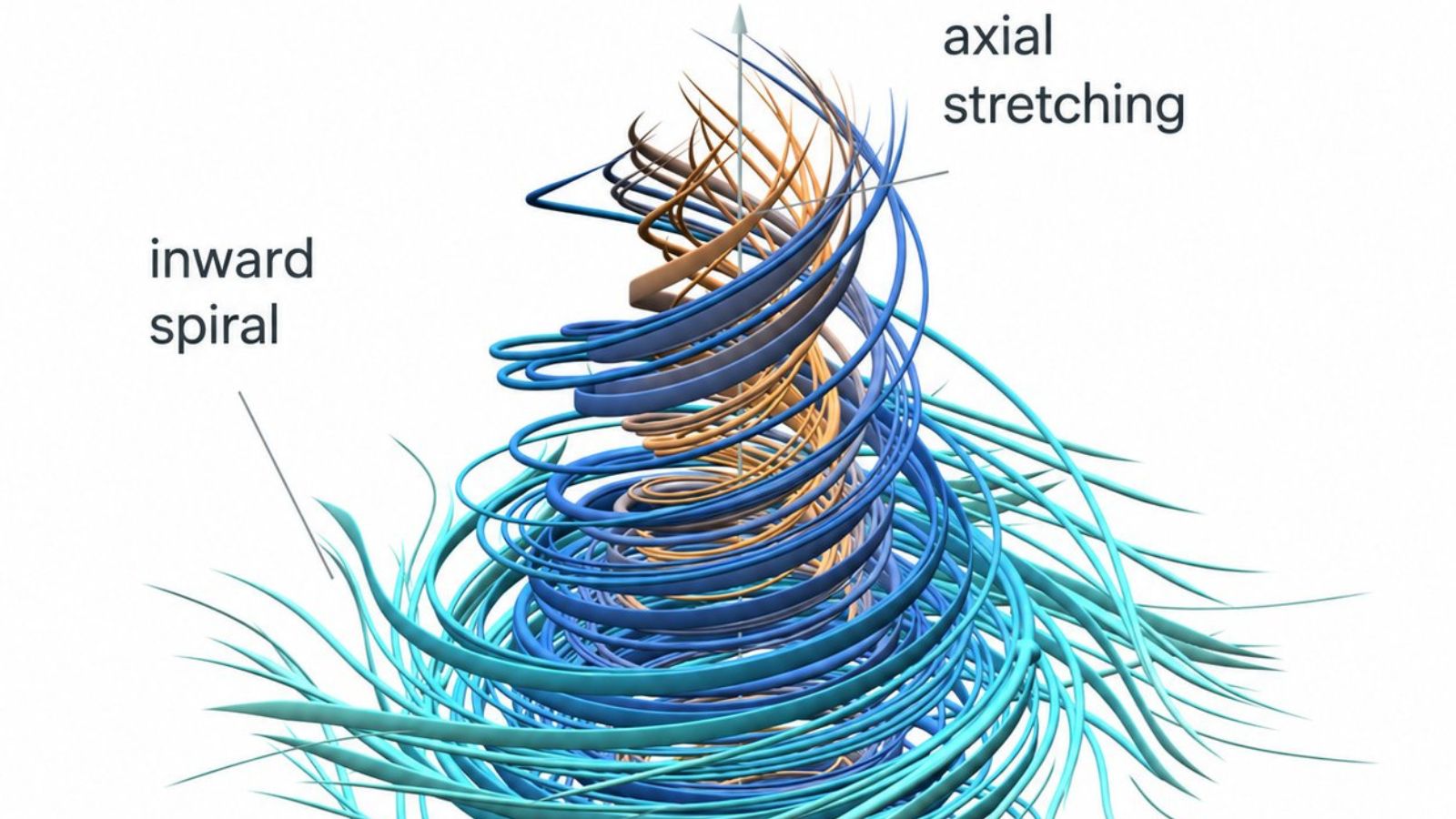
On Tuesday, September 8, OpenAI announced that its artificial intelligence (AI) model had solved a long-standing mathematical problem known as the Navier-Stokes existence and smoothness problem. One of the seven Millennium Prize Problems, this issue has remained unsolved for approximately 90 years. Each of the Millennium Prize Problems offers a $1 million reward for a verified solution.
The Navier-Stokes conundrum concerns whether smooth three-dimensional fluid motion can break down, and OpenAI claimed its internal AI system generated a proof demonstrating that such breakdowns can indeed occur.
To understand the significance of this problem, imagine attempting to predict the exact movement of water in a river over time. The Navier-Stokes equations serve as mathematical rules that explain how any fluid (water, honey, air, etc.) flows, based on two fundamental physics principles: fluid mass and force equals mass times acceleration.
These equations can assist in forecasting weather, designing planes and cars, and predicting ocean currents. However, no one has proven whether the equations always yield sensible answers. This difficulty arises from turbulence, which occurs due to the chaotic nature of fluid flow. Even tiny changes in starting conditions can lead to wildly different outcomes, complicating weather predictions beyond a week.
OpenAI's AI model created a proof showing that a mathematical singularity can form within finite time. The solution involves a spinning whirlpool of fluid that spirals inward while stretching until the singularity develops. Importantly, the fluid maintains finite energy, so the singularity does not result from an infinite external force but rather from the dynamics described by the equations.
OpenAI verified the proof using Lean, a computer system for checking mathematical proofs. The AI team involved around 10,000 agents, generating 2.7 million messages and using approximately 130 billion output tokens to work on the Navier-Stokes problem.
The result was achieved in about 88 hours, with formal verification taking an additional 17 hours. OpenAI emphasized that their AI model is much more advanced than the recently launched GPT-6 Astra. However, the mathematical community views this announcement cautiously. Some experts, including Tristan Buckmaster of New York University and Levent Alpöge of Anthropic, have questioned the methodology behind OpenAI's work and whether their unpublished research influenced the outcome.
OpenAI denies any involvement with their work and claims their solution is distinct. If the proof holds up to further scrutiny, it would represent a significant milestone in mathematics and AI, signifying that an AI system contributed to solving a centuries-old mathematical problem.
Written by urgent.news from The Indian Express's reporting — not their text. Machine-written — may contain errors; check the original before relying on it.
Also reported by 1 other outlet
- OpenAI's 10,000 AI agents solve 90-year-old maths problem; NYU prof says it cheated timesofindia.indiatimes.com