NASA’s Chandra Unveils Mysterious X-Ray Objects
Using NASA’s Chandra X-ray Observatory, scientists have discovered a new class of objects behaving unlike any they have seen before. Astronomers suggest these newly spotted objects in other galaxies may help solve not one, but two long-standing questions in astrophysics. These mysterious objects give off unusually low-energy X-rays but intense levels of ultraviolet radiation. This […]
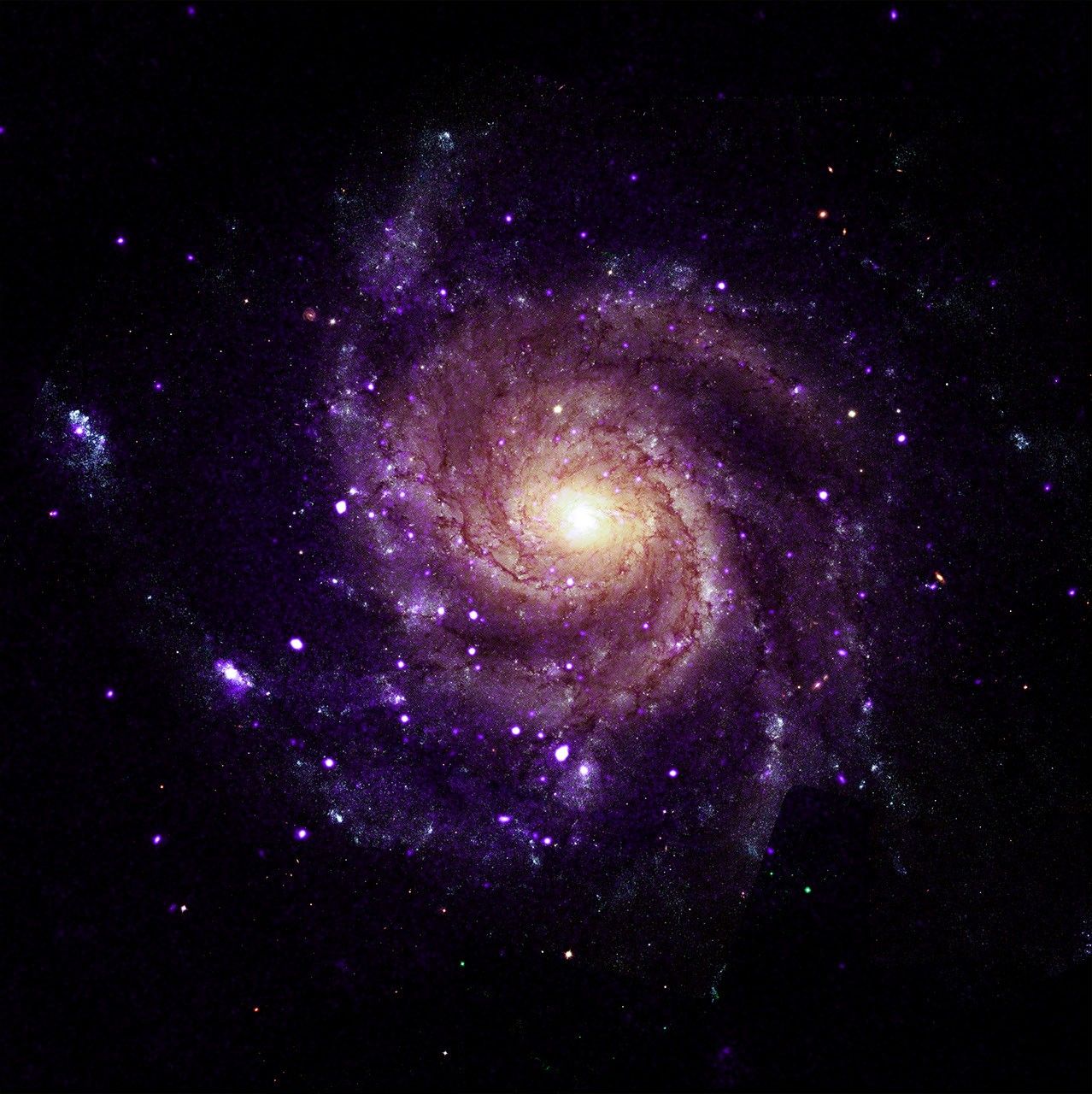
NASA's Chandra X-ray Observatory has revealed a new class of celestial objects exhibiting unprecedented behavior, potentially unlocking answers to two longstanding questions in astrophysics. These enigmatic objects, dubbed "hypersoft X-ray sources," emit exceptionally low-energy X-rays alongside intense ultraviolet radiation, a phenomenon never before observed in such abundance.
The discovery was made by analyzing data from Chandra spanning six galaxies, uncovering a total of 84 hypersoft X-ray sources. Two of these galaxies, the Andromeda galaxy (M31) and the Pinwheel galaxy (M101), are spiral in shape, while the remaining four are elliptical. The sources were identified by their presence in low-energy X-ray images but absence in higher-energy X-ray images, indicating their unique luminosity profile.
The research team, led by Mustafa Muhibullah from the University of Alabama, believes these objects may be the result of either a black hole, neutron star, or white dwarf accreting material from a companion star. This material, drawn from the companion star, heats up dramatically before being consumed by the black hole, neutron star, or white dwarf, producing the observed X-ray emissions. However, the exact nature of these objects remains a mystery.
The finding suggests the existence of vast populations of binary systems with previously undetected energetic ultraviolet radiation and low-energy X-ray emissions. These clandestine X-ray sources are among the most powerful objects within galaxies, potentially addressing two cosmic enigmas simultaneously. Firstly, certain white dwarf systems accreting material from companion stars could give rise to Type Ia supernovae, crucial for measuring the universe's expansion rate.
Type Ia supernovae have played a pivotal role in detecting the accelerating universe. Secondly, hypersoft X-ray sources might explain the phenomenon of electron stripping in galactic gas, a process that has puzzled astronomers for years.
Written by urgent.news from NASA's reporting — not their text. Machine-written — may contain errors; check the original before relying on it.
This story
This is one outlet's version. Read the fullest account.
- NASA’s Chandra Unveils Mysterious X-Ray Objects science.nasa.gov