Japan’s China-facing military build-up confronts labour, budget and political limits
The risk of a conflict over Taiwan is shaping Japanese defence planning, with Tokyo shoring up security at home and abroad for a potentially prolonged fight. But there are economic, demographic and political constraints on how far its military transformation can go. In the third of a three-part series, Gabriel Dominguez examines the various challenges confronting Japan in its bid to expand its…
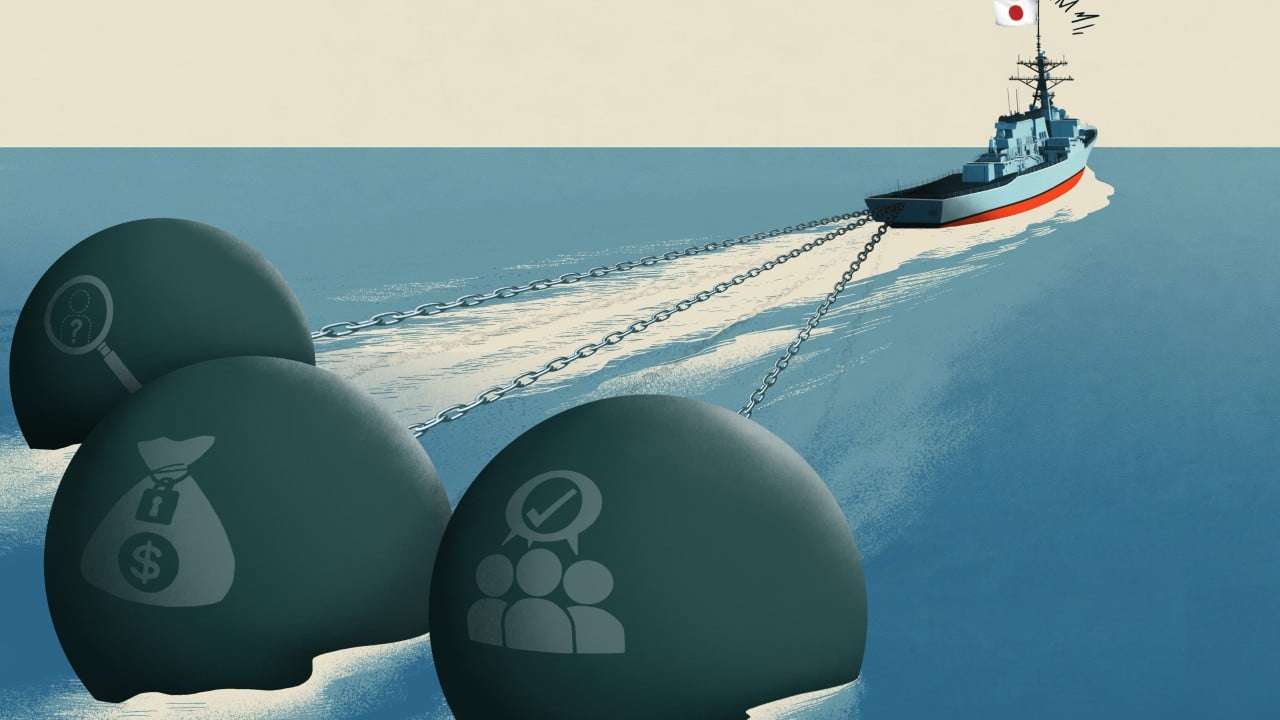
Japan is undergoing its most ambitious military transformation since World War II, driven by concerns over a potential conflict over Taiwan. The country is acquiring long-range missiles, embracing drones and expanding defense partnerships. However, there are significant constraints on how far the transformation can go.
The shrinking pool of military recruits, an aging population, mounting fiscal pressures, and lagging industrial capacity are all creating challenges for Tokyo's defense build-up. The Self-Defense Forces (SDF) currently have only 217,701 personnel out of an authorized 247,154, with projections suggesting a significant drop in numbers by 2045.
Addressing these issues involves better pay and working conditions, turning to unmanned systems and automation, and potentially reorganizing the force composition. The Maritime Self-Defense Force may shift resources towards Aegis destroyers, unmanned vessels, and sensors, while the Ground Self-Defense Force may need to reduce its reliance on infantry, tanks, and artillery in favor of missile forces.
However, these structural changes may be difficult to implement due to internal political resistance, economic considerations, and ongoing demands for disaster relief. As Tokyo commits more funds to defense, reaching a 2% level of GDP may prove challenging. The financial burden extends beyond the initial cost of weapons, with long-term expenses on personnel, maintenance, training, ammunition, infrastructure, upgrades, and eventual replacement.
While Japan claims to have already reached its goal of spending 2% of GDP on defense ahead of schedule, maintaining or exceeding this level could prove increasingly difficult in the face of high debt and a weakening yen.
Written by urgent.news from Reuters Business via SCMP's reporting — not their text. Machine-written — may contain errors; check the original before relying on it.