Japan’s China-facing military build-up confronts labour, budget and political limits
The risk of a conflict over Taiwan is shaping Japanese defence planning, with Tokyo shoring up security at home and abroad for a potentially prolonged fight. But there are economic, demographic and political constraints on how far its military transformation can go. In the third of a three-part series, Gabriel Dominguez examines the various challenges confronting Japan in its bid to expand its…
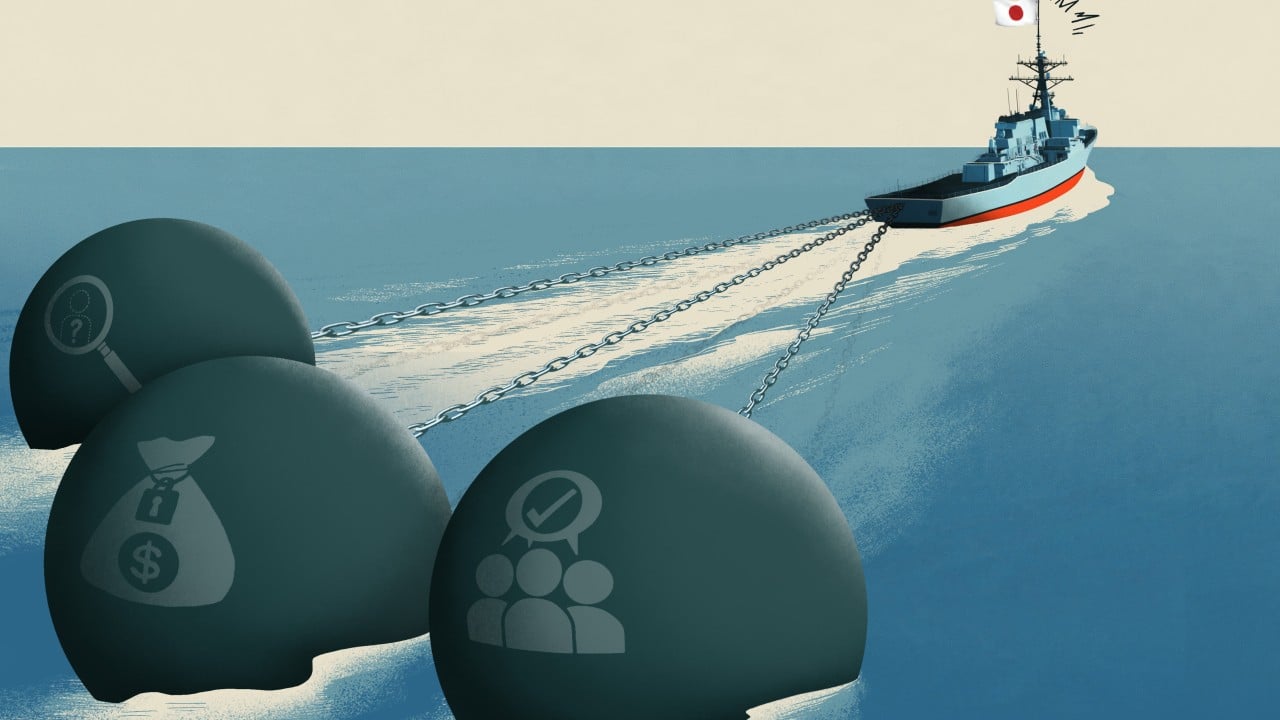
Japan's growing military build-up in response to the risk of conflict over Taiwan is facing numerous challenges, including economic, demographic, and political constraints. The country is investing in advanced weaponry, such as long-range missiles and drones, and expanding defense partnerships worldwide. However, these efforts are hindered by a shrinking pool of military recruits, an aging population, mounting fiscal pressures, and an industrial base struggling to keep pace with the rapid military transformation.
According to Misato Matsuoka, an associate professor at Teikyo University, simply acquiring sophisticated weapons is not enough to build an effective force. Japan may acquire increasingly advanced weaponry without developing the necessary manpower and institutional capacity to operate them effectively, creating a "hardware-capability gap." This mismatch could lead to a situation where advanced equipment outpaces the ability of Japan's Self-Defence Forces (SDF) to effectively utilize it.
Recruitment has improved in recent years, but the SDF still has only 217,701 personnel against an authorized strength of 247,154 as of March 2023. Defense ministry projections suggest that without intervention, personnel numbers could decline from about 220,000 to 130,000 by 2045. To address this issue, Tokyo is offering better pay and working conditions, as well as turning to uncrewed systems and automation to do more with fewer personnel.
However, the ministry acknowledges that recruitment and retention alone will not be sufficient to address the potential personnel shortages.
The need for a significant change in the force composition to deter potential Chinese aggression is also becoming apparent. Rintaro Inoue, a research fellow specializing in Japanese defence strategy, stated that the SDF will need to alter its composition to deter China from initiating a conflict in the region. This may involve shifting resources from existing vessels and crewed patrol aircraft towards Aegis destroyers, unmanned vessels, and sensors, as well as reducing the reliance on infantry, tanks, and artillery in favor of missile forces.
Internal organizational politics, resistance from local governments concerned about the economic impact of base closures, and the ongoing demand for disaster-relief operations further complicate the challenge of transforming the Japanese military. These structural problems arise even as Tokyo continues to request record defense budgets, with the ministry requesting a record ¥8.9 trillion (US$55.7 billion) for the financial year 2027, which could ultimately rise to about ¥10 trillion once Japan revises its three main security documents by the end of the year.
However, increasing defense spending does not necessarily translate into proportionately more military capability. Matsuoka cautioned that the financial burden should be measured beyond the initial cost of acquiring weapons, as new systems bring long-term costs related to personnel, maintenance, training, ammunition, infrastructure, upgrades, and eventual replacement.
Once incorporated into the SDF, these capabilities could also become politically and strategically complicated to relinquish, potentially locking Japan into an increasingly difficult-to-sustain long-term cycle of defense spending. Despite Japan already spending about 2% of its GDP on defense ahead of schedule, sustaining this level, or exceeding it significantly, poses a greater challenge due to high debt and a weak yen.
Written by urgent.news from South China Morning Post's reporting — not their text. Machine-written — may contain errors; check the original before relying on it.
This story
This is one outlet's version. Read the fullest account.