What we know about the Amazon cargo plane crash
As investigators comb through the wreckage, key questions are emerging, from where the jet actually touched down to why it was still travelling at more than 200 kilometres per hour at the end of the runway.
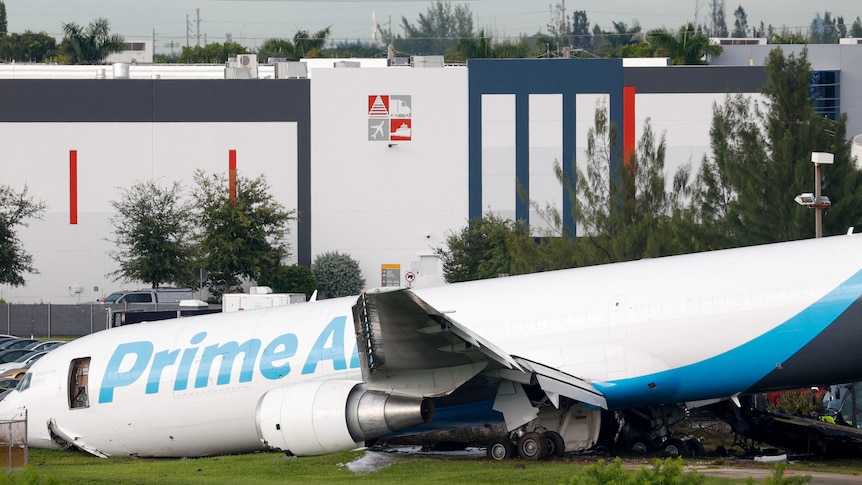
An Amazon cargo plane crashed off the runway at Miami International Airport on Sunday, causing extensive damage and leaving five people dead and five more injured. The plane, Prime Air Flight 7598, was on its third flight of the day, arriving from San Juan, Puerto Rico, just before 2pm local time. Video footage suggests the plane continued moving at around 129mph at the end of the runway, traveling an additional 396 meters before coming to a stop.
The crash resulted in thick black smoke billowing over the airport, forcing the closure of all runways and scattering debris across one of the U.S. busiest air travel hubs. The five fatalities were individuals in vehicles outside the airport grounds, including a van carrying seven workers from a cleaning company and a Toyota SUV driving on a road beyond the airport.
The pilot and copilot were trapped inside the plane, while several others were trapped in vehicles struck by the aircraft. Miami-Dade Fire Rescue dispatched over 60 units and around 200 personnel to assist in the rescue efforts. Experts are examining various factors, such as the plane's speed, landing zone, and the absence of runway-end safety material, to determine the probable cause of the crash. The NTSB is still collecting evidence and will interview the crew and survivors in the coming days.
Written by urgent.news from ABC News AU's reporting — not their text. Machine-written — may contain errors; check the original before relying on it.