From the Cape of Good Hope to the Arctic: Why women are entering the world's toughest professions
A South African student’s Arctic expedition and the career of Marina Starovoitova, described as the first female captain of a nuclear-powered icebreaker, highlight changing opportunities for women in science, technology and other demanding professions.
South Africa and the Arctic may appear vastly different, yet they share common traits – resilience, calm under pressure, and the ability to lead amid uncertainty. From South Africa's mining operations to the Arctic shipping routes, the nation has long been synonymous with demanding work environments. In sectors like mining, shipping, engineering, and advanced technologies, the narrative around who should be part of these fields is evolving.
Not due to lowered standards, but because more women are venturing into roles previously deemed off-limits, and excelling in real-world settings.
In nations like South Africa, conversations about women in technical and leadership positions intertwine with broader issues of opportunity, skills development, and the workforce of tomorrow. Amidst this, global stories of women thriving in extreme professional arenas gain prominence – not merely as symbols of representation, but as testaments to competence, resilience, and decisive leadership in high-stress situations.
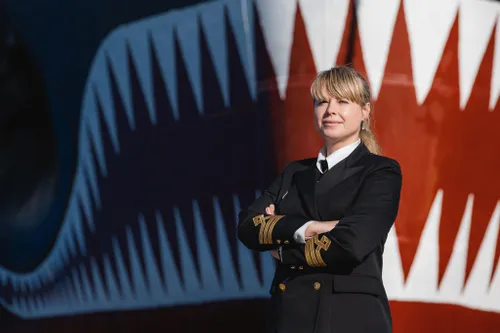
One such exemplar is Marina Starovoitova, the world's first female captain of a nuclear-powered icebreaker. Her career transcends the mere fact of this achievement; it embodies the effort required to attain it. She navigates constant unpredictability, extended isolation from land, and high-pressure operations that demand swift, intricate decision-making.
Starovoitova's respect is earned through performance rather than titles. "If you're a professional and can do your job well, you'll earn respect. On the open deck of an icebreaker in temperatures below 30°C, I demonstrated my equality to my shipmates through diligent work," she stated. Her tale also challenges stereotypes of leadership in challenging environments.
Industries known for rigorous conditions are often depicted as strictly hierarchical. Starovoitova contends that effective leadership hinges on adaptability and accurately interpreting the circumstances. "A captain must possess a broad spectrum of approaches. When swift decisions are imperative, one must be assertive. Yet in regular conditions, I favor collaboration – every crew member's input is invaluable. The ultimate objective remains unchanged: the crew's and ship's safety."
For the youth, such narratives render specialized professions more tangible and attainable. Fields such as engineering, navigation, and advanced technology often seem elusive to students who lack role models in these domains. International programs like Icebreaker of Knowledge are gaining traction to address this. Sponsored by Rosatom, this initiative offers students from various countries the chance to join a scientific expedition on a nuclear icebreaker, gaining insights into careers in technology, research, and navigation.
For Isabella Eileen Nell, a South African participant in last year's expedition, the experience transcended a mere adventure. "Initially, I perceived a career in science or technology as a distant dream. However, this expedition transformed my perspective – I now understand that it can become a tangible reality," she emphasized.
Such experiences prove pivotal. They bridge the gap between theoretical career discussions and tangible examples of professionals in these fields. They also illustrate that leadership and expertise in technical industries are not constrained by traditional gender or background expectations. This realization resonates with Isabella as well.
"I have never felt technology was not my domain, not suited for me. Yet, I've witnessed other girls harbor such doubts. This expedition reinforced my conviction that I should inspire others to embrace similar aspirations," she added.
South African youth can emulate Isabella's journey this year through the 'Icebreaker of Knowledge' scientific and educational expedition. Commencing on May 5th, the international selection process invites 23 countries, including South Africa, Namibia, Rwanda, and others, to participate. The chosen participants will embark on an Arctic expedition aboard the nuclear-powered icebreaker 50 Let Pobedy in August.
As pioneers from their countries, these individuals will traverse the North Pole and delve into the Arctic's natural landscape, reminiscent of the pioneering journeys undertaken by today's trailblazers. South Africa necessitates individuals equipped to perform under pressure, lead during uncertainty, and make decisive choices when the scope for error is minimal.
These qualities transcend gender; they lack any ceiling. From engineering and energy to maritime professions and global scientific endeavors, role models broaden these career avenues. By showcasing that these paths are within reach, not by lowering the bar, but by demonstrating that the bar is reachable.
Written by urgent.news from IOL's reporting — not their text. Machine-written — may contain errors; check the original before relying on it.