What conservation rumors reveal about climate projects in the Congo Basin (commentary)
In 2020, a strange rumor began circulating in villages around the Yangambi Biosphere Reserve in the Democratic Republic of Congo’s Tshopo province. A newly constructed scientific tower, people said, was extracting oxygen from the surrounding rainforest and sending it to Europe, where it was being sold for profit. Not long after, an initiative to plant […]
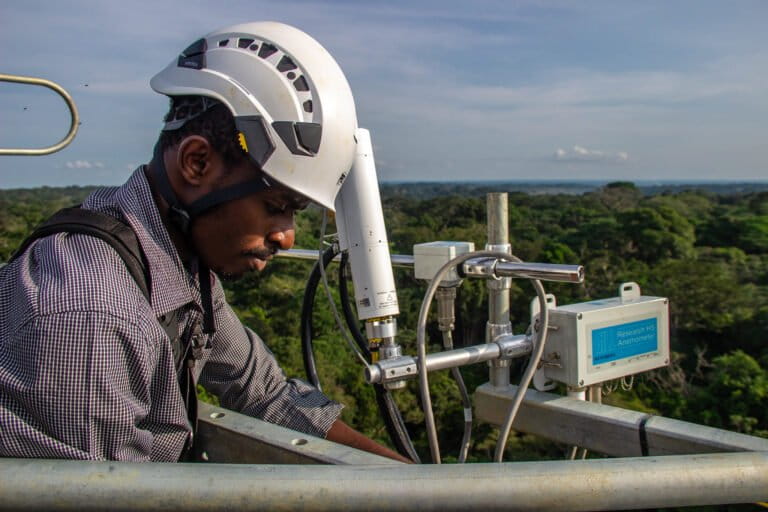
In 2020, a rumor emerged in villages surrounding the Yangambi Biosphere Reserve in the Democratic Republic of Congo's Tshopo province. The tale claimed that a recently built scientific tower was extracting oxygen from the rainforest and selling it for profit in Europe. Shortly after, an acacia tree planting initiative within the reserve was also added to the rumors, with locals alleging that the trees were being planted to generate more oxygen for the tower.
In May 2024, during a particularly hot spell, a new version of the rumor spread rapidly through social media in Kisangani, the provincial capital. This time, the tower was blamed for the extreme heat by allegedly removing oxygen from the atmosphere. When these claims resurfaced in 2024, the then-DRC environment minister, Ève Bazaiba, dismissed them as "ignorance" and "superstitions."
She published a video on social media to demonstrate that the tower, known as CongoFlux, does not extract oxygen; instead, it measures greenhouse gas exchanges between the rainforest and the atmosphere, aiding scientists in understanding the Congo Basin's role in global climate regulation.
However, addressing the science is only part of the solution. The rumors also reveal much about the people who spread them and their relationship with conservation. According to a recently published study in Environmental Sociology, the rumors serve as a means for individuals to contest conservation efforts while simultaneously making claims about who should benefit from them.
At the same time, the rumors are shaped by a complex interplay of factors, reflecting the diverse perspectives and relationships among the people living in and around the reserve.
Written by urgent.news from Mongabay's reporting — not their text. Machine-written — may contain errors; check the original before relying on it.