Chinese naval scientists fall in love with the ‘big guns’ on Trump-class warship
US President Donald Trump’s vision of new warships bristling with huge-calibre guns – widely mocked as a billionaire’s vanity project and a throwback to the battleship era of the second world war – has received an unexpected nod from military scientists in China. In a paper published last month by the Chinese peer-reviewed journal Command Control & Simulation, the authors suggested that…
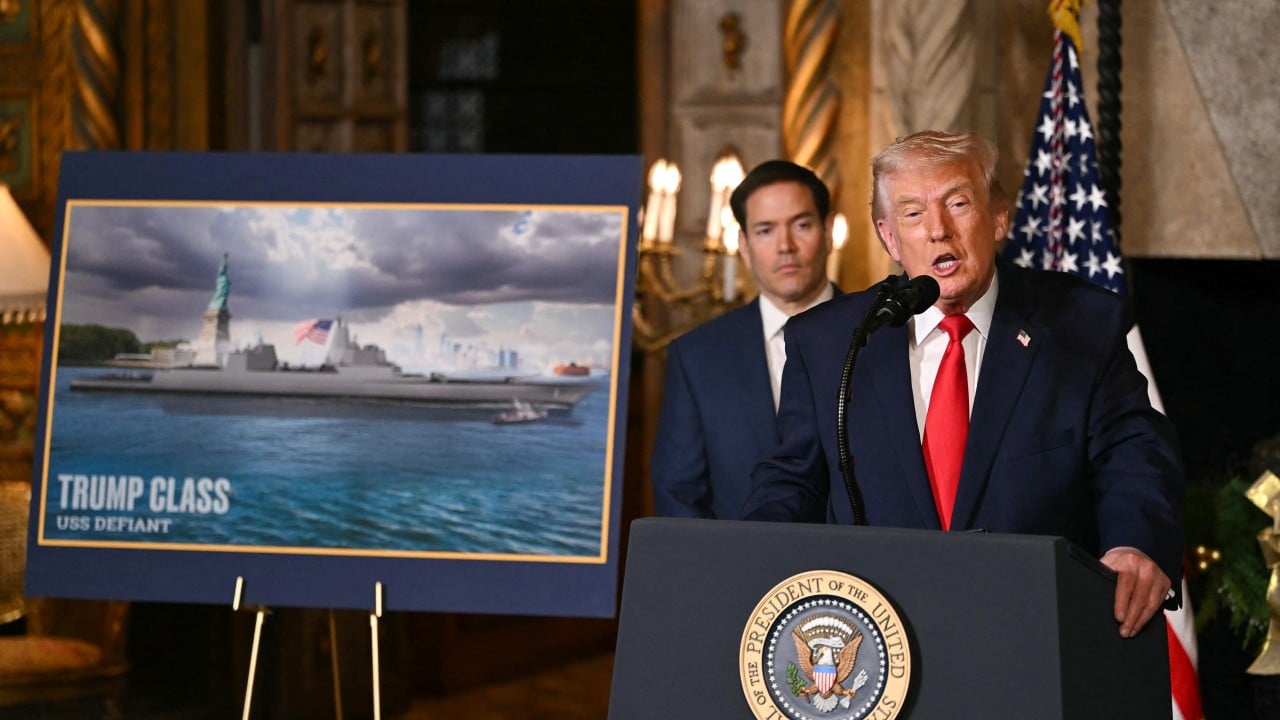
A recent study published in a Chinese academic journal has suggested that large-calibre naval guns could play a crucial role in future warfare by countering the rising threat of inexpensive drone swarms. The researchers from the People's Liberation Army's Dalian Naval Academy proposed that these guns could fire prefabricated-fragment shells designed to explode near a swarm, creating a high-speed cloud of fragments that could damage multiple targets within a designated area.
The study focused on the Trump-class battleship, a proposed warship known for its extensive missile capacity, nine large naval guns, and other electromagnetic weapons. The Trump-class has sparked criticism and skepticism from various quarters, including social media commenters and military analysts, who question the practicality and cost-effectiveness of concentrating such firepower on a single, extremely expensive platform in an era of advanced long-range missiles and unmanned weapons.
The Chinese military scientists' paper has faced opposition from within China's defence community, with one expert dismissing the research as "just a lousy paper written for promotion" due to its lack of convincing evidence on the effectiveness of large-calibre guns against drone swarms. However, the study highlights an ongoing debate about the potential of traditional naval weapons in modern warfare, particularly in the context of emerging threats and the high costs associated with developing and deploying such advanced warships.
Written by urgent.news from South China Morning Post's reporting — not their text. Machine-written — may contain errors; check the original before relying on it.