Von Falten zur Freiheit: Angst vor dem Älterwerden: Wie kann ich mit ihr umgehen?
Plötzlich der Gedanke, das Gefühl: Ist es das jetzt, das Alter? Die Psychologie-Professorin Jana Nikitin verrät, wie aus dem Schreck ein Gewinn wird und neue Klarheit und Freiheit entstehen.
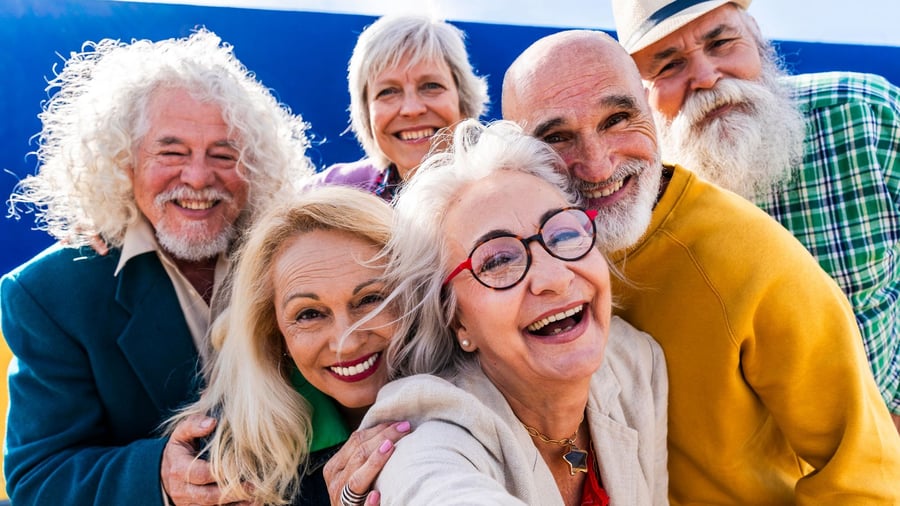
At some point, the thought creeps in: "Oh no, I'm getting old." This might be triggered by a celebration of a round birthday, a reflection in the mirror, or a sudden sensation that the body feels different. For many, this is not a pleasant thought, but rather associated with a sort of fear. However, it's not just about wrinkles and gray hair or occasional tingling.
Rather, it encompasses larger questions such as whether one's life will continue to decline, whether one will lose value, and how much influence one can actually have. Aging: Often, we only see the losses "Aging is not only associated with losses, but also with gains," says psychologist and gerontologist Prof. Jana Nikitin. Yet, "By focusing on the losses, we quickly forget that the gains are still there."
So we prepare for weaker, less attractive, and forgetful selves. Is this true? Not necessarily, but our conception of aging tends to be negative. Even seemingly complimentary remarks can reinforce this: "You look much younger" or, "I feel ten years younger." Old, then, are different. "In fact, we emphasize the negative images of aging - and luckily, I'm not one of them."
If our image of aging influences how we age. This is partly due to the fact that many lack or have little contact with people outside their own age group, aside from family, according to the researcher. Then there are missing experiences that could refute common assumptions. "Studies in social psychology show that contact leads to the dismantling of stereotypes," says Nikitin.
Her advice is therefore: "Expose yourself to knowledge and have friends in other age groups - not always within your own." Age images can even influence how we actually age, the researcher says. For example, someone with back pain might think, "This is aging, and there's nothing I can do," and thereby forgo seeking ways to act. This leads to a sort of self-fulfilling prophecy: We anticipate the decline, interpret changes accordingly, and become passive.
Not to endure aging, but to shape it The solution, however, is not to view aging exclusively positively. "One has certain possibilities, but not all the possibilities of the world," says Nikitin. This is just as much a realistic assessment as knowing: "Aging is what I make of my conditions. It's not something that happens to me, but something we co-create."
Positively, this can be achieved through movement, healthy nutrition, social contacts, and meaningful work - "this is good in any age and it's never too late." What we gain in aging In addition, there may be emotional gains. On average, older people are more balanced, emotionally stable, and better at regulating their emotions, according to the professor.
Additionally, they often experience their social encounters as meaningful. This can also be attributed to the growing awareness that their own time is limited. This can lead to a new clarity. "Will I really have to put up with every nonsense?" asks Nikitin. "No, I don't. I choose more consciously which people I spend time with and which tasks seem meaningful."
We also tend to care less about what others think of us. When looking in the mirror and seeing the reflection of aging, one should let the first thought lead to others: Which of my notions about aging are actually correct? What options do I still have? What have I gained in aging? What have I built, learned, or accomplished? What people, relationships, and experiences belong to my life today?
The answers are different for everyone. The wrinkles do not disappear, but their significance might change: they are no longer just a sign that something is lost, but also that something has been added. What have I created, what can I shape now? According to Nikitin, aging also involves another process: we become better at adapting to what we have and perceiving its value.
In the higher adult years, people have more opportunities to exert control over their lives: "We either change the world so that it matches our needs and goals, or we change ourselves so that our needs match what we have." This second process becomes more prominent in later adulthood. It sounds like surrender at first. However, Nikitin sees it as a gain: "We simply find the good, the positive, more in what we have than in our youth."
Relationships, experiences, abilities, overcome crises, a home, a family - all of this comes together - and perhaps even more.
Written by urgent.news from Handelsblatt's reporting — not their text. Machine-written — may contain errors; check the original before relying on it.