Smart farms seen as key to next phase of food security
The shift toward smart agriculture has become an increasingly important requirement to strengthen food security, improve production efficiency, and ensure the long-term sustainability of the country&#...
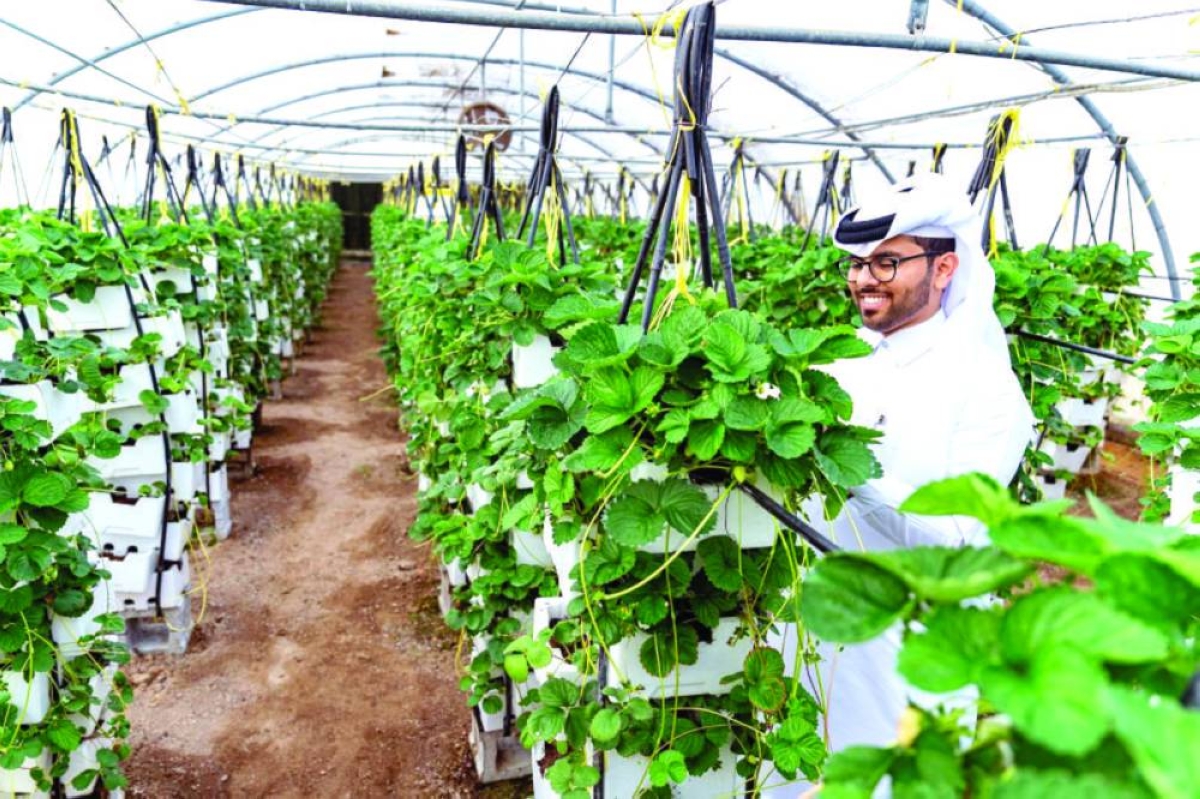
Smart farms are hailed as a crucial element in advancing food security, enhancing productivity, and ensuring the future viability of Qatar's agricultural industry, according to experts and farmers. Technologies such as controlled-environment greenhouses, hydroponics, vertical farming, automated irrigation, and artificial intelligence are touted as ways to enable farmers to generate more food on limited land while consuming fewer resources like water, energy, fertiliser, and pesticides.
These innovations offer more consistent production cycles, allowing farms to align output with market demand and supply fresh, local produce throughout the year. This approach aligns with Qatar's commitment to sustainable domestic production outlined in its National Food Security Strategy 2030, which emphasizes enhanced domestic production through modern and sustainable technologies as one of its three key priorities, alongside strategic reserves and diversification of external food sources.
Dr. Rashid al-Kuwari, a prominent figure in the agricultural sector, underscores the importance of smart farms for maintaining stable production costs and crop quality. He explains that the model necessitates appropriate farm infrastructure and the integration of smart technologies, including AI that can monitor crop health, growth cycles, and temperature, enabling farmers to conserve resources effectively.
Additionally, remote monitoring systems and AI allow farmers to modify agricultural inputs in real-time, minimizing water, fertiliser, and pesticide usage. Such systems also produce dependable production data, assisting farmers in planning output accurately and aiding policymakers in evaluating domestic production levels and food security.
However, Dr. al-Kuwari notes that high initial investment costs, narrow profit margins in the local market, and limited availability of specialised infrastructure and technical service providers pose significant barriers to broader adoption. Abdullah Mohamed al-Kaabi, Executive Director of a farm, highlights the urgent need for Qatari farms to embrace smart-farming systems.
His farm, which includes over 15 greenhouses utilizing both traditional and modern methods, along with vertical towers and hydroponics, has demonstrated the ability of these systems to improve resource efficiency and cut operational costs. Al-Kaabi reports that his farm produces various crops, primarily cucumbers, tomatoes, and leafy greens, predominantly through hydroponic methods.
He believes that adopting smart farming solutions would ensure more consistent quality and availability year-round, potentially leading to more stable retail prices in the medium to long term. Government-backed agricultural initiatives have also highlighted the benefits of greenhouse farming, including increased production, water conservation, and year-round vegetable supply.
Abdulrahman al-Obaidan, another farm owner, describes smart farming as a vital step for Qatar's agricultural sector, particularly given the nation's scarce water and energy resources. He stresses that reducing waste in water, energy, and fertiliser is crucial for lowering production costs and ensuring farm profitability. Smart technologies can also boost output per square metre, enabling farmers to deliver fresh, consistent local produce while decreasing reliance on imported goods.
The integration of greenhouses, hydroponics, and vertical farming can transform agricultural production from a seasonally vulnerable model to a more continuous, year-round system. Al-Obaidan emphasizes the potential of indoor farming with artificial lighting, which allows producers to exert greater control over planting, harvesting, and delivery schedules, enabling them to respond more precisely to consumer demand.
Furthermore, neglecting the expansion of smart agriculture could result in significant economic consequences, such as excessive water usage, crop losses, declining farm profitability, and reduced competitiveness for local producers. The National Food Security Strategy 2030 aims to boost domestic production through modern technologies, enhance agricultural land productivity, and bolster the resilience of food supply chains.
Written by urgent.news from Gulf Times's reporting — not their text. Machine-written — may contain errors; check the original before relying on it.
Also reported by 1 other outlet
- Smart farms seen as key to next phase of food security gulf-times.com