Smart farms seen as key to next phase of food security
The shift toward smart agriculture has become an increasingly important requirement to strengthen food security, improve production efficiency, and ensure the long-term sustainability of the country&#...
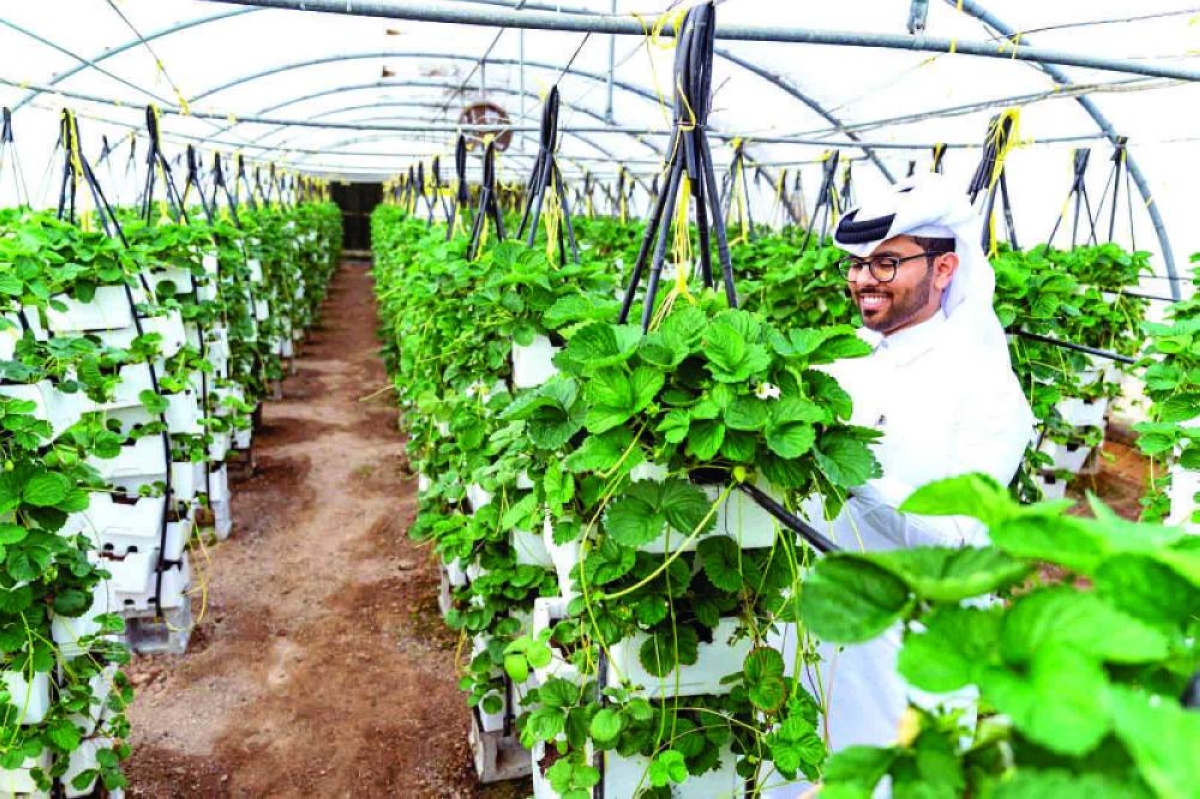
Smart farming technologies are viewed as crucial for enhancing food security, boosting production efficiency, and ensuring the long-term sustainability of Qatar's agricultural industry, according to specialists and farm owners. These advanced methods, including controlled-environment greenhouses, hydroponics, vertical farming, automated irrigation, and artificial intelligence, enable farmers to cultivate more crops on limited land while consuming less water, energy, fertiliser, and pesticides.
By providing more stable production cycles, smart farming allows farms to align their output with market demand, ensuring a steady supply of fresh local produce throughout the year. This aligns with Qatar's National Food Security Strategy 2030, unveiled in December 2024, which emphasizes increasing domestic production through modern and sustainable technologies as one of its three primary pillars.
Precision-agriculture solutions are being developed to equip farmers with technology that enhances growing conditions, lowers operational costs, and supplies government agencies with consolidated data for crop planning and food-security contingency planning. Dr Rashid al-Kuwari, an agricultural sector specialist, highlighted the importance of smart farms for ensuring stability in production costs and crop quality.
These systems, which incorporate artificial intelligence to monitor crop quality, growth periods, and temperature, can also allow farmers to adjust agricultural inputs in real-time, reducing water, fertiliser, and pesticide usage.
Despite the potential benefits, challenges such as high initial investment costs, narrow profit margins, and limited availability of specialised infrastructure and technical service providers pose significant barriers to wider adoption. Farm owner Abdullah Mohamed al-Kaabi noted that adopting smart-farming systems has become increasingly urgent for Qatar, citing the efficiency and cost-reduction benefits demonstrated by his farm, which employs over 15 greenhouses with a mix of conventional and modern techniques.
Government-backed initiatives have demonstrated the effectiveness of greenhouse farming in increasing production, conserving water, and providing vegetables year-round. Abdulrahman al-Obaidan, another farm owner, emphasized that smart farming is essential for Qatar's agricultural sector, particularly given the country's limited water and energy resources.
He stressed that reducing waste in water, energy, and fertiliser directly lowers production costs and ensures profitability. Smart systems also increase output per square metre, allowing farms to supply fresh, consistent local produce while decreasing reliance on imported products.
Indoor farming using artificial lighting offers the potential for producers to have more control over planting, harvesting, and delivery schedules, enabling them to respond more precisely to consumer demand. The National Food Security Strategy 2030 aims to increase domestic production through modern technologies, improve agricultural land productivity, and enhance the resilience of food supply chains by promoting smart agriculture.
Written by urgent.news from Gulf Times's reporting — not their text. Machine-written — may contain errors; check the original before relying on it.
This story
This is one outlet's version. Read the fullest account.
- Smart farms seen as key to next phase of food security gulf-times.com