The burning question of child safety in Amravati’s government maternity hospital
Three newborn babies died and 36 were rescued after an explosion at Amravati’s government maternity hospital, a key healthcare facility serving the district and surrounding areas, including women with critical pregnancies. Snehal Mutha speaks to survivors, rescuers and hospital staff, who flag lapses in fire safety audits
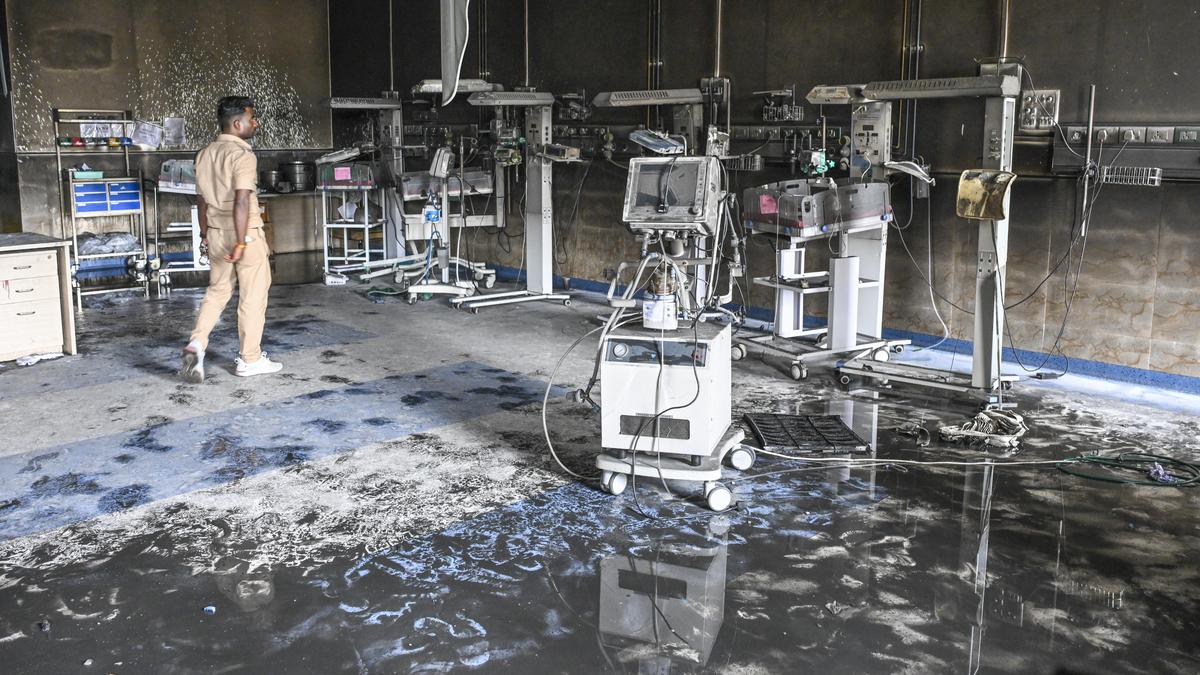
On a rainy morning of August 26, the courtyard of District Women Hospital in Amravati district was filled with people – politicians, reporters and bystanders – as they gathered around the scene of tragedy. One of the three newborns who lost their lives in the devastating fire that occurred around 3.15 a.m. on August 24 was Swapnil Borde's child. The hospital, which serves the districts of Amravati, Wardha, Yavatmal and Washim, has a history of such incidents, with another fire taking place there in September 2022.
The fire was allegedly sparked by a ventilator in the four-storey Special Newborn Care Unit and Neonatal Intensive Care Unit (NICU), located on the third floor of the maternity hospital. Thirty-six babies were rescued and shifted to nearby hospitals, with two sustaining burn injuries. The parents of the deceased babies, hailing from Achalpur and Paratwada, expressed their grief and frustration at the hospital's negligence.
The hospital, formerly known as Dufferin Hospital, was established in 1938 and is one of Amravati's major government maternity hospitals, catering to critical pregnancies from various regions. The investigation committee, headed by Maharashtra Minister for Public Health and Family Welfare Prakash Abitkar, is tasked with examining ventilator and electrical faults, the fire-audit history and administrative lapses, with a report due on August 31. However, the report has not yet been released.
Written by urgent.news from The Hindu - Sci-Tech's reporting — not their text. Machine-written — may contain errors; check the original before relying on it.
This story
This is one outlet's version. Read the fullest account.