Houbara footprints aid tracking and conservation in Saudi deserts
The houbara bustard leaves a distinctive three-pronged track in Saudi deserts, helping trackers and falconers follow its path and highlighting its cultural value.
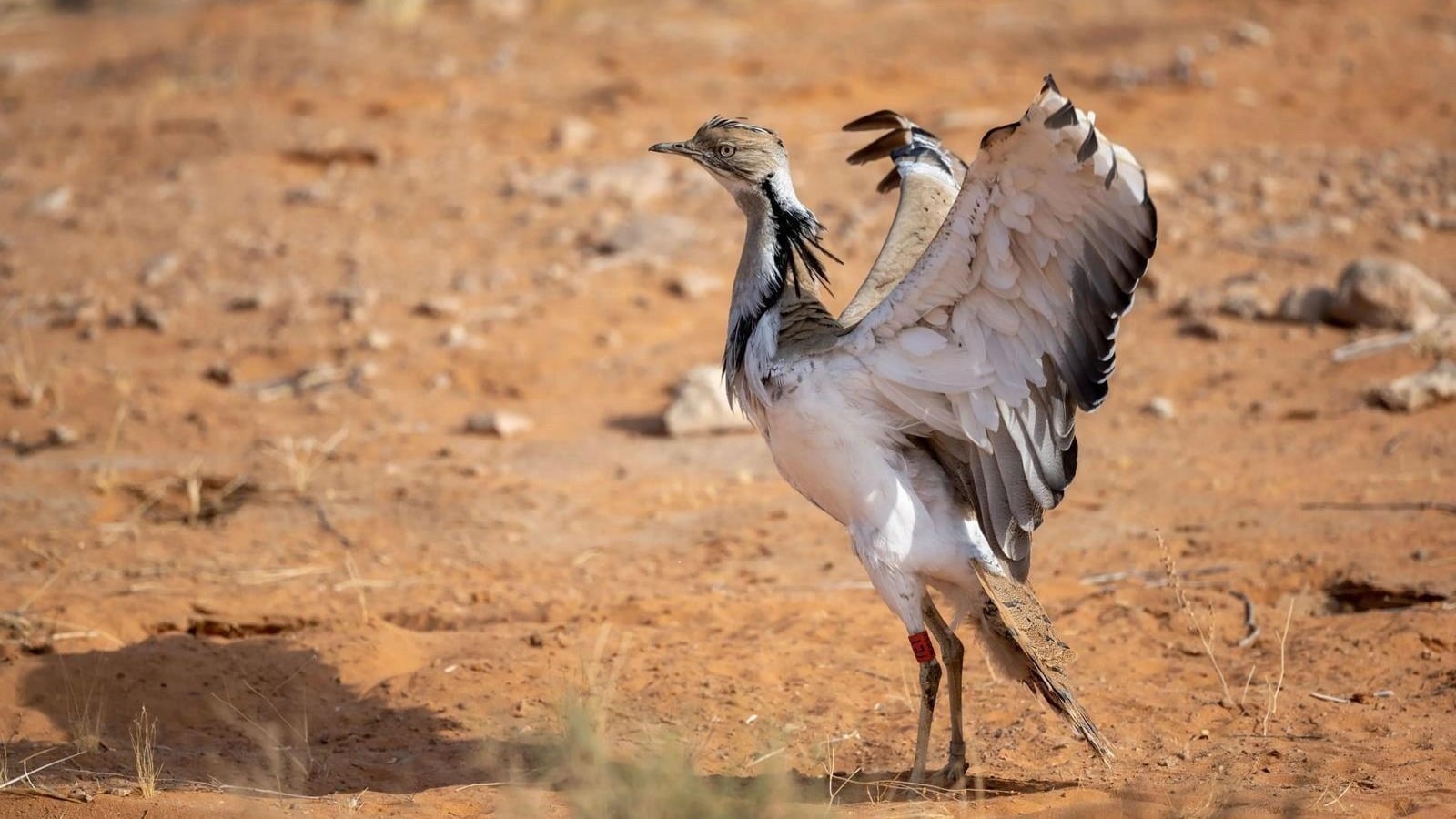
The houbara bustard's distinctive three-pronged footprints in Saudi deserts prove invaluable for tracking and conservation efforts. This unique mark, resembling a bird's forked stride, allows falconers and wildlife trackers to follow the bird's trail by identifying its characteristic imprints on the sand. Unlike typical four-toed birds, the houbara's foot has three forward-facing toes and lacks a hind toe, resulting in a clear and easily recognizable track.
Locally, these prints are known as "al-jurra" or "al-jarayer." The tracks exhibit evenly spaced steps in a straight line, with no dragging, and the bird's soft sole leaves a faint impression on the terrain. By studying the shape, spacing, and sequence of these footprints, specialists can precisely map the houbara's movements. This knowledge, passed down through generations, supports the conservation of the species and its role in the Arabian Peninsula's desert ecology.
Beyond its practical applications, the houbara holds significant cultural and ecological importance, playing a crucial role in the region's heritage and maintaining the balance of its arid and semi-arid habitats. Designating nature reserves is key to safeguarding the houbara and preserving the Kingdom's desert biodiversity.
Written by urgent.news from Ajel English's reporting — not their text. Machine-written — may contain errors; check the original before relying on it.