Google, TCS, and the physics of air-cooling a large data centre | Explained
Using air-cooling alone to cool a 1-GW data centre is considered impractical; while liquid-cooling imposes higher costs upfront, air-cooling imposes a performance and efficiency tax
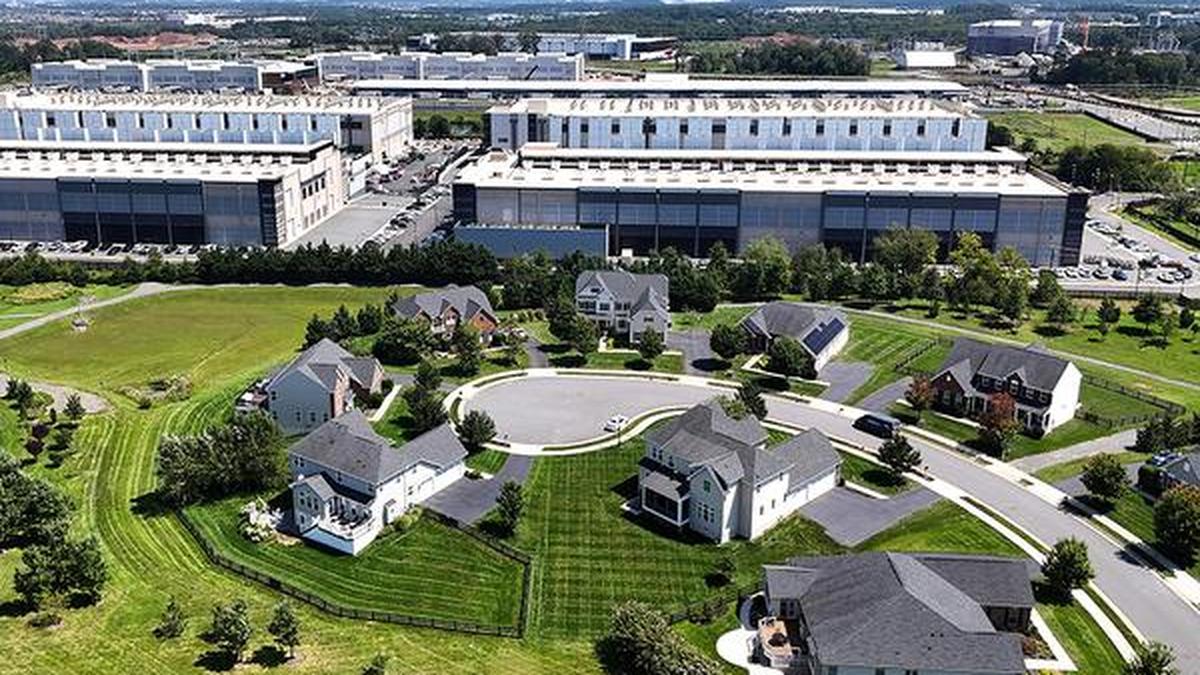
Google has announced plans for a massive 1-GW data centre in Visakhapatnam district, opting for air-cooling technology to cool its servers. While air-cooling uses less water compared to traditional liquid-cooling methods, it has its own set of trade-offs.
Inside each data centre, there are millions of processors, each containing billions of transistors. As these transistors manipulate electrical current to process data, they generate heat. A 1-GW data centre would theoretically produce 1 GW of heat.
The heat generated is first transferred from the silicon die holding the transistors to a designated heat sink, typically a cooling plate. The heat is then managed through various cooling options based on economic feasibility, scale of operations, and local conditions.
Air-cooling, a common method, involves fans pushing cool air through or around the server racks, with the hot air eventually being collected and cooled. Other cooling technologies include computer-room ACs, CRAHs, hot-aisle/cold-aisle containment, free-cooling, direct liquid cooling, immersion cooling, evaporative cooling, dry-cooling, and chilled-water systems among others.
Air-cooling generally has lower upfront infrastructure costs compared to liquid-cooling systems. However, it may require more energy as the ambient air may not be sufficiently cool or dry to efficiently dissipate the heat. The choice of cooling technology depends on the specific needs and conditions of each data centre.
Written by urgent.news from The Hindu - Sci-Tech's reporting — not their text. Machine-written — may contain errors; check the original before relying on it.