Goldman sees Cybercab giving Tesla a cost advantage in robotaxis
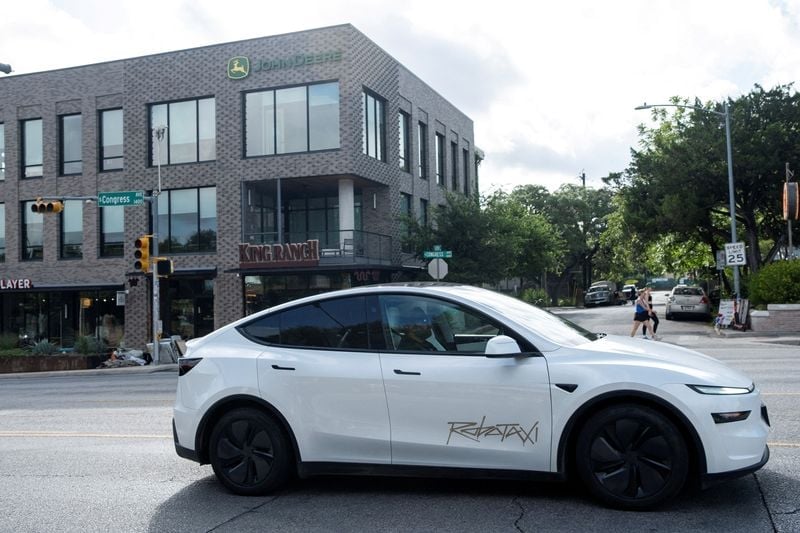
Goldman Sachs analysts believe Tesla's Cybercab could provide an edge in the autonomous vehicle sector, but the company's success will hinge more on software performance than manufacturing costs. The firm unveiled the Cybercab at a Sept. 3 event in Austin and started offering robotaxi rides in the vehicle. So far, Tesla has logged 1 million miles of unsupervised robotaxi operations.
In addition to inviting operators to own Cybercab fleets and host events, Tesla is also working on infrastructure. The analysts highlighted Tesla's emphasis on a low-cost vehicle, thanks to its unboxed manufacturing approach and camera-only sensors, which could boost the economics of its robotaxi business. If Tesla can achieve its $20,000-$30,000 cost target at scale, the analysts estimate a potential $0.05-$0.30 per-mile advantage over competitors whose vehicles cost $50,000-$100,000 upfront.
However, the bigger challenge for investors may be whether Tesla's artificial intelligence can rapidly scale its autonomous driving software across broader geographic areas, as this could generate more revenue and spread the vehicle cost base across more miles. Tesla's safety data for its supervised Full Self-Driving system shows lower rates of certain safety events in North America, with vehicles using FSD Supervised experiencing 75%-85% fewer automatic emergency braking events and 40%-90% fewer collisions than non-FSD vehicles.
In Europe, FSD Supervised vehicles showed even more significant reductions in events. Goldman also reported that Tesla has received provisional approval for FSD in the Netherlands and four other European Union countries. Based on NHTSA crash data and Tesla's disclosures, Tesla's fully driverless robotaxi operation has experienced an accident every 50,000 to 70,000 miles.
Goldman maintained a Neutral rating on Tesla with a 12-month price target of $360, compared to the stock's closing price of $376.37 on Sept. 3. The analysts outlined an illustrative upside scenario of around $500 and a downside scenario of about $150. Key downside risks include slower electric vehicle demand, increased competition, tariffs, delays in FSD and other products, and operational and margin pressures.
Goldman believes faster adoption of electric vehicles, earlier product launches, and a larger-than-expected contribution from AI products like FSD, Optimus, and robotaxis could present upside opportunities.
Written by urgent.news from Investing.com's reporting — not their text. Machine-written — may contain errors; check the original before relying on it.