How the east became Germany’s far-right stronghold
BERLIN, Sept 6 — More than three decades after Germany’s 1990 reunification, lasting east-west div...
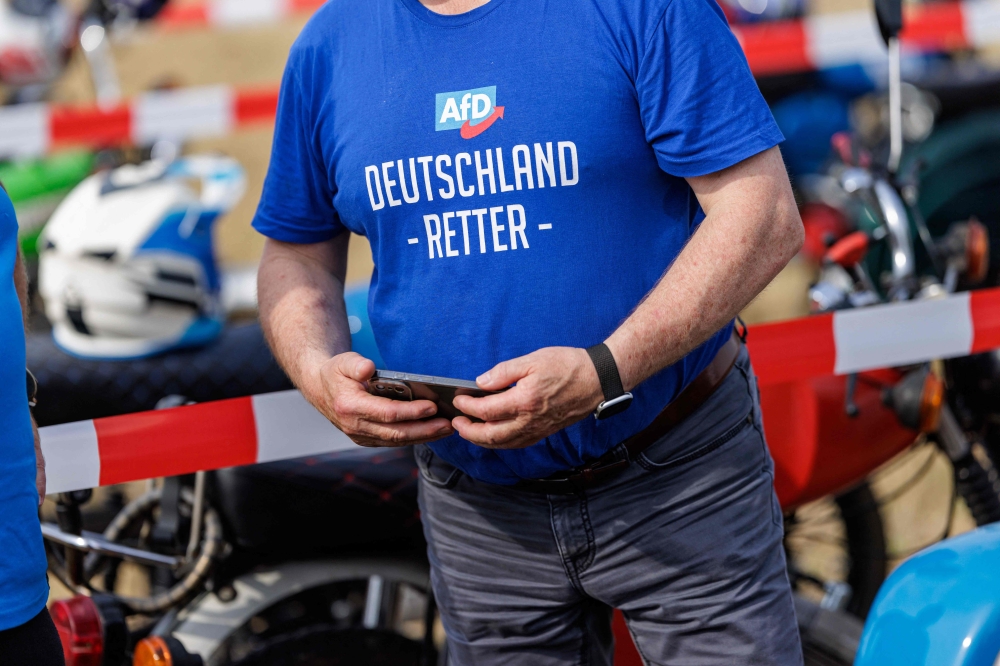
Three decades after Germany's 1990 reunification, the lasting east-west divisions may resurface during the upcoming election in Saxony-Anhalt, an eastern state. The Alternative for Germany (AfD), known for its anti-immigration stance and Moscow-friendly policies, is anticipated to perform well and potentially gain power at the state level, making it the first far-right party to achieve such success in post-war German history.
Elisabeth Kaiser, the government's commissioner for eastern Germany and a lawmaker from Thuringia, an eastern state, discussed these factors with AFP.
During the fall of the Berlin Wall in 1989, many state-owned enterprises closed, leading to mass unemployment and outmigration, particularly of young women. Kaiser noted that these experiences have persisted across generations, shaping the collective east German memory of devaluation, loss, and the realization that everything can change overnight.
Today, eastern Germans still earn less on average, have fewer big businesses, and are underrepresented in politics. Although the government has invested in infrastructure and economic stimulation, some disparities remain, with feelings of being disadvantaged and unseen by the rest of Germany.
The AfD's stance against migration resonates in much of the east, despite fewer foreign-born residents compared to the west. Unlike the West, which benefited from post-war guest workers, the East invited contract workers from socialist "brother states" who were physically separated and on limited contracts. Kaiser noted that while the GDR proudly presented itself as internationalist, there was also racism, xenophobia, and right-wing extremism during the 'baseball bat years' of the 1990s.
Recently, resentment has grown, particularly towards Syrian and Afghan asylum-seekers, who are accused of receiving "extra things for free."
Kaiser addressed concerns about the romanticization of East Germany, known as "Ostalgie." In times of crisis, people often look back on positive aspects of their past. Populists exploit emotionally charged elements from the GDR era, such as the Simson-brand scooter, which symbolized freedom during that time. While some older voters might remember feeling secure in the GDR, they should also remember the control and surveillance that came with it.
Kaiser emphasized that the peaceful revolution of 1989, which many in the east take pride in, also highlights their collective capability to overthrow a system. The AfD's advocacy for closer ties to Russia, despite its invasion of Ukraine and alleged "hybrid attacks" attributed to Moscow, is seen as a reflection of the lingering anti-Americanism and skepticism of the transatlantic alliance in the east.
Written by urgent.news from Malay Mail's reporting — not their text. Machine-written — may contain errors; check the original before relying on it.
This story
This is one outlet's version. Read the fullest account.