BepiColombo sheds its ride and starts the final glide to Mercury
Eight year after launch, Mercury probe and its Mercury Transfer Module consciously uncouple as orbit approaches
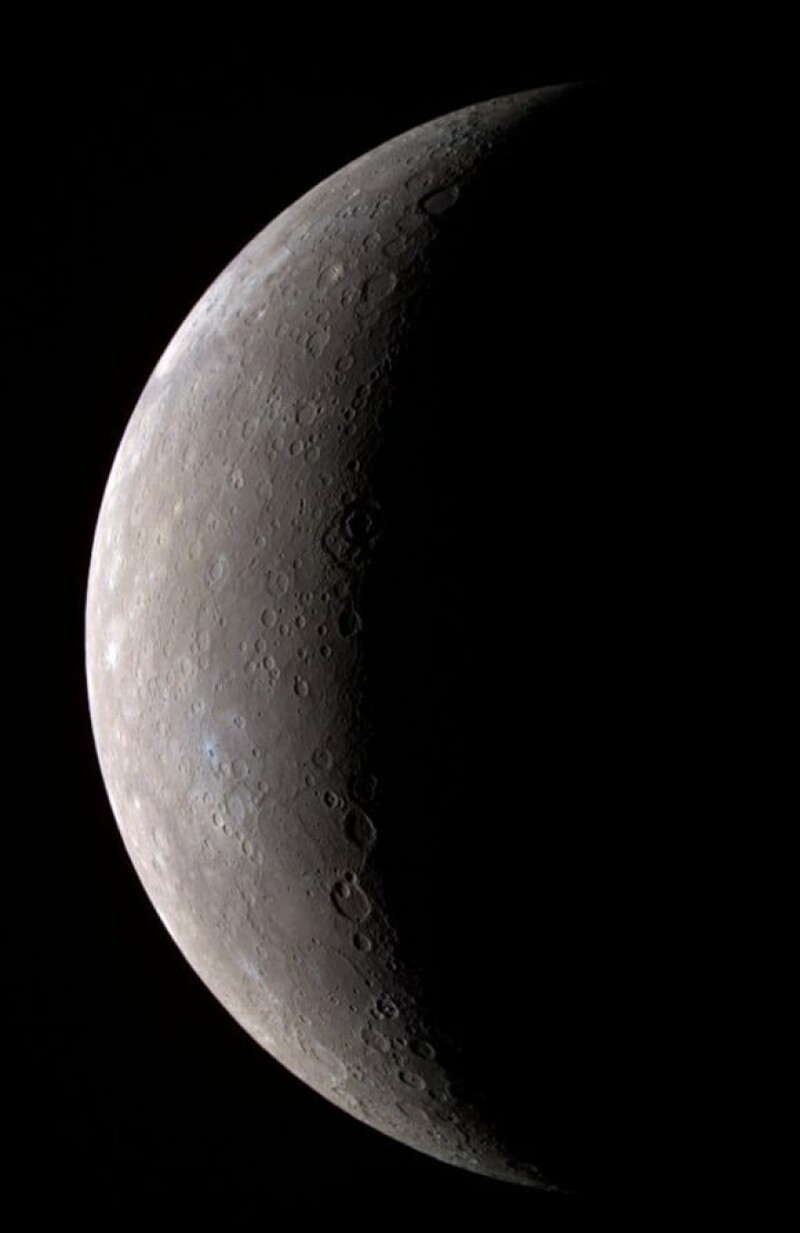
After eight years of travel, the joint ESA and JAXA spacecraft BepiColombo is now nearing Mercury. Engineers have begun the final approach sequence by separating the power module that transported it thus far. On September 3, the spacecraft detached from the Mercury Transfer Module (MTM) at around 1400 CEST. After a brief period of uncertainty, controllers confirmed the successful separation via a preliminary Doppler signal. By 1552 CEST, it was verified that all systems were functioning as intended.
The solar panels of the Mercury Planetary Orbiter (MPO) are now charging the spacecraft's batteries. The next crucial step is to enter into orbit around Mercury on November 21. Subsequently, the Mercury Magnetospheric Orbiter (MMO) – also known as Mio – will be released between December 9 and 10. A week after Mio's release, the MPO will commence its journey to its final orbit around Mercury, which spans 480 x 1500 km. Science operations are anticipated to commence in April 2027.
It's important to note that the arrival at Mercury is one year later than initially planned. This delay was due to issues with the spacecraft's Solar Electric Power (SEP) system, which required a reevaluation of the trajectory, thereby extending the spacecraft's journey. Despite its previous six flybys of Mercury, as well as flybys of Venus and Earth following its 2018 launch, BepiColombo remains an exemplary demonstration of international collaboration.
The MPO and MTM are contributions from ESA, while the MMO is provided by JAXA. ESA also contributed the sunshield, which will be discarded after the MMO's release. The MPO features a main body measuring 2.4 x 2.2 x 1.7 m and a mass of 1,230 kg, including an 85 kg science payload. In contrast, JAXA's MMO measures 1.8 m in diameter and 1.1 m in height, and weighs 255 kg (45 kg of which is the science payload).
While the MPO is equipped with 3-axis stabilization and nadir-pointing capabilities, the MMO will spin at 15 rpm with its spin axis perpendicular to the Sun. The mission's primary objective is to study Mercury comprehensively, focusing on its magnetosphere, structure, dynamics, large iron core, magnetic field, and origin. The initial mission duration at Mercury is planned to be one Earth year (approximately four Mercury years), with a potential extension of an additional Earth year.
Written by urgent.news from The Register Science's reporting — not their text. Machine-written — may contain errors; check the original before relying on it.
This story
This is one outlet's version. Read the fullest account.