BepiColombo sheds its ride and starts the final glide to Mercury
Eight year after launch, Mercury probe and its Mercury Transfer Module consciously uncouple as orbit approaches
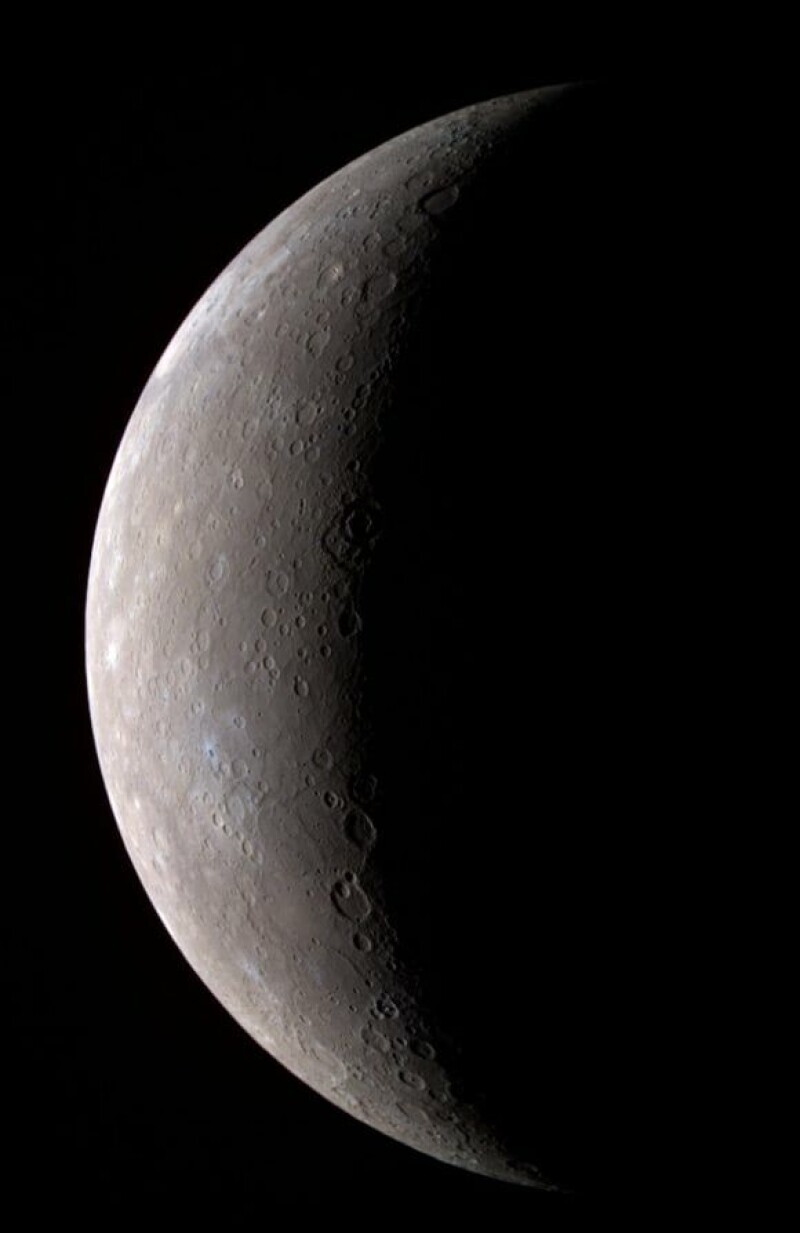
After an eight-year journey, the BepiColombo spacecraft is nearing its destination - Mercury. Engineers on September 3 began the arrival sequence by releasing the power module that helped get it there. This separation was confirmed around 1552 CEST, with signals indicating a successful detachment. Once clear, the craft's solar panels began charging its batteries.
The next major step is entering orbit around Mercury on November 21. This will be followed by the release of the Mercury Magnetospheric Orbiter (MMO), also known as Mio, between December 9 and 10. A week later, the Mercury Planetary Orbiter (MPO) will transition into its final orbit, 480 x 1500 km from the planet's surface. Scientific observations are expected to commence in April 2027.
The arrival is a year later than initially planned, due to issues with the spacecraft's Solar Electric Power system. Despite this delay, BepiColombo has a history of Mercury encounters, having performed six flybys since 2021. The spacecraft, a testament to international cooperation, consists of the MPO and MTM from ESA, and the MMO from JAXA.
The MPO measures 2.4 x 2.2 x 1.7 m and weighs 1,230 kg, while JAXA's MMO is 1.8 x 1.1 x 1.1 m and 255 kg. The primary goal is to study Mercury's magnetosphere, core properties, and magnetic field, with the mission planned for one Earth year, potentially extendable by another.
Written by urgent.news from The Register's reporting — not their text. Machine-written — may contain errors; check the original before relying on it.
This story
This is one outlet's version. Read the fullest account.