Landtagswahl am Sonntag: Wahlkampffinale in Sachsen-Anhalt - AfD in Umfrage klar vorn
Noch zwei Tage haben die Parteien, um Wähler zu überzeugen. Die Umfragewerte vor der Landtagswahl sind relativ stabil. Doch sehr viele Wähler scheinen noch unentschlossen.
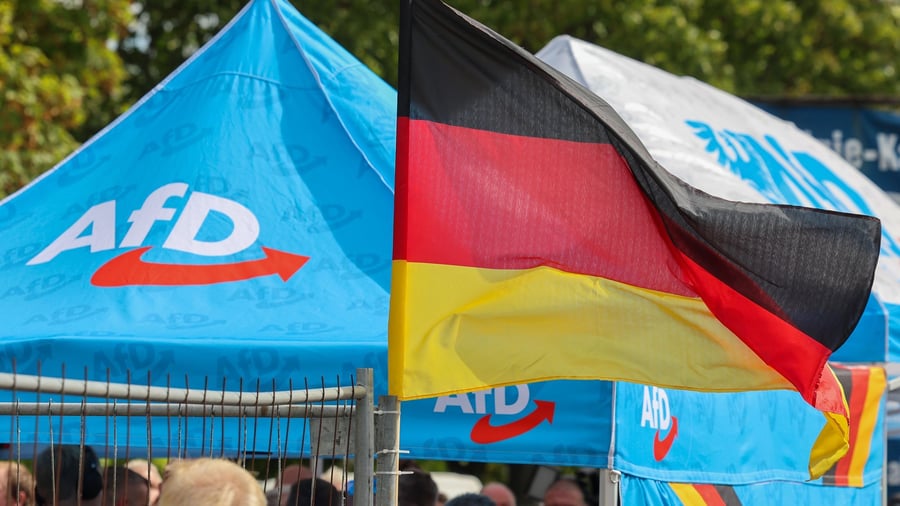
Sachsen-Anhalt kicks off its final push for the upcoming Landtag election on Sunday, with the AfD leading in recent surveys. The Freie Demokratische Partei (AfD) currently holds 41% in the ZDF research group's poll, a one-point increase from a week ago, while the Christian Democrats (CDU) remain unchanged at 23%. In such a hypothetical election outcome, the AfD would fall short of their goal to govern alone, though forming a coalition around them could prove challenging.
The CDU would reportedly need to rely on the support of the left-wing parties, such as the Social Democrats (SPD) and Greens, to form a minority government against the AfD, which is classified by the Saxon-Anhalt security service as right-wing extremist.
The left-wing party comes in third with 11.5%, a 1.5-point decrease from the previous week. The SPD loses 0.5 points to 8.5%, and the Greens remain steady at 6%. The BSW and FDP are expected to fail the 5% threshold required for parliamentary representation, with the latter at 3%. At present, Magdeburg is governed by a coalition of CDU, SPD, and FDP.
The AfD's clear lead in other polls is consistent with other institutes' findings, such as Insa's poll for "Nius," where the AfD held 43% and the CDU 22%. Infratest dimap's survey for the ARD in late August put the AfD at 42% and the CDU at 22%.
The AfD's dominance in these surveys aligns with other research institutes as well. Despite the AfD's strong performance, around 26% of respondents still remain uncertain about whom or whether they intend to vote. A total of 1,044 eligible voters were surveyed by the research group from September 1st to 3rd. The survey is claimed to be representative.
The AfD's substantial lead in these polls mirrors the results from other research institutes. However, opinion polls come with inherent uncertainties, as they can be affected by waning party affiliations and increasingly time-sensitive electoral decisions. In general, polls only reflect the opinions at the time of the survey and are not forecasts of election results.
Written by urgent.news from Handelsblatt's reporting — not their text. Machine-written — may contain errors; check the original before relying on it.
This story
This is one outlet's version. Read the fullest account.