How Volkswagen's huge workforce became a costly burden
The struggling German carmaker plans to cut up to 100,000 jobs from its 630,000-strong workforce. How did VW's headcount get so bloated, and will the cuts be enough to survive the Chinese EV onslaught?
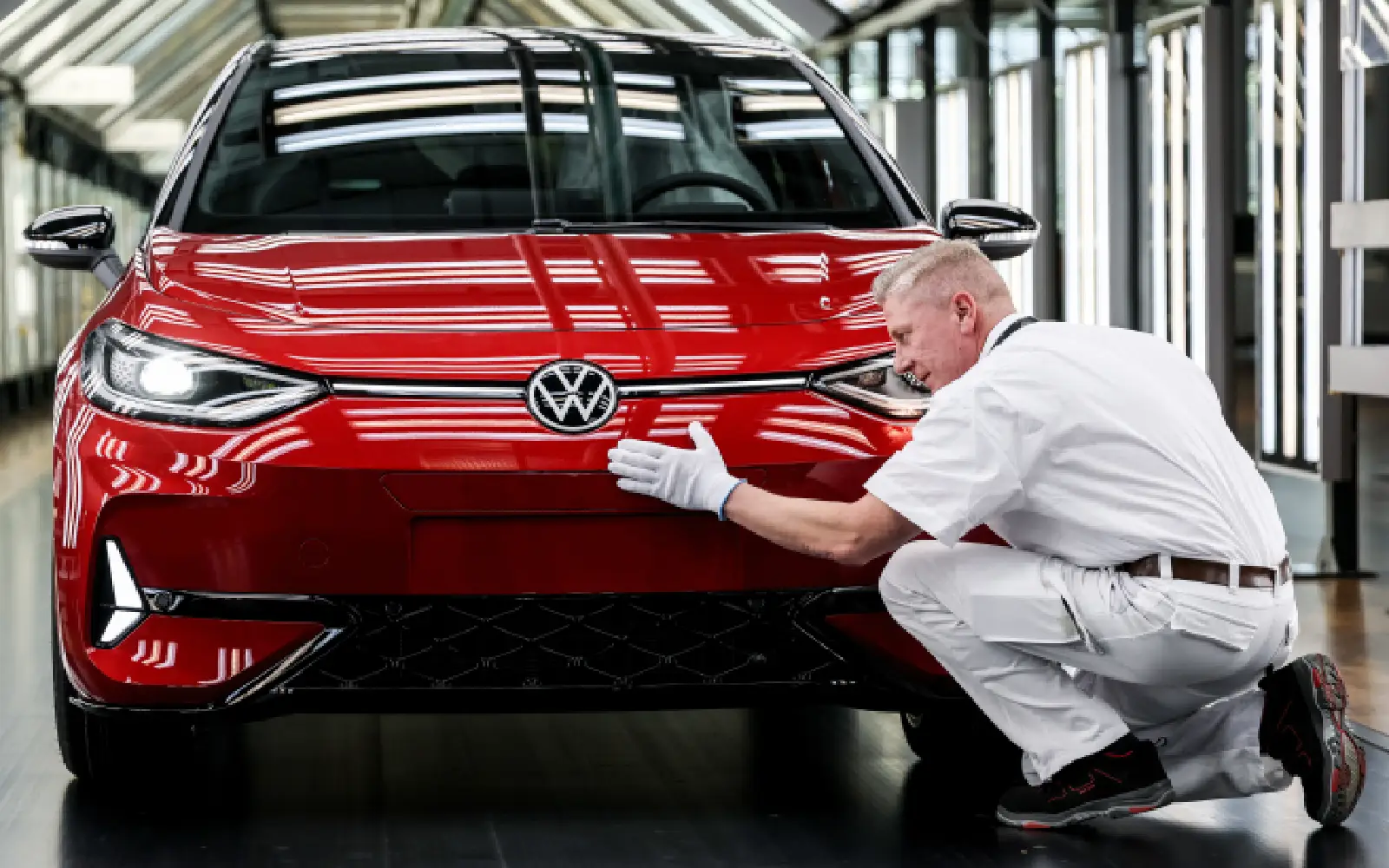
Volkswagen, one of the world's largest automotive manufacturers, now faces a significant challenge due to its extensive workforce. With nearly 630,000 employees, the company employs around 60% more workers than Toyota, 140% more than Stellantis, and nearly 240% more than Ford. This vast headcount, once a symbol of Germany's industrial prowess and VW's profitability, has now become a substantial burden. It has compelled the company to make difficult job cuts in an effort to remain competitive against agile Chinese rivals.
After already reducing thousands of positions last year as profits dwindled, Volkswagen is now set to lay off an additional 50,000 employees globally, including tens of thousands in Germany. The proposal received approval from the VW Supervisory Board on Thursday, September 2. The company has also proposed closing four German factories, though the supervisory board has not yet decided to implement this measure immediately. These job cuts extend to luxury brands such as Porsche and Audi.
Volkswagen's workforce expansion was a result of its strategic decisions to control various stages of production. According to Meghan Ostertag, an analyst at the US-based Information Technology and Innovation Foundation, the company's larger workforce was necessary due to its internal production of many components and software. This approach led to increased demand for labor and higher labor costs.
Additionally, VW's aggressive acquisition strategy over the years, which included brands like Skoda, Porsche, SEAT, and Bugatti, has contributed to its complexity and increased labor costs.
Despite surviving the 2015 Dieselgate emissions scandal without significant financial damage, Volkswagen has incurred considerable costs and is now grappling with new issues. The company's delayed transition to electric vehicles (EVs) has been a critical factor. As Chinese EV manufacturers gained significant traction and technological advantages, VW's slow response led to slower sales in China, which accounts for a third of VW's total sales.
Furthermore, VW's reluctance to adapt production methods to leaner models, similar to the US auto industry's mistakes in the 1960s and 1970s, has resulted in falling behind competitors.
The German government's support for domestic EV battery plants and the European Union's Industrial Accelerator Act (IAA) aim to reduce dependence on Chinese imports and strengthen the bloc's competitiveness. However, VW's underlying cost structure and slow decision-making culture may necessitate more substantial reforms. Analysts suggest that the company should invest more heavily in automation to better compete with leaner firms, such as China's BYD, a rapidly growing EV brand in Europe.
Written by urgent.news from DW English (Business)'s reporting — not their text. Machine-written — may contain errors; check the original before relying on it.
This story
This is one outlet's version. Read the fullest account.
- How Volkswagen's huge workforce became a costly burden dw.com
- Volkswagen to fire 12% of its India workforce economictimes.indiatimes.com