From grasslands to GPUs: Why China is building its AI powerhouse in Mongolia
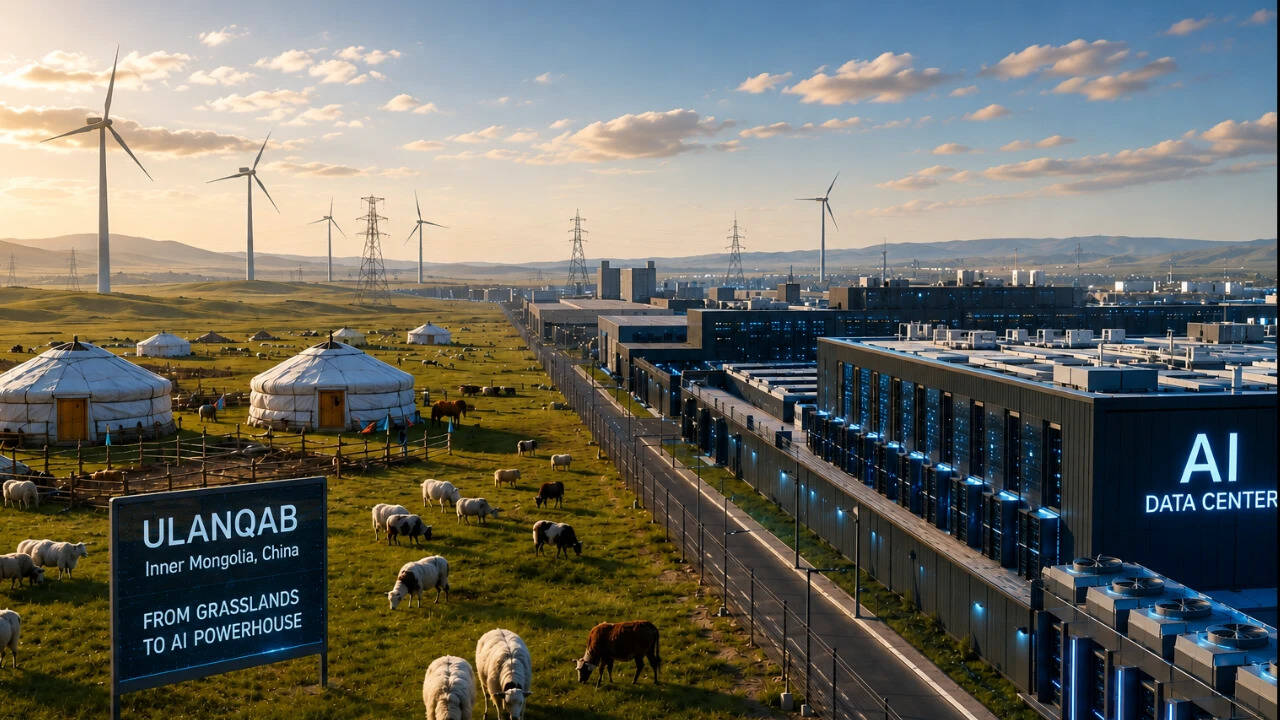
China's artificial intelligence boom extends beyond its major cities, with Ulanqab, a city in Inner Mongolia, becoming an emerging hub for AI infrastructure. By the end of 2025, China had 602 million generative AI users, a 141.7% increase from the previous year, and an AI industry valued at over 1.2 trillion yuan. The country's AI industry had more than 6,200 companies by 2025.
AI's rise is prompting a rapid expansion of computing infrastructure, with China's intelligent computing capacity reaching 1.59 million petaflops by the end of 2025.
Ulanqab, better known for its grasslands, livestock, and potatoes, has transformed into a data centre industry hub. In 2013, the city started laying the foundation for this industry with Huawei's data centre project. By August 2026, Ulanqab's operating computing capacity had reached 172,000 petaflops, with intelligent computing accounting for over 95% of the total.
The transformation is driven by a combination of factors, including abundant electricity, cooling conditions, and high-speed connectivity. Inner Mongolia was designated as one of China's eight national computing hub nodes, and Ulanqab's Jining Big Data Industrial Park was included in the starting area of the national hub. The city now has over 100 data centre projects, 5 million contracted standard racks, and 430,000 operating racks.
While agricultural and livestock production remain significant, Ulanqab's computing industry generates over ¥6.8 billion in annual revenue. AI workloads are increasingly being processed in the region, linking Ulanqab to major technology markets in the densely populated east of China. Ulanqab's appeal lies in its unique combination of resources, making it an intriguing case of an unlikely AI computing hub.
Written by urgent.news from Times of India's reporting — not their text. Machine-written — may contain errors; check the original before relying on it.