Malaysia must decide when AI helps learning and when it replaces it
SEPTEMBER 4 — New York City Mayor Zohran Mamdani’s decision to impose a one-year moratorium on student-facin...
September 4 — The decision by New York City Mayor Zohran Mamdani to place a one-year ban on student-facing generative AI in schools from early education through Grade 8 provides Malaysia with valuable insight. The crux of the policy is not the ban per se, but the underlying principle that technology should enhance learning, not supplant the mental effort essential to that process.
As educators, we must refrain from hastily incorporating AI into every subject merely because it exists. Curriculum design should not be tool-focused; it should revolve around the knowledge, comprehension, practice, and eventual independent application that learners must attain. Malaysia could benefit from adopting a progressive AI curriculum tailored to age-appropriateness.
At the primary level, the focus should remain on foundational skills such as reading, writing, arithmetic, verbal expression, creativity, problem-solving, and interpersonal engagement. Children should master constructing a coherent paragraph before delegating its refinement to AI, resolving a challenge before soliciting an immediate solution, and ideating concepts before soliciting their generation via a prompt.
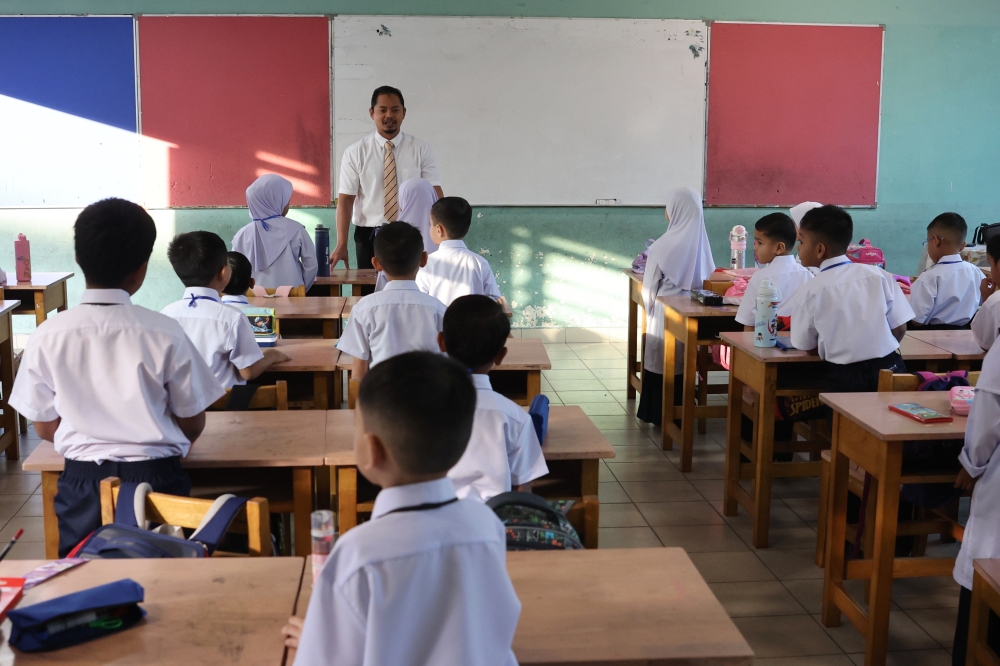
As the author notes, children must first internalize the process of constructing a paragraph before seeking AI-assisted improvement, solving a problem before requesting an instant answer, and constructing ideas before generating them through an AI prompt. - Source: Bernama pic At the secondary level, AI can be progressively introduced as a subject of study rather than an automated answer-provisioner.
Students should gain an understanding of how AI functions, why it sometimes generates inaccurate or fabricated information, how biases can infiltrate AI-generated content, the risks associated with compromising personal data, and when relying on AI crosses the line into academic dishonesty. Equally crucial, they must learn to critically evaluate AI-generated responses rather than unreservedly accepting them.
Curriculum developers should also rethink assessment methodologies. Schools need to prioritize oral defense, written composition, demonstrations, projects, reflective journals, and problem-solving exercises where students must articulate the reasoning behind their answers. Teachers, meanwhile, require precise curriculum guidelines that delineate when AI assistance is permissible and when it constitutes an overreliance on cognitive outsourcing.
While Malaysia need not replicate New York's moratorium verbatim, we would do well to embrace its fundamental premise: technology should be deployed based on developmental readiness and educational objective. The question should not be "How much AI can we embed into schools?" but rather "What critical thinking skills must our children still cultivate independently?" * Assoc Prof Dr Muhammad Noor Abdul Aziz and Dr Siti Noor Aneeis are affiliated with the Curriculum Instruction Unit at the School of Education at Universiti Utara Malaysia. ** The aforementioned perspectives represent the personal opinion of the writer or publication and do not necessarily reflect the views of Malay Mail.
Written by urgent.news from Malay Mail's reporting — not their text. Machine-written — may contain errors; check the original before relying on it.